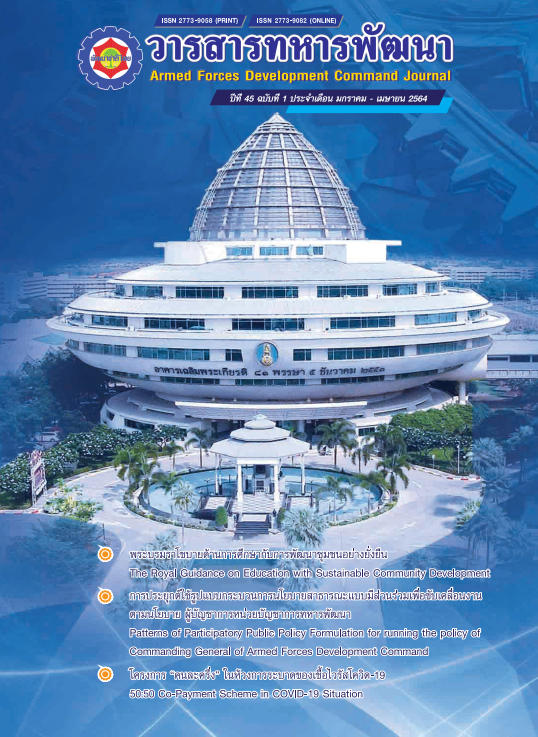
โครงการ “คนละครึ่ง” ในห้วงการระบาดของเชื้อไวรัส โควิด 19
คำสำคัญ:
กระตุ้นเศรษฐกิจ, คนละครึ่ง, ไวรัสโควิด 19บทคัดย่อ
ในสถานการณ์การแพร่ระบาดของเชื้อไวรัสโควิด 19 ส่งผลกระทบทั่วโลก แม้แต่ประเทศมหาอำนาจโลกอย่างอเมริกาและจีน ประเทศไทยเป็นประเทศหนึ่งในเอเชียที่ได้รับผลกระทบจากสถานการณ์เดียวกันรายได้หลักของประเทศที่ต้องพึ่งพาอุตสาหกรรมการท่องเที่ยว จากสถานการณ์ดังกล่าว ส่งผลให้ธุรกิจหลายประเภทเกิดความชงักงัน ประชาชนจำนวนมากได้รับความเดือดร้อน ดังนั้นรัฐบาลจึงต้องออกมาตรการอย่างเร่งด่วนเพื่อขจัดปัญหาต่างๆที่จะตามมา ในขั้นต้นก็เป็นการช่วยเหลือประชาชนที่อยู่ในภาวะของความทุกข์ยาก รวมไปถึงการกระตุ้นเศรษฐกิจภายในประเทศให้มีการขับเคลื่อนต่อไป มาตรการต่างๆดังที่ปรากฏ อันได้แก่ การลดอัตราดอกเบี้ยธนาคาร การพักชำระหนี้สำหรับบุคคลทั่วไป หักลดหย่อนภาษี ลดเงินสมทบประกันสังคม เป็นต้น สำหรับบทความฉบับนี้มีวัตถุประสงค์เพื่อศึกษาโครงการ “คนละครึ่ง”ในสถานการณ์หลังการคลายล็อคดาวน์โดยนำหลักการ SWOT ANALYSIS มาวิเคราะห์ จุดแข็ง จุดอ่อน โอกาส อุปสรรค ของโครงการดังกล่าวเพื่อนำไปพัฒนาโครงการที่จะเกิดในอนาคต ซึ่งผลการศึกษาโครงการ พบว่า ในส่วนของจุดแข็ง คือการกระจายรายได้ไปสู่ร้านค้าขนาดเล็กเพราะบริษัทห้างร้านขนาดใหญ่ไม่สามารถลงทะเบียนได้ และการนำเทคโนโลยีมาใช้ประโยชน์ ในส่วนของจุดอ่อนยังคงเป็นเรื่องของเทคโนโลยี เพราะประชาชนที่เข้าร่วมโครงการต้องมีความรู้ด้านเทคโนโลยี และการจำกัดสิทธิของประชาชน ส่วนของโอกาส เนื่องจากสถานการณ์คลายล็อคดาวน์ส่งผลให้ประชาชนออกจากบ้านเพื่อมาจับจ่ายใช้สอย และสุดท้าย คือส่วนของอุปสรรค ยังพบว่าประชาชนบางกลุ่มที่ไม่สามารถเข้าถึงเทคโนโลยี เช่น กลุ่มไม่มีสมาร์ทโฟน และกลุ่มผู้สูงอายุที่ไม่มีความรู้เรื่องเทคโนโลยี
เอกสารอ้างอิง
อุทัย ปริญญาสุทธินันท์. (2559) การวิเคราะห์ SWOT แสงไฟส่องนำทางสู่การจัดการเชิงกลยุทธ์ที่ชุมชนทำได้. วารสารเทคโนโลยีสุรนารี, 2(10).
สื่ออิเล็กทรอนิกส์
กระทรวงการคลัง. (29 กันยายน 2563). โครงการเพิ่มกำลังซื้อให้แก่ผู้มีบัตรสวัสดิการแห่งรัฐ และโครงการคนละครึ่ง [ระบบ ออนไลน์]. แหล่งที่มา http://www.fpo.go.th/main//News/Press-conference/13487.aspx. เข้าถึงเมื่อ 19 มกราคม 2564.
กระทรวงการคลัง. (4 มกราคม 2564). ความคืบหน้าโครงการละครึ่ง [ระบบ ออนไลน์]. แหล่งที่มา http://www.fpo.go.th/main//News/Press-conference/13893.aspx. เข้าถึงเมื่อ 21 มกราคม 2564.
ณรจญา ตัญจพัฒน์กุล และ สมคิด พุทธศรี. (14 กรกฎาคม 2563). “รัฐสวัสดิการจะเกิดขึ้นได้ รัฐและภาคประชาชนต้องไว้วางใจซึ่งกันและกัน” ภาคภูมิ แสงกนกกุล [ระบบ ออนไลน์]. แหล่งที่มา https://www.the101.world/pakpoom-seangkanokkul-interview/?fbclid=IwAR01cK9xICl3exjnKdQWR3S3xvho5sutvZ6-uge_Npv7vvSH7jNl48NehHw เข้าถึงเมื่อ 18 มกราคม 2564.
ยุวาณี อุ้ยนอง. (29 กรกฏาคม 2559). Helicopter money: ทางเลือกของมาตรการช่วยฟื้นเศรษฐกิจ [ระบบ ออนไลน์]. แหล่งที่มา https://www.scbeic.com/th/detail/product/2556 เข้าถึงเมื่อ 21 มกราคม 2564.
วิน พรหมแพทย์. (17 พฤษภาคม 2559). มารู้จัก Helicopter Money กันเถอะ [ระบบ ออนไลน์]. แหล่งที่มา https://www.finnomena.com/win/helicopter-money/ เข้าถึงเมื่อ 18 มกราคม 2564.
ดาวน์โหลด
เผยแพร่แล้ว
ฉบับ
ประเภทบทความ
สัญญาอนุญาต
บทความที่ได้รับการตีพิมพ์เป็นลิขสิทธิ์ของหน่วยบัญชาการทหารพัฒนา กองบัญชาการกองทัพไทย
ข้อความที่ปรากฏในบทความแต่ละเรื่องในวารสารวิชาการเล่มนี้เป็นความคิดเห็นส่วนตัวของผู้เขียนแต่ละท่านไม่เกี่ยวข้องกับหน่วยบัญชาการทหารพัฒนา กองบัญชาการกองทัพไทย และบุคลากรท่านอื่นๆในกองบัญชาการฯ แต่อย่างใด ความรับผิดชอบองค์ประกอบทั้งหมดของบทความแต่ละเรื่องเป็นของผู้เขียนแต่ละท่าน หากมีความผิดพลาดใดๆ ผู้เขียนแต่ละท่านจะรับผิดชอบบทความของตนเองแต่ผู้เดียว