
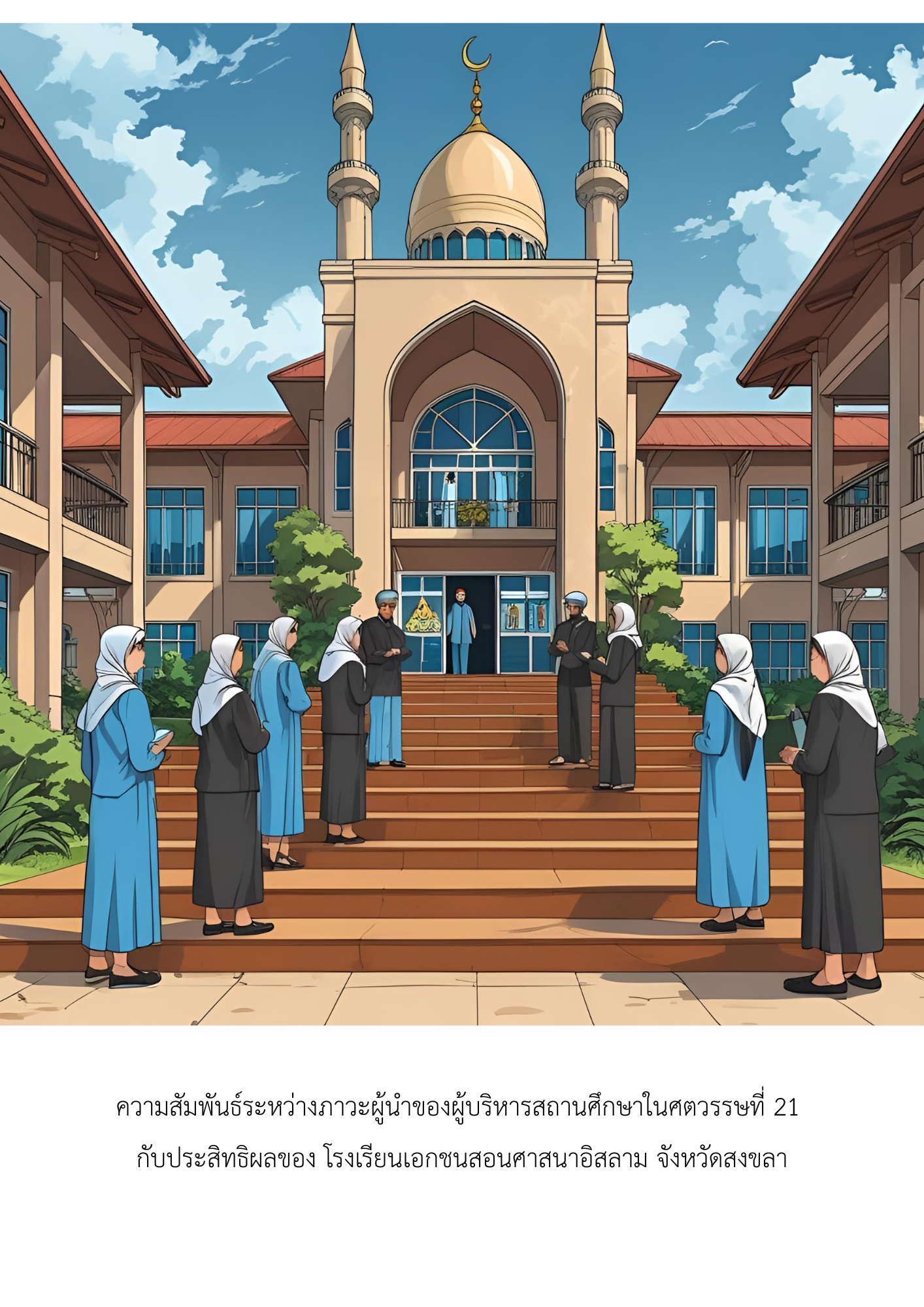
ความสัมพันธ์ระหว่างภาวะผู้นำของผู้บริหารสถานศึกษาในศตวรรษที่ 21 กับประสิทธิผลของโรงเรียนเอกชนสอนศาสนาอิสลาม จังหวัดสงขลา
คำสำคัญ:
ภาวะผู้นำ, ประสิทธิผล, โรงเรียนเอกชนสอนศาสนาอิสลามบทคัดย่อ
การศึกษาครั้งนี้เป็นการวิจัยแบบผสมผสาน (Mixed methods Research) มีวัตถุประสงค์เพื่อ
1) ศึกษาระดับภาวะผู้นำของผู้บริหารสถานศึกษาในศตวรรษที่ 21 ที่ส่งผลต่อประสิทธิผลของโรงเรียนเอกชนสอนศาสนาอิสลามจังหวัดสงขลา 2) ศึกษาระดับประสิทธิผลการบริหารสถานศึกษาในศตวรรษที่ 21 ของผู้บริหารโรงเรียนเอกชนสอนศาสนาอิสลามจังหวัดสงขลา 3) ศึกษาความสัมพันธ์ระหว่างภาวะผู้นำของผู้บริหารสถานศึกษาในศตวรรษที่ 21 กับประสิทธิผลของโรงเรียนเอกชนสอนศาสนาอิสลามจังหวัดสงขลา
4) ศึกษาข้อเสนอแนะแนวทางในการพัฒนาภาวะผู้นำของผู้บริหารสถานศึกษาในศตวรรษที่ 21 ที่ส่งผลต่อประสิทธิผลของโรงเรียนเอกชนสอนศาสนาอิสลามจังหวัดสงขลา กลุ่มตัวอย่างที่ใช้ในการตอบแบบสอบถามเป็น ผู้บริหารและครูผู้สอนโรงเรียนเอกชนสอนศาสนาอิสลามในจังหวัดสงขลาจำนวน 163 คน เครื่องมือที่ใช้ในการวิจัย คือ แบบสอบถามความคิดเห็นเกี่ยวกับภาวะผู้นำของผู้บริหารสถานศึกษาในศตวรรษที่ 21 ที่ส่งผลต่อประสิทธิผลของสถานศึกษาโรงเรียนเอกชนสอนศาสนาอิสลามจังหวัดสงขลา และแบบสัมภาษณ์ สถิติที่ใช้ในการวิเคราะห์ข้อมูล ได้แก่ ค่าความถี่ ร้อยละ ค่าเฉลี่ย ส่วนเบี่ยงเบนมาตรฐาน วิเคราะห์ความแปรปรวนและค่าสหสัมพันธ์พหุคูณ
ผลการวิจัย พบว่า 1) ภาวะผู้นำของผู้บริหารสถานศึกษาในศตวรรษที่ 21 โรงเรียนเอกชนสอนศาสนาอิสลามจังหวัดสงขลา โดยรวมและรายด้านอยู่ในระดับมาก โดยด้านที่มีค่าเฉลี่ยสูงสุดคือ ด้านความยืดหยุ่น รองลงมา คือด้านความคิดสร้างสรรค์ และด้านการทำงานเป็นทีม ส่วนที่มีค่าเฉลี่ยต่ำสุดคือ ด้านการมีวิสัยทัศน์ 2) ระดับประสิทธิผลของโรงเรียนเอกชนสอนศาสนาอิสลามจังหวัดสงขลา พบว่าโดยรวมและรายด้านอยู่ในระดับมาก โดยด้านที่มีค่าเฉลี่ยสูงสุด คือ ด้านความพึงพอใจในการทำงานของครู รองลงมาคือ ด้านความสามารถในการแก้ปัญหาภายในสถานศึกษา และด้านความสามารถในการปรับตัวให้เข้ากับสิ่งแวดล้อม สถานศึกษา และด้านความสามารถในการพัฒนานักเรียนให้มีทัศนคติทางบวก ตามลำดับ และค่าเฉลี่ยที่ต่ำสุดคือ ด้านความสามารถในการผลิตนักเรียนให้มีผลสัมฤทธิ์ทางการเรียนสูง 3) ความสัมพันธ์ระหว่างภาวะผู้นำของผู้บริหารสถานศึกษาในศตวรรษที่ 21 กับประสิทธิผลของโรงเรียนเอกชนสอนศาสนาอิสลามจังหวัดสงขลาโดยรวม มีความสัมพันธ์กันทางบวกในระดับสูง (r= .886**) อย่างมีนัยสำคัญทางสถิติที่ระดับ .01
4) ข้อเสนอแนะแนวทางเพื่อการพัฒนาภาวะผู้นำของผู้บริหารสถานศึกษาในศตวรรษที่ 21 ที่ส่งผลต่อประสิทธิผลของสถานศึกษา โรงเรียนเอกชนสอนศาสนาอิสลามจังหวัดสงขลา 1) ด้านวิสัยทัศน์ ผู้บริหารต้องมีวิสัยทัศน์ที่ดีต่อสถานศึกษาและบุคลากรในสถานศึกษา ควรส่งเสริมให้บุคลากรมีส่วนร่วมและแสดงความคิดเห็นในการกำหนดและพัฒนาวิสัยทัศน์ของโรงเรียน และควรมีวิสัยทัศน์ในการนำเทคโนโลยีมาใช้ในการบริหารให้เกิดประโยชน์สูงสุด 2) ด้านความยืดหยุ่น ผู้บริหารที่ดีควรปิดโอกาสรับฟังความคิดเห็นของบุคลากรหรือผู้ใต้บังคับบัญชา ยอมรับในความต่างของผู้ร่วมงาน ไม่ยึดติดกับกรอบความคิดเห็นของตนเอง ควรรับฟังคนรอบข้างให้มากขึ้น ใช้กระบวนการมีส่วนร่วม ในการกำหนดเป้าหมาย และแก้ไขปัญหาต่าง ๆ โดยไม่ยึดความคิดของตนเอง มีความยืดหยุ่นในกระบวนการบริหารจัดการ โดยคำนึงถึงความเหมาะสมต่อบริบทของครูนักเรียน ผู้ปกครองและผู้มีส่วนได้ส่วนเสียทั้งหมด 3) ด้านความคิดสร้างสรรค์ ผู้บริหารควรกล้าปรับเปลี่ยนหรือเปลี่ยนแปลงแนวคิดเดิมให้ทันยุค ทันสมัย เพื่อให้การจัดการศึกษาให้ทันต่อการเปลี่ยนแปลงอย่างรวดเร็วควรมีนวัตกรรมใหม่ ๆ ให้นักเรียนและครูได้ลองใช้ผู้นำเทคนิคกระบวนการใหม่ๆ มาสู่โรงเรียน เพื่อเป็นแบบอย่างให้กับครูตลอดจนการกระตุ้นส่งเสริมสนับสนุน ความคิดสร้างสรรค์ต่างๆที่เกิดขึ้นจากคนรอบข้าง
4) ด้านการทำงานเป็นทีม ผู้บริหารจะต้องเป็นแบบอย่าง ในการทำงานเป็นทีม ยอมรับความคิดเห็นที่แตกต่าง และผสานความคิด ข้อเสนอดี ๆ เข้าสู่กระบวนการทำงาน โดยไม่ยึดความคิดของตัวเองเป็นหลัก ส่งเสริมรสร้างบรรยากาศที่ดีในการทำงานนอกจากนี้ ต้องสนับสนุนส่งเสริม ความสามัคคี การทำงานเป็นทีม และการสร้างทีมที่แข็งแกร่งโดยการสร้างแรงจูงใจให้กับครูตามความเหมาะสม
เอกสารอ้างอิง
กิตติกร ธรรมกิจวัฒน์. (2562). การพัฒนาโปรแกรมเสริมสร้างภาวะผู้นำเชิงสร้างสรรค์ของผู้บริหารสถานศึกษาเอกชน สังกัดสำนักงานศึกษาธิการจังหวัดบุรีรัมย์. วิทยานิพนธ์กศ.ม. มหาสารคาม, มหาวิทยาลัยมหาสารคาม.
กิตติ์กาญจน์ ปฏิพันธ์และคณะ.(2556 ). ภาวะผู้นำเชิงสร้างสรรค์ .ขอนแก่น : คลังนานาวิทยา.
เกศณี กฐินเทศ. (2562). ภาวะผู้นำเชิงสร้างสรรค์ของผู้บริหารสถานศึกษา สังกัดสำนักงานเขตพื้นที่การศึกษาประถมศึกษาสุรินทร์เขต 2. วิทยานิพนธ์ค.ม.บุรีรัมย์, มหาวิทยาลัยราชภัฏบุรีรัมย์
จันทร์ธิมา รัตนโกสุม. (2561). การพัฒนารูปแบบภาวะผู้นำเชิงสร้างสรรค์ของครูในโรงเรียนสังกัดสำนักงานเขตพื้นที่การศึกษาประถมศึกษาสกลนคร เขต 3. วิทยานิพนธ์ ค.ม. สกลนคร,มหาวิทยาลัยราชภัฏสกลนคร.
ณัฏฐพันธ์ เขจรนันทน์ และคณะ. (2546). การสร้างทีมงานที่มีประสิทธิภาพ. กรุงเทพฯ : เอ็กซเปอร์เน็ท
ดุษฎีรัตน์ โกสุมภ์ศิริ. (2558). “ภาวะผู้นำแบบดุลยภาพ – ภาวะผู้นำสำหรับศตวรรษที่ 21 Scholarly Article: Equilibrium Leadership – Leadership for 21st Century” .(ค้นเมื่อวันที่ 15 ธันวาคม 2565).จากอินเตอร์เน็ต
ธร สุนทรายุทธ. (2551). การบริหารจัดการเชิงปฏิรูป ทฤษฎี วิจัยและปฏิบัติทางการศึกษา.กรุงเทพฯ : เนติกุลการพิมพ์
ธัญวิทย์ ศรีจันทร์. (2558). รูปแบบและกลยุทธ์การพัฒนาภาวะผู้นำในศตวรรษที่ 21 ของกรรมการองค์กรนิสิต. วิทยานิพนธ์ค.ด. (อุดมศึกษา), จุฬาลงกรณ์มหาวิทยาลัย.
ธานินทร์ ศิลป์จารุ. (2550). การวิจัยและวิเคราะห์ข้อมูลทางสถิติ SPSS. (พิมพ์ครั้งที่ 8). กรุงเทพมหานคร: วี อินเตอร์ พริ้นท์.
นันทิยาภรณ์ หงส์เวียงจันทร์ และนิพนธ์ วรรณเวช. (2560). การพัฒนารูปแบบภาวะผู้นำเชิงกลยุทธ์ที่มีประสิทธิผลของผู้บริหารสถานศึกษาขั้นพื้นฐาน. วารสารศึกษาศาสตร์ มหาวิทยาลัยนเรศวร. 20(1), 94 -97.
นิตยา หอยมุกข์. (2562). “กลยุทธ์การพัฒนาทักษะภาวะผู้นำในศตวรรษที่ 21 ของผู้บริหารโรงเรียนประถมศึกษา. วารสารมหาวิทยาลัยนราธิวาสราชนครินทร์. 7(1), 92.
นุสรา พูลสุด. (2564). ความสัมพันธ์ระหว่างทักษะของผู้บริหารสถานศึกษาในศตวรรษที่ 21 กับประสิทธิผลการปฏิบัติงานของครูในโรงเรียนสังกัดกรุงเทพมหานคร. วารสารวิจัยมหาวิทยาลัยเวสเทิร์น มนุษยศาสตร์และสังคมศาสตร์. 7(2), 72-85.
ปาริชาต สมใจ. (2556). อิทธิพลของภาวะผู้นำ าตามสถานการณ์ของผู้นำบริหารสถานศึกษาต่อ ประสิทธิผลของสถานศึกษา สังกัดสำนักงานงคณะกรรมการการศึกษาขั้นพื้นฐาน. วิทยานิพนธ์ กศ.ด. (การบริหารการศึกษา). นครปฐม: บัณฑิตวิทยาลัย, มหาวิทยาลัยศิลปากร.
พันธ์ยศ เจนหัตถ์คุณ. "บทบาท และ ความ สำคัญ ของ ภาวะ ผู้นำ สำหรับ ศตวรรษ ที่ 21." The Journal of Law, Public Administration and Social Science. School of Law Chiang Rai Rajabhat University 6.1 (2022): 129-141.
ไพฑูรย์ สินลารัตน์. (2555). ออกแบบผู้นำการศึกษาใหม่ : ผู้นำเชิงสร้างสรรค์และผลิตภาพ. กรุงเทพฯ : วิทยาลัยครุศาสตร์มหาวิทยาลัยธุรกิจบัณฑิต.
ภาวดี อนันต์นาวี. (2553). หลักการ แนวคิด ทฤษฎีทางการบริหารการศึกษา. ชลบุรี: มหาวิทยาลัยบูรพา
มนัส บุญชมและชญาพิมพ์ อุสาโห. (2557). การพัฒนาระบบริหารสู่ความเป็นเลิศของโรงเรียนเอกชนสอนศาสนาควบคู่วิชาสามัญ. วารสารครูศาสตร์. 42(2), 72-86.
ยุทธนา เกื้อกูล (2559). การพัฒนารูปแบบการบริหารงานวิชาการของโรงเรียนเอกชนสอนศาสนา อิสลามจังหวัดชายแดนภาคใต้เพื่อสร้างผู้เรียนสู่ความเป็นมนุษย์ที่สมบูรณ์. วิทยานิพนธ์ ปริญญาปรัชญาดุษฎีบัณฑิต สาขาวิชาอิสลามศึกษา มหาวิทยาลัยสงขลานครินทร์ วิทยาเขตปัตตานี.
รัตนา เหลืองาม. (2562). ภาวะผู้นำของผู้บริหารสถานศึกษาในศตวรรษที่ 21 ที่ส่งผลต่อประสิทธิผลของสถานศึกษา สังกัดสำนักงานเขตพื้นที่การศึกษาประถมศึกษาจันทบุรี เขต 1. วิทยานิพนธ์สาขาการบริหารการศึกษา, มหาวิทยาลัยราชภัฏรำไพพรรณี.
วันเพ็ญ บุรีสูงเนิน. (2552). ปัจจัยที่ส่งผลต่อความสำเร็จในการบริหารสถานศึกษาขั้นพื้นฐานเขตพื้นที่ชายฝั่งทะเลตะวันออก. วิทยานิพนธ์หลักสูตรปรัชญาดุษฎีบัณฑิต สาขาวิชาการบริหารการศึกษา บัณฑิตวิทยาลัย, มหาวิทยาลัยศิลปากร.
วัลลภ โพธิ์ไทย,. ความ สัมพันธ์ระหว่าง ภาวะผู้นำการเปลี่ยนแปลงกับประสิทธิผลการบริหารสถานศึกษาขั้น พื้นฐาน. วารสารนวัตกรรมการริหารการศึกษา. 1(1), 10-20.
วิโรจน์ สารรัตนะ. (2555). แนวคิด ทฤษฎี และประเด็นเพื่อการบริหารทางการศึกษา.กรุงเทพฯ : หจก.ทิพย์วิสุทธิ์.
ศศิรดา แพงไทย. (2559). บทบาทของผู้บริหารสถานศึกษาในศตวรรษที่21. วารสารวิทยาลัย บัณฑิตเอเซีย.
(1), 7.
สถาพร พฤฑฒิกุล. (2560). การบริหารการศึกษากับการเปลี่ยนแปลง ในศตวรรษ ที่ 21. (ค้นเมื่อวันที่ 1 มกราคม 2565) จากอินเตอร์เน็ตhttps://buuir.buu.ac.th/bitstream/1234567890/3451/1/edu28n2p36-49.pdf
สมบูรณ์ ศิริสรรหิรัญ. (2559). ภาวะผู้นำของนักบริหารการศึกษามืออาชีพในศตวรรษที่ 21. วารสารการบริหารการศึกษา มหาวิทยาลัยเกษตรศาสตร์. 1(1), 30-44
อมรวิชช์ นาครทรรพ และคณะ. (2550). รายงานวิจัยฉบับสมบูรณ์โครงการวิจัยและพัฒนารูปแบบการจัดการเรียนรู้เพื่อท้องถิ่นในพื้นที่สามจังหวัดชายแดนภาคใต้สำนักงานกองทุนสนับสนุนการวิจัย.
อัฟรออ์ จะปะกิยา. (2565). ศึกษาแนวทางการพัฒนาภาวะผู้นำเชิงเทคโนโลยีของผู้บริหารโรงเรียนเอกชนสอน ศาสนาอิสลามในจังหวัดปัตตานี. วิทยานิพนธ์ปริญญาศึกษาศาสตรมหาบัณฑิต สาขาวิชาการบริหาร คณะศึกษาศาสตร์, มหาวิทยาลัยมหาวิทยาลัยฟาฏอนี.
Hoy, W. K. & Miskel, C. G. (2008). Educational Administration. Theory Research and Practice. 8th ed. Singapore: McGraw-Hill, Inc., 291-322
http://leader1234.blogspot.com/2015/09/21-scholarly-article-equilibrium.html
Mark E. Hanson, Educational Administration and Organization Behavior, 4 th ed. (Boston, MA : Allyn and Bacon,1996), 35.
Yukl, G. A. (1994). Leadership in organization (3 rd ed.). Eagle Wood Cliffs: Prentic Hall.
ดาวน์โหลด
เผยแพร่แล้ว
ฉบับ
ประเภทบทความ
สัญญาอนุญาต
ลิขสิทธิ์ (c) 2025 Ana wansani, สุไรยา หนิเร่

อนุญาตภายใต้เงื่อนไข Creative Commons Attribution-NonCommercial-NoDerivatives 4.0 International License.
Proposed Creative Commons Copyright Notices

