
ปัจจัยแรงจูงใจในการเลือกใช้บริการท่องเที่ยวต่างประเทศ
คำสำคัญ:
การตลาดเชิงบูรณาการ, แรงจูงใจ, บริการท่องเที่ยวต่างประเทศบทคัดย่อ
การศึกษาเรื่อง ปัจจัยแรงจูงใจในการเลือกใช้บริการท่องเที่ยวต่างประเทศ มีวัตถุประสงค์ (1) เพื่อศึกษาถึงความแตกต่างกันของปัจจัยด้านประชากรศาสตร์ เพศ อายุ สถานภาพ ระดับการศึกษา อาชีพ รายได้ ที่ส่งผลต่อแรงจูงใจในการเลือกใช้บริการท่องเที่ยวต่างประเทศ (2) เพื่อศึกษา ความสัมพันธ์ระหว่างปัจจัยการตลาดเชิงบูรณาการกับแรงจูงใจในการเลือกใช้บริการท่องเที่ยว ต่างประเทศ และ (3) เพื่อศึกษาความสัมพันธ์ระหว่างปัจจัยด้านผู้ให้บริการ กับแรงจูงใจในการเลือก ใช้บริการท่องเที่ยวต่างประเทศ กลุ่มตัวอย่างที่ใช้ในการศึกษา คือ นักท่องเที่ยวที่มีประสบการณ์ ในการใช้บริการท่องเที่ยวต่างประเทศ จำนวน 400 คน โดยใช้แบบสอบถามเป็นเครื่องมือในการ เก็บข้อมูล สถิติที่ใช้ในการวิเคราะห์ข้อมูล คือ ค่าความถี่ ค่าร้อยละ ค่าเฉลี่ย ค่าเบี่ยงเบน มาตรฐาน และมีการทดสอบ สมมุติฐานสถิติเชิงอ้างอิง โดยใช้ค่า ANOVA และ Multiple Regression Analysis (MRA) เพื่อหาค่า t-test, F-test ค่า Sig สัมประสิทธิ์สหพันธ์ (R) สัมประสิทธิ์การกำหนด (R2) และค่าวัดการกระจายความคลาดเคลื่อน เพื่อการวิเคราะห์ความ สัมพันธ์ของตัวแปรต่างๆที่ระดับนัยสำคัญทางสถิติ .05 ผลการทดสอบสมมุติฐานพบว่า (1) ปัจจัยด้านผู้ให้บริการ กับแรงจูงใจในการเลือกใช้ บริการท่องเที่ยวต่างประเทศ ประกอบด้วย ภาพลักษณ์องค์กร ความภักดีต่อสินค้า และ ความไว้ วางใจ มีความสัมพันธ์กับแรงจูงใจในการเลือกใช้บริการท่องเที่ยวต่างประเทศ อย่างมีนัยสำคัญ ทางสถิติ .05 (2) ปัจจัยการตลาดเชิงบูรณาการกับแรงจูงใจในการเลือกใช้บริการท่องเที่ยว ต่างประเทศ มีเพียงกระบวนการขายที่มีความสัมพันธ์กับแรงจูงใจในการเลือกใช้บริการท่องเที่ยวต่างประเทศ อย่างมีนัยสำคัญทางสถิติ .05 และ (3) ลักษณะปัจจัยด้านประชากรศาสตร์ เพศ อายุ สถานภาพ ระดับการศึกษา อาชีพ รายได้ ไม่มีความแตกต่างต่อแรงจูงใจในการเลือกใช้บริการ ท่องเที่ยวต่างประเทศ
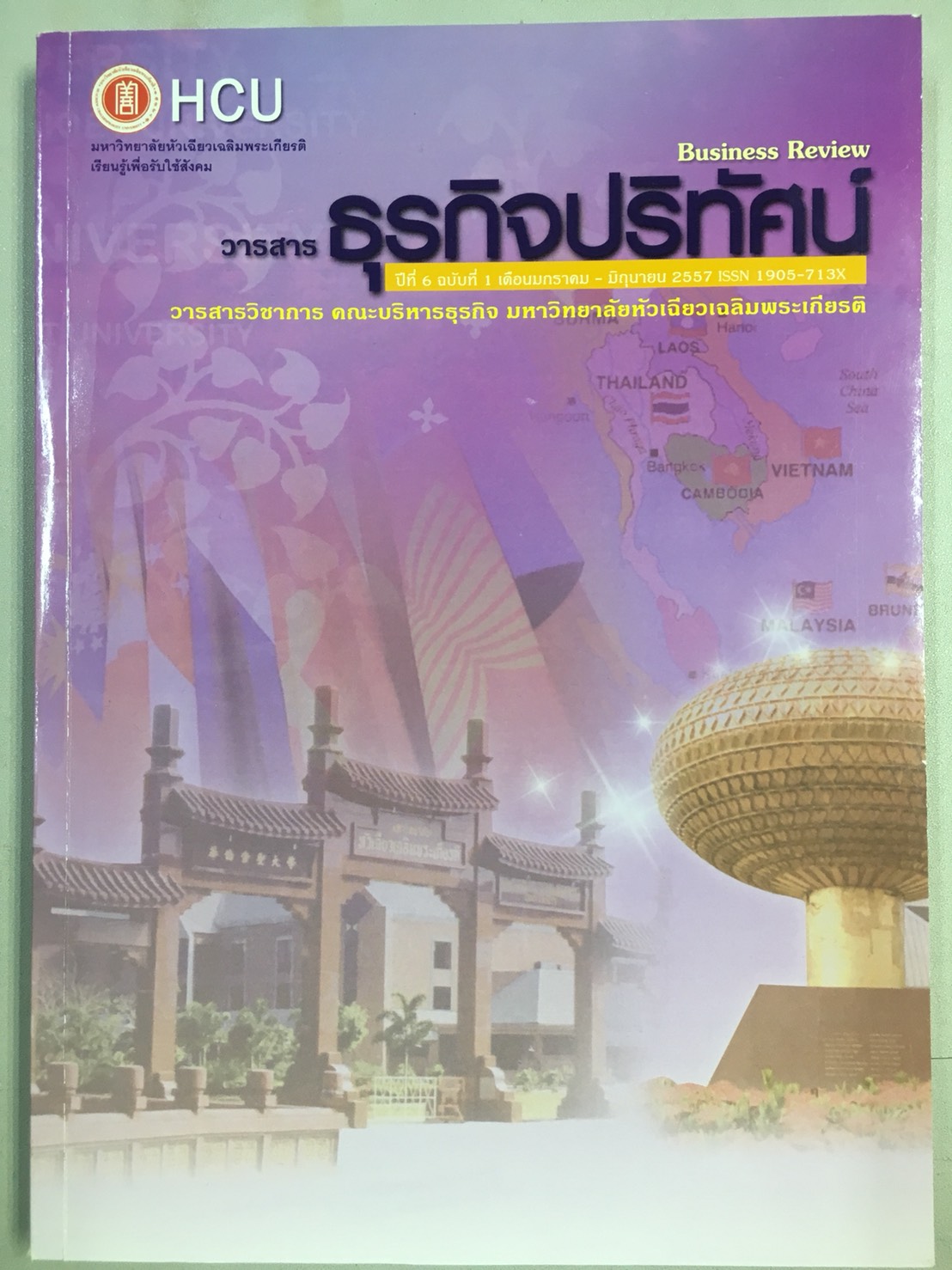
ดาวน์โหลด
เผยแพร่แล้ว
รูปแบบการอ้างอิง
ฉบับ
ประเภทบทความ
สัญญาอนุญาต
บทความที่ได้รับการตีพิมพ์จะเป็นลิขสิทธิ์ของวารสารธุรกิจปริทัศน์
ข้อความที่ปรากฏในบทความแต่ละเรื่องในวารสารวิชาการเล่มนี้เป็นความคิดเห็นส่วนตัวของผู้เขียนแต่ละท่านไม่เกี่ยวข้องกับมหาวิทยาลัยหัวเฉียวเฉลิมพระเกียรติ และคณาจารย์ท่านอื่น ๆ ในมหาวิทยาลัยฯ แต่อย่างใด ความรับผิดชอบองค์ประกอบทั้งหมดของบทความแต่ละเรื่องเป็นของผู้เขียนแต่ละท่าน หากมีความผิดพลาดใด ๆ ผู้เขียนแต่ละท่านจะรับผิดชอบบทความของตนเองแต่ผู้เดียว


