
Factors Affecting the Efficiency of Temporary Prisons in Region 1 for the Rehabilitation of Inmates
Keywords:
Temporary Prison, Temporary Prison Efficiency, Prisoner RehabilitationAbstract
The objectives of this survey research were: 1) to examine the selection of convicted prisoners and the classification of prisoner characteristics by the officers and their impact on the efficiency of temporary prisons within Correctional Region 1, Department of Corrections; 2) to investigate the influence of activity models in temporary prisons on prison efficiency and the rehabilitation of prisoners; and 3) to study social acceptance among service users regarding the rehabilitation of prisoners across 11 temporary prisons in Correctional Region 1. This study employed a mixed-methods approach, integrating both quantitative and qualitative research. The sample consisted of 82 officers, 254 prisoners, and 78 service users.
The research findings are as follows:
1) Officer Group: The affiliated agency showed statistical significance regarding the selection of convicted prisoners and temporary prison efficiency. The level of prisoner selection and classification served as statistically significant predictors for estimating temporary prison efficiency (at the 0.001 level). Additionally, prisoner classification significantly predicted prisoner rehabilitation (at the 0.001 level). Consistent with qualitative results, temporary prisons should be developed as an "Integrated Prisoner Development Innovation Model" to enhance efficiency as branch prisons. This model emphasizes vocational training alongside security through two approaches: 1) developing specific laws and regulations for temporary prisons, and 2) implementing "High-Tech Control Measures". The Department of Corrections must prioritize selection and classification to improve both prison efficiency and prisoner rehabilitation.
2) Prisoner Group: Variables including place of detention, age, status, residency prior to incarceration, pre-incarceration income, frequency of imprisonment, prisoner class, disciplinary history, and self-sufficiency confidence significantly influenced activity models, prison efficiency, and rehabilitation (at the 0.05, 0.01, and 0.001 levels). Activity models and prison efficiency were found to be significant predictors of prisoner rehabilitation in terms of adaptation, intention, and commitment (at the 0.001 level). Qualitative data indicated that activity models in temporary prisons are beneficial projects that provide legitimate career opportunities for the future. Prisoners reported feeling a sense of freedom, positive emotional behavioral changes, and increased responsibility. Furthermore, service users expressed high confidence in the efficiency and rigor of the officer's prisoner selection system regarding safety.
3) Service User Group: Regarding social acceptance of prisoner rehabilitation, it was found that users were most satisfied with beverage services. Key satisfaction factors included polite service, product impression, and hospitality. Users highlighted that utilizing these services represents giving prisoners a second chance, resulting in high overall satisfaction.
References
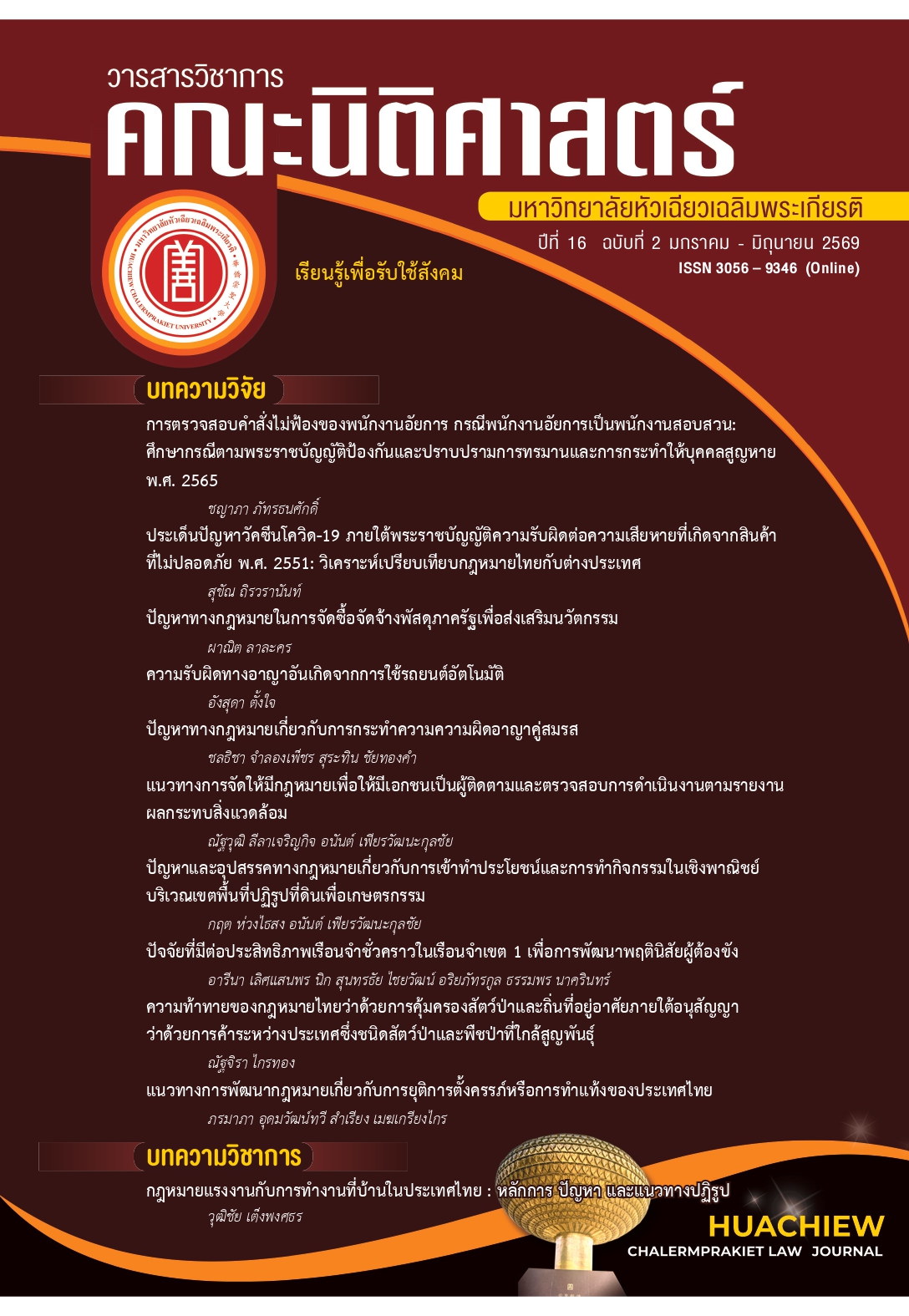
กรมราชทัณฑ์, คู่มือการจำแนกลักษณะผู้ต้องขัง (Handbook of Prisoner Classification) : บทที่ 5 การจำแนกลักษณะผู้ต้องขังเพื่อคัดเลือกไปประจำอยู่ทัณฑสถานเปิดและเรือนจำชั่วคราว (นนทบุรี: ส่วนจำแนกลักษณะผู้ต้องขัง สำนักทัณฑปฏิบัติ, 2566).
กฤตภาคิน มิ่งโสภา, “ แรงจูงใจที่ส่งผลต่อประสิทธิภาพการปฏิบัติงาน” (2564) 23:2 วารสารวิทยาการจัดการปริทัศน์.
เดือนงาม สุขชวลิต และคณะ, กำลังใจ เรือนจำภายใต้ศูนย์เรียนรู้เศรฐกิจพอเพียง : คนพอเพียง โครงการกำลังใจกรมราชทัณฑ์ กลุ่มงานโครงการใน พระดำริฯ และส่งเสริมการเกษตร (กรุงเทพฯ: สำนักพิมพ์จุฬาลงกรณ์มหาวิทยาลัย, 2568).
ธันยนันท์ ทองบุญตา, “ เพิ่มประสิทธิภาพการทำงานด้วยการเสริมแรงทางลบ” (2566) 5:3 วารสารมนุษยศาสตร์และสังคมศาสตร์ มหาวิทยาลัยราชพฤกษ์.
เสาวคนธ์ เจษฎารักษ์และคณะ, การศึกษาการเพิ่มคุณค่าผู้ต้องขังและผู้พ้นโทษภายใต้แบรนด์ผลิตผลคนดี (นนทบุรี: กรมราชทัณฑ์ กระทรวงยุติรรม, 2561).
อัจฉรียา ชุตินันทน์, อาชญาวิทยาและทัณฑวิทยา (กรุงเทพฯ: สำนักพิมพ์วิญญูชน, 2561).
องค์กรการปฏิรูปการลงโทษสากล (Penal Reform International – PRI), คู่มือฉบับย่อสำหรับข้อกำหนดมาตรฐานขั้นต่ำแห่งสหประชาชาติว่าด้วยการปฏิบัติต่อผู้ต้องขังฉบับปรับปรุง (ข้อกำหนดแมนเดลา) (กรุงเทพฯ : องค์กรการปฏิรูปการลงโทษสากล, 2559).
UNODC, Introductory Handbook on prevention of recidivism and social reintegration of offenders (Criminal Justice Handbook Series) (United Nation: Vienna, 2012).
Downloads
Published
How to Cite
Issue
Section
License
Copyright (c) 2026 Huachiew Chalermprakiet Law Journal

This work is licensed under a Creative Commons Attribution-NonCommercial-NoDerivatives 4.0 International License.
บทความหรือข้อความคิดเห็นใด ๆ ที่ปรากฏในวารสารฉบับนี้เป็นวรรณกรรมของผู้เขียนโดยเฉพาะ คณะนิติศาสตร์มหาวิทยาลัยหัวเฉียวเฉลิมพระเกียรติ และกองบรรณาธิการไม่มีส่วนรับผิดชอบหรือไม่จำเป็นต้องเห็นด้วยกับข้อคิดเห็นนั้น แต่ประการใด




