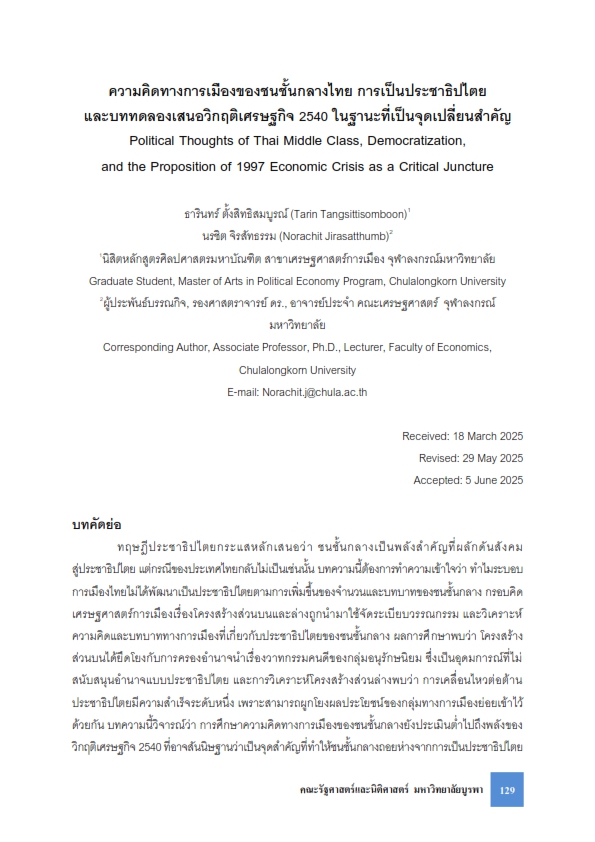
Political Thoughts of Thai Middle Class, Democratization, and the Proposition of 1997 Economic Crisis as a Critical Juncture
Keywords:
democratization, middle class, critical juncture, 1997 economic crisisAbstract
Mainstream democratic theories argue that the middle class is a significant force influencing democratic society. But this is not the case for Thailand. This paper aims to make understanding the reason that Thai political regime has not developed into democracy despite the increasing number and role of the middle class. The political economy framework of superstructure and substructure was employed to organize the literature and analyze political thoughts and roles of the Thai middle class. The results revealed that the superstructure was linked to the hegemony of the “good-man” discourse promoted by conservative group, which did not support democratic power. Additionally, the analysis of the substructure showed that undemocratic movements achieved some success because they were able to align different interests among various sub-political groups. This paper critiques previous studies on middle-class political thoughts for underestimating the significance of the 1997 economic crisis, which may have been hypothesized as a critical juncture shifting the middle class away from democratization.
References
ภาษาไทย
กนกรัตน์ เลิศชูสกุล. (2560). พัฒนาการและพลวัตของขบวนการต่อต้านทักษิณ: จากขบวนการเสรีนิยมอันหลากหลายสู่ขบวนการอนุรักษนิยมเข้มข้น. สํานักงานกองทุนสนับสนุนการวิจัย.
กฤษณา ทองใบใหญ่ (2563). ชนชั้นกลาง นโยบายประชานิยม และการกลายเป็นประชาธิปไตย: แบบจำลองทางทฤษฎี. วิทยานิพนธ์ศิลปศาสตรมหาบัณทิต, คณะเศรษฐศาสตร์, จุฬาลงกรณ์มหาวิทยาลัย.
กาญจนา แก้วเทพ. (2551). สายธารนักคิดทฤษฎีเศรษฐศาสตร์การเมืองกับการสื่อสารศึกษา. ภาพพิมพ์.
กาญจนาพร เชยอักษร. (2565). “คนดี” และ "ความดี" ในทางการเมืองไทย: การต่อสู้ทางความหมายทางการเมืองระหว่าง 2549 – 2557. วิทยานิพนธ์รัฐศาสตรมหาบัณฑิต, คณะรัฐศาสตร์, จุฬาลงกรณ์มหาวิทยาลัย.
ณรงค์ เพ็ชรประเสริฐ. (2548). คนคอปกขาวในระบบเศรษฐกิจการเมืองไทย, ใน ณรงค์ เพ็ชรประเสริฐ (บรรณาธิการ). คนชั้นกลางในกระแสทุนนิยม. เอดิสันเพรส,.
ธัญณ์ณภัทร์ เจริญพานิช. (2566). มหาบุรุษแห่งชุมชนศีลธรรม : วัฒนธรรมอำนาจนิยมและอารมณ์เชิงวัฒนธรรมไทย. สมมติ.
ธร ปิตดิล และชานนทร์ เตชะสนุทระวัฒน์. (2560). การเติบโตและการหันหลังให้กลับประชาธิปไตยของคนชั้นกลางระดับบนในประเทศไทย. รายงานวิจัยเสนอสํานักงานกองทุนสนับสนุนการวิจัย.
นฤมล นิ่มนวล (2559). การเมืองในแบบเรียนชั้นมัธยมศึกษาของไทย ระหว่างปี พ.ศ. 2503-2551. วิทยานิพนธ์รัฐศาสตรมหาบัณฑิต, คณะรัฐศาสตร์, มหาวิทยาลัยธรรมศาสตร์.
ประจักษ์ ก้องกีรติ (2560). ธรรมาธรรมะสงคราม ความรุนแรงเชิงศีลธรรม และอนารยะขัดขืน: การเมือง อัตลักษณ์ของ “คนดี” ในวิกฤต การเมืองไทย (2556-2557): รายงานวิจัยฉบับสมบูรณ์. สำนักงานคณะกรรมการส่งเสริมวิทยาศาสตร์ วิจัยและนวัตกรรม.
ประจักษ์ ก้องกีรติ. (2558). ประชาธิปไตยในยุคเปลี่ยนผ่าน. ฟ้าเดียวกัน.
ปรีชา เปี่ยมพงศ์สานต์. (2536). ทฤษฎีชนชั้นกลาง. ใน สังศิต พิริยะรังสรรค์ และผาสุก พงษ์ไพจิตร (บรรณาธิการ), ชนชั้นกลางบนกระแสประชาธิปไตยไทย. ศูนย์ศึกษา เศรษฐศาสตร์การเมือง จุฬาลงกรณ์มหาวิทยาลัย.
ผาสุก พงษ์ไพจิตร. (2550). รัฐประหาร – ประชาธิปไตยกับเศรษฐศาสตร์การเมืองว่าด้วยประชานิยม. ใน ณรงค์ เพ็ชรประเสริฐ (บรรณาธิการ), ก้าว (ไม่) พ้นประชานิยม: แสวงหาประชาธิปไตย. จุฬาลงกรณ์มหาวิทยาลัย.
ผาสุก พงษ์ไพจิตร และคริส เบเคอร์. (2546). เศรษฐกิจการเมืองไทยสมัยกรุงเทพฯ. ซิลค์เวอร์ม บุคส์.
ผาสุก พงษ์ไพจิตร. (2536). บทบาทชนชั้นกลางในเศรษฐกิจและการเมืองของประเทศเอเชียนิกส์และไทย: ข้อสังเกตเบื้องต้น. ใน สังศิต พิริยะรังสรรค์ และผาสุก พงษ์ไพจิตร (บรรณาธิการ), ชนชั้นกลางบนกระแสประชาธิปไตยไทย. ศูนย์ศึกษาเศรษฐศาสตร์การเมือง จุฬาลงกรณ์มหาวิทยาลัย.
พิทยา ว่องสกุล. (2551). หลักคิดและบทเรียนยุทธศาสตร์ประชาชน. ชุมศิลป์ธรรมดา.
ภูริ ฟูวงศ์เจริญ. (2563). การเมืองการปกครองไทย: พัฒนาการทางประวัติศาสตร์ (พ.ศ. 2475 - 2540). คณะรัฐศาสตร์ มหาวิทยาลัยธรรมศาสตร์.
มูนีเราะฮ์ ยีดำ. (2565). ชนชั้นกลางและประชาธิปไตย: มุมมองเชิงเปรียบเทียบประเทศไทยและฟิลิปปินส์. วิทยานิพนธ์รัฐศาสตรมหาบัณฑิต, คณะรัฐศาสตร์, จุฬาลงกรณ์มหาวิทยาลัย.
วรวิทย์ เจริญเลิศ. (2536). ชนชั้นกลางกับเหตุการณ์พฤษภาประชาคม : ฝ่ายประชาธิปไตยหรือรัฐปฏิการ? ใน สังศิต พิริยะรังสรรค์ และ ผาสุก พงษ์ไพจิตร (บรรณาธิการ), ชนชั้นกลางบนกระแสประชาธิปไตยไทย. ศูนย์ศึกษาเศรษฐศาสตรการเมือง จุฬาลงกรณ์มหาวิทยาลัย.
วสุชน รักษ์ประชาไท (2563). พัฒนาการกลุ่มอนุรักษนิยมสุดขั้วในขบวนการต่อต้านทักษิณ. วิทยานิพนธ์รัฐศาสตรมหาบัณฑิต, คณะรัฐศาสตร์, จุฬาลงกรณ์มหาวิทยาลัย.
สังศิต พิริยะรังสรรค์ และผาสุก พงษ์ไพจิตร, บรรณาธิการ. (2536). ชนชั้นกลางบนกระแส ประชาธิปไตยไทย (พิมพ์ครั้งที่ 2). มูลนิธิฟรีดริชเอแบรท.
อภิชาต สถิตนิรามัย (2556). รัฐไทยกับการปฏิรูปเศรษฐกิจ. ฟ้าเดียวกัน.
อภิชาต สถิตนิรามัย, ยุกติ มุกดาวิจิตร และ นิติ ภวัครพันธุ์. (2556). ทบทวนภูมิทัศน์การเมืองไทย.
สำนักงานกองทุนสนับสนุนการสร้างเสริมสุขภาพ (สสส.)
อภิชาต สถิตนิรามัย และ อนุสรณ์ อุณโณ (2560). “การเมืองคนดี”: ความคิด ปฏิบัติการ และอัต
ลักษณ์ทางการเมืองของผู้สนับสนุน “ขบวนการเปลี่ยนแปลงประเทศไทย”. สำนักงานกองทุนสนับสนุนการวิจัย.
อัสมา หวังกุหลำ. (2553). บทบาททางการเมืองของชนชั้นกลางไทยในขบวนการพันธมิตรประชาชนเพื่อประชาธิปไตยภายใต้ระบอบทักษิณ. วิทยานิพนธ์รัฐศาสตรมหาบัณฑิต, คณะรัฐศาสตร์, จุฬาลงกรณ์มหาวิทยาลัย.
เอนก เหล่าธรรมทัศน์. (2536). ม็อบมือถือ : ชนชั้นกลางและนักธุรกิจกับพัฒนาการประชาธิปไตย. มติชน.
เอนก เหล่าธรรมทัศน์. (2552). สองนคราประชาธิปไตย. คบไฟ.
ภาษาอังกฤษ
Acemoglu, D., & Robinson, J. A. (2006). Economic origins of dictatorship and democracy. Cambridge University Press.
Acemoglu, D., Naidu, S., Restrepo, P., & Robinson, J. A. (2019). Democracy does cause growth. Journal of Political Economy, 127(1), 47-100.
Althusser, L. (2014[1995]). Ideology and ideological state apparatuses (Goshgarian, G.M.,Trans). Verso.
Barro, R. J. (1996). Determinants of economic growth: A cross-country empirical study. NBER Working Paper No. w5698.
Bellin, E. (2000). Contingent democrats: industrialists, labor, and democratization in late-developing countries. World Politics, 52(2), 175-205.
Chen, J. (2013). A middle class without democracy: Economic growth and the prospect for democratization in China. Oxford University Press.
Fukuyama, F. (2012). The end of history and the last man. Penguin Books.
Grabb, E. G. (1980) Marxist categories and theories of class: The case of working-class authoritarianism. The Pacific Sociological Review, 23(4), 359-376
Lipset, S. M. (1960). Political man; the social bases of politics. Doubleday.
Moore, B., Jr. (1966). Social origins of dictatorship and democracy: Lord and peasant in the making of the modern world. Beacon Press.
Norton, E. (2012). Illiberal democrats versus undemocratic liberals: The struggle over the
future of Thailand’s fragile democracy. Asian Journal of Political Science, 20(1), 46–69. https://doi.org/10.1080/02185377.2012.673860
Plümper, T., & Martin, C. W. (2003). Democracy, government spending, and economic growth: A Political-Economic Explanation of the Barro-Effect, Public Choice, 117(1/2), 27-50.
Schwarzmentel, J. (2015) The routledge guidebook to Gramsci’s prison notebook. Routledge.
Sidel, J. T. (2008). Social origins of dictatorship and democracy revisited: Colonial state and Chinese immigrant in the making of modern Southeast Asia. Comparative Politics, 40(2), 127–147.
So, A.Y., & Xianjia, S. (2012). New middle class politics in China: The making of a quiet democratization? In Joseph Y.S. Cheng (ed.). Whither China’s democracy? Democratization in China since the Tiananmen incident. City University of Hong Kong Press.
Walker, A. (2012). Thailand's political peasants: power in the modern rural economy. University of Wisconsin Press.