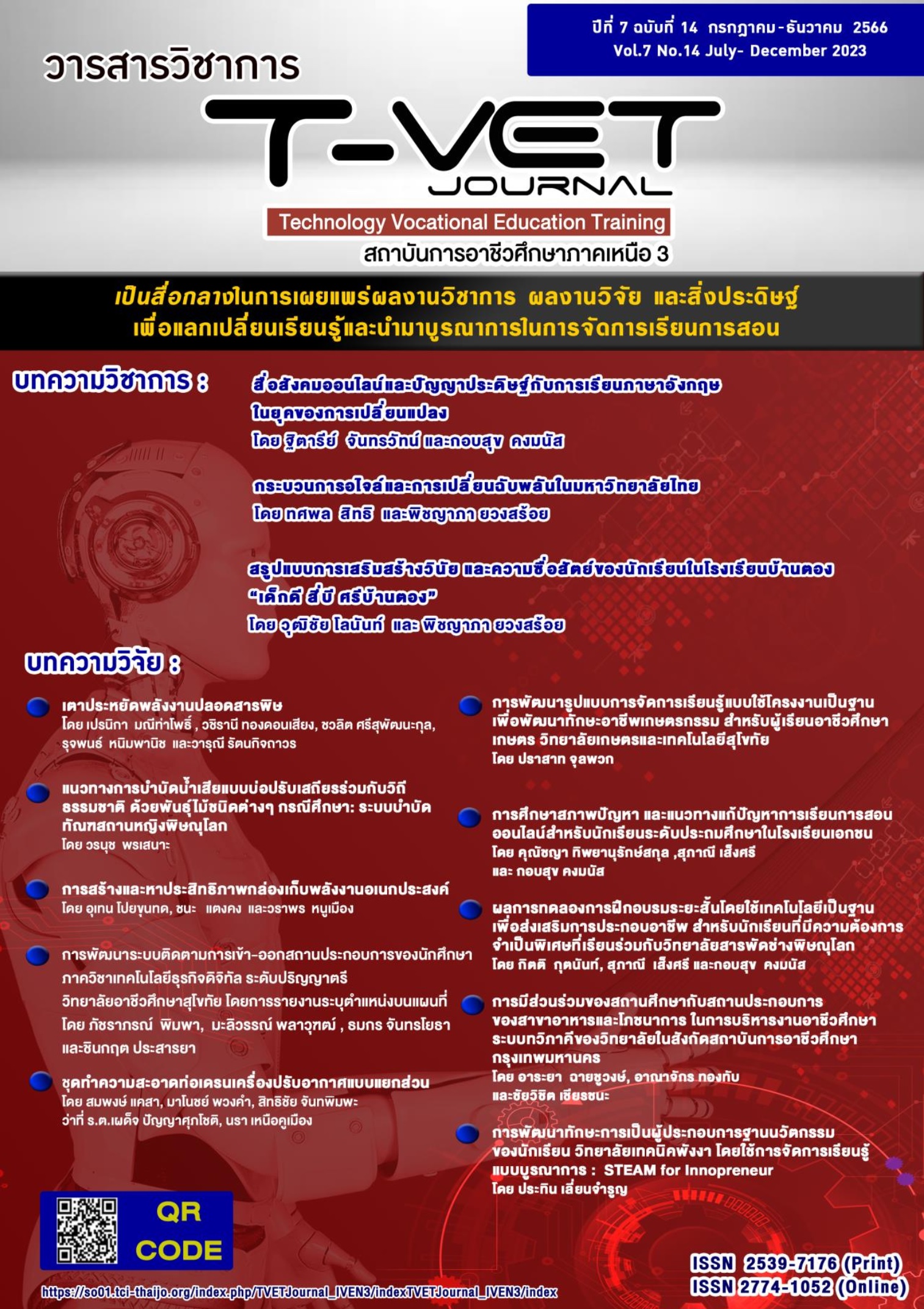
Discipline enhancing model and honesty of students in Ban Tong School “Dek Dee, Si B, Sri Ban Tong” DISCIPLINE ENHANCING MODEL AND HONESTY OF STUDENTS IN BAN TONG SCHOOL "DEK DEE, SI B, SRI BAN TONG"
Article Sidebar
Main Article Content
Abstract
Management of education in Thailand since the beginning of systematic education until the present time can be seen that Education plans and educational programs at different levels, each of which are issued, have the aim of developing Thai children. to be happy and well-being with a sense of Thainess Self-reliance, creative thinking, adapting in society, emphasizing character, diligence, patience, honesty, economical and discipline. Educational management at each level is therefore a process that It is important to develop quality people. That is to say, knowledge and morality.” The model for enhancing the discipline and honesty of students in Ban Tong School, “Dek Sibee Sribantong” can instill students in the moral and ethical aspects of thinking process skills with discipline. Honesty, Sufficiency, Responsibility sweet talk Make yourself useful and humble. Always respect the elders This is to build confidence in the school to be accepted by parents to send their children to study at the school more and more. And it is a development that hardly uses the development budget. but all practitioners must cooperate Strive to develop their students to the best of their ability and practice consistently. that is, not strict, but not indulging, always emphasize and repeat students Including helping to reinforce positively for students who do good deeds that are evident, encouraged and praised. Create the right attitude to practice in society, create good people and smart people for the country to continue.
Article Details
References
สานักวิชาการและมาตรฐานการศึกษา สานักงานคณะกรรมการการศึกษาขั้นพื้นฐาน กระทรวงศึกษาธิการ. พิมพ์ครั้งที่ 2. (2553). แนวทางการจัดกิจกรรมพัฒนาผู้เรียน ตามหลักสูตรแกนกลางการศึกษาขั้น พื้นฐานพุทธศักราช 2551. กรุงเทพมหานคร: โรงพิมพ์ชุมนุมสหกรณ์การเกษตรแห่งประเทศไทย จากัด
มูลนิธิสยามกัมมาจล. พิมพ์ครั้งที่ 3. (2556). ปรัชญาของเศรษฐกิจพอเพียง: จากหลักคิดสู่วถี ปฏิบัติ. กรุงเทพมหานคร: บริษัทอมรินทร์พริ้นติ้งแอนด์พับลิชชิ่ง จากัด (มหาชน).
นางสาวกรวิภา งามวุฒิวงศ์. (2559). ปัจจัยที่ส่งผลต่อการทำงานเป็นทีม ภายในสำนัก อำนวยการ สำนักงานปลัดกระทรวงศึกษาธิการ. (วิทยานิพนธ์ปริญญามหาบัณฑิต มหาวิทยาลัยธรรมศาสตร์).
ปัจจัยสู่ความสำเร็จในการทำงานเป็นทีม. (มปป). สืบค้นจาก https://ajsuthasinee.files.wordpress.com
กรรณิการ์ ทรัพย์สิน. (มปป). PDCA. สืบค้นจาก https://sites.google.com/site/narubadininterschool/
phl-ngan/pdca-plan-do-check-act
พระธรรมกิตติวงศ์. สืบค้นเมื่อ 25 มีนาคม 2562, สืบค้นจากวิกิพีเดีย https://th.wikipedia.org/wiki/สังคหวัตถุ_4
พระบรมราโชบายด้านการศึกษา ของสมเด็จพระเจ้าอยู่หัวรัชกาลที่ 10s. (มปป). สืบค้นจาก
http://nv.ac.th/site/?p=1878
วิภาส ทองสุทธิ์. (2560). รูปแบบการเสริมสร้างวินัยนักเรียนในสถานศึกษาขั้นพื้นฐาน สํานักงานเขตพื้นที่การศึกษาประถมศึกษา จังหวัดปทุมธานี. (วิทยานิพนธ์ปริญญา มหาบัณฑิต มหาวิทยาลัยศรีนครินทรวิโรฒ).
