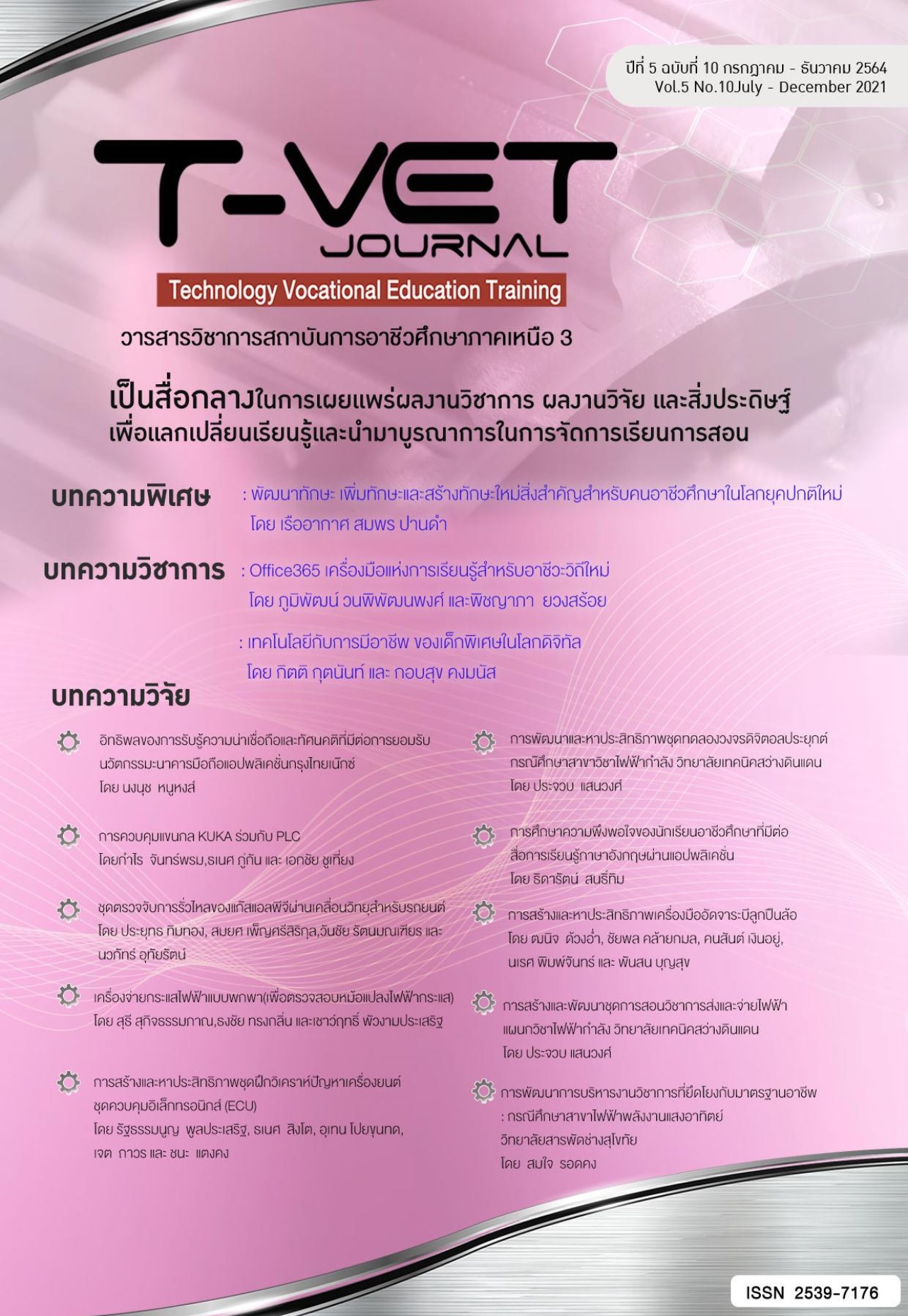
Reskilling upskilling and new skill the vocational manpower in the era of the New Normal RESKILLING UPSKILLING AND NEW SKILL THE VOCATIONAL MANPOWER IN THE ERA OF THE NEW NORMAL
Article Sidebar
Main Article Content
Abstract
This article presents information, concepts, and development of vocational workforce skills. (Reskill/Upskill/Newskill) to prepare for future work after the COVID-19 crisis It also shows the importance of developing and upgrading skills for those affected by the COVID-19 crisis. Ready to return to the job market or start a new career Build skills for unemployed / repatriated workers / self-employed entrepreneurs to be able to create jobs Build your own career as well as adding advanced skills and modern work to the workforce in SMEs and large industrial sectors According to the concept Lifelong Learning
Office of Vocational Education Commission Play an important role in the production process and develop quality manpower. To enable workers of all ages to access learning resources and develop skills to prepare for change and meet the needs of the labor market in the future including the development of the country according to the concept of skills development and life-long learning to update “A new set of skills” that can work with robots and automation in order to adapt to work for the future world In order to increase the country's competitiveness, in 2022, the focus will be on "upgrading the quality of holistic vocational education by using space" in order to respond to rapidly changing demand. On the responsibility of the country to develop vocational education and vocational training to be of quality and standard.
Article Details
References
เอกสารอ้างอิง
ดร. เสาวณี จันทะพงษ์ ฝ่ายเศรษฐกิจมหภาค และ นายกัมพล พรพัฒนไพศาลกุล ฝ่ายนโยบายโครงสร้างเศรษฐกิจประจำธนาคารแห่งประเทศไทย. “การยกระดับทักษะแรงงานไทย: โจทย์ใหญ่ในยุคเทคโนโลยีเปลี่ยนโลก”. (ออนไลน์). เข้าถึงได้จาก : https://www.bot.or.th, (1 ตุลาคม 2564).
ไทยพับลิก้า. “Lifelong Learning สร้างทักษะรับ Digital Future (ตอน 1): กำหนดเส้นทางอาชีพ”. (ออนไลน์). เข้าถึงได้จาก : https://thaipublica.org/2018/05/lifelong-learning-digital-disruption-reskill/ , (2 ตุลาคม 2564).
Praornpit Katchwattana. ระดมสมองยกระดับ ‘ทักษะแรงงานไทย’ โจทย์ใหญ่ที่ต้องรับมือ ในยุคเทคโนโลยีเปลี่ยนโลก. (ออนไลน์). เข้าถึงได้จาก https://www.salika.co/2019/04/21/reskill-upskill-worker-disrupted-technology/, (1 ตุลาคม 2564).
สมพร ปานดำ. (2564). พัฒนาและยกระดับทักษะอาชีวศึกษาไทยในยุคเทคโนโลยีเปลี่ยนโลก. วารสารรัฏฐาภิรักษ์วิทยาลัยป้องกันราชอาณาจักร. 63(1), 124-133.
Praornpit Katchwattana. ระดมสมองยกระดับ ‘ทักษะแรงงานไทย’ โจทย์ใหญ่ที่ต้องรับมือ ในยุคเทคโนโลยีเปลี่ยนโลก. (ออนไลน์). เข้าถึงได้จาก https://www.salika.co/2019/04/21/reskill-upskill-worker-disrupted-technology/, (10 ตุลาคม 2564).
บริษัท พีทีที โกลบอล เคมิคอล จำกัด (มหาชน). รับมือโลกหลัง COVID-19 กับ Reskill & Upskill ปรับวิธีการทำงาน. (ออนไลน์). เข้าถึงได้จาก https://www.pttgcgroup.com/th/updates/feature-stories/1448, (20 ตุลาคม 2564).
World Economic Forum (WEF), (2020), The Future of Jobs Report 2020 and Global Competitiveness Report 2020 (CGI)
เสาวณี จันทะพงษ์์ และคณะ. Upskill & Reskill: วัคซีนสร้างภูมิคุ้มกันให้ “แรงงานชนะ” ในโลกทำงานยุคดิจิทัล. (ออนไลน์). เข้าถึงได้จาก https://www.bot.or.th/Thai/ResearchAndPublications/articles /Pages/Article_2Mar2021.aspx, (21 ตุลาคม 2564).
เสาวณี จันทะพงษ์์ และคณะ. การสำรวจวัดทักษะแรงงานผู้ใหญ่ (PIAAC Programme for the International Assessment of Adult Competencies) เป็นแบบทดสอบที่ใช้ในกลุ่ม OECD สำรวจมากกว่า 40 ประเทศทั่วโลก. (ออนไลน์). เข้าถึงได้จากhttps://www.bot.or.th/Thai/ResearchAnd Publications/articles /Pages/Article_2Mar2021.aspx,(23 ตุลาคม 2564).
Suthasinee Lieopairoj. Reskilling, Upskilling ความท้าทายที่ทวีความจำเป็นสำหรับมนุษย์ในโลกอนาคต (ออนไลน์). เข้าถึงได้จาก https://siamchamnankit.co.th/reskilling-upskilling , (25 ตุลาคม 2564).
สำนักงานคณะกรรมการการอาชีวศึกษา. (2564). ยกระดับคุณภาพการจัดการอาชีวศึกษา แบบองค์รวมโดยใช้พื้นที่เป็นฐาน. เอกสารประกอบการประชุมสัมมนา ยกระดับคุณภาพการจัดการอาชีวศึกษา แบบองค์รวมโดยใช้พื้นที่เป็นฐาน ของสำนักงานคณะกรรมการการอาชีวศึกษา ปีงบประมาณ พ.ศ.2565 , (11พฤศจิกายน 2564).
