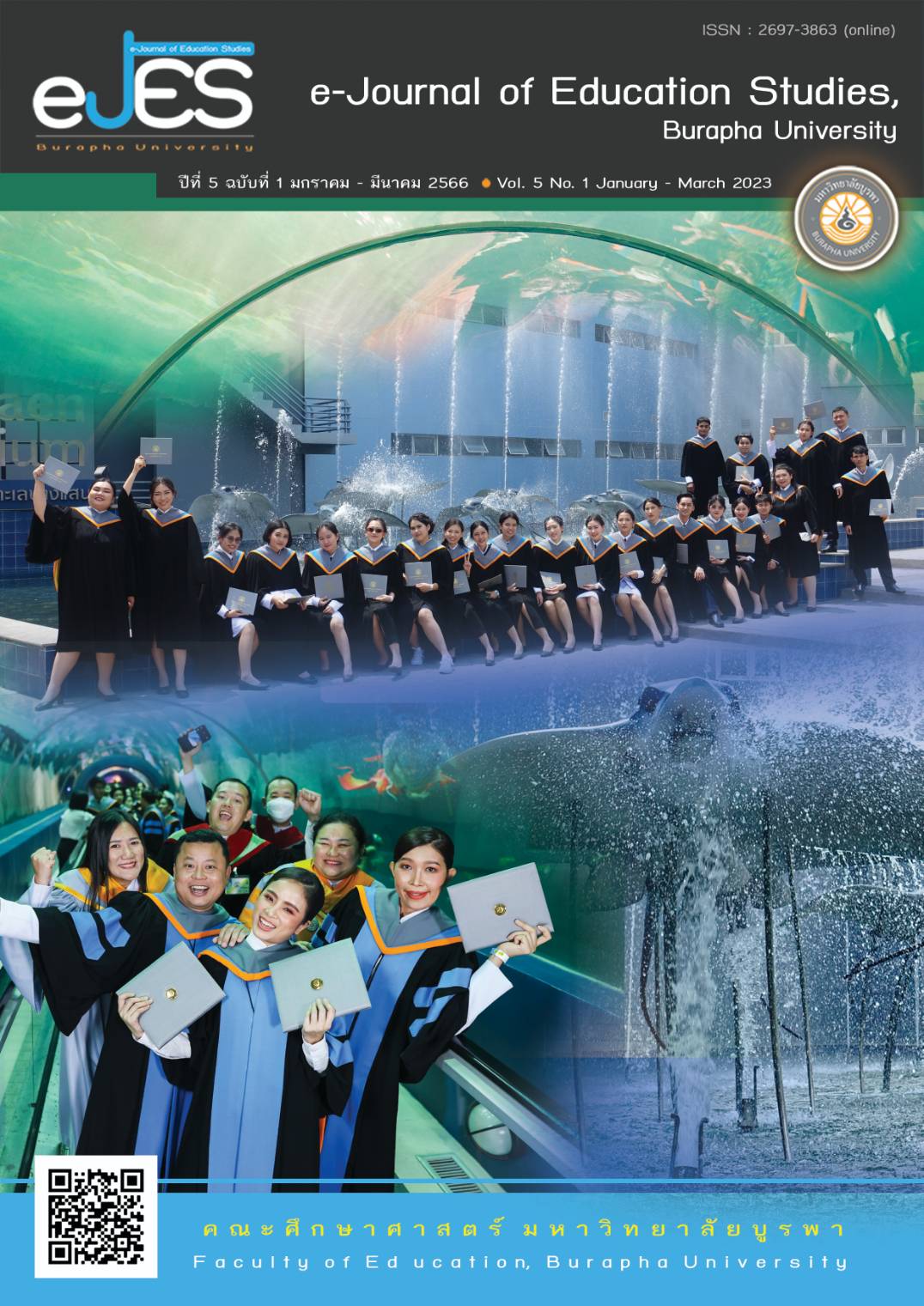
มุมมองของผู้เชี่ยวชาญต่อโครงสร้างหลักสูตรและรายวิชาของหลักสูตรปรัชญาดุษฎีบัณฑิต สาขาวิชาการพัฒนาทรัพยากรมนุษย์ (หลักสูตรปรับปรุง 2566) คณะศึกษาศาสตร์ มหาวิทยาลัยบูรพา
Article Sidebar
Main Article Content
บทคัดย่อ
Article Details

เอกสารอ้างอิง
คณะกรรมการผู้สูงอายุแห่งชาติกองทุนผู้สูงอายุ. (2562). รายงานสถานการณ์ผู้สูงอายุไทย พ.ศ. 2561. นครปฐม: พริ้นเทอรี่.
จำเนียร จวงตระกูล. (2553). การวิจัยเชิงคุณภาพ: เครื่องมือสร้างองค์ความรู้เพื่อการพัฒนาประเทศ. กรุงเทพฯ: ศูนย์กฎหมายธุรกิจอินเตอร์เนชั่นแนล.
ณัฏฐ์พัชร์ ลาภบำรุงวงศ์. (2019). การประยุกต์ทฤษฎีแรงจูงใจในการปฏิบัติงาน. วารสารวไลยอลงกรณ์ปริทัศน์ (มนุษยศาสตร์และสังคมศาสตร์), 9(2), พฤษภาคม-สิงหาคม 2562. เข้าถึงจาก https://so06.tci-thaijo.org/index.php/var/article/view/213509
ปกิต มูลเพ็ญ และอติพร เกิดเรือง. (2564). ประสิทธิผลการดำเนินงานเพื่อเป็นองค์การสมรรถนะสูงของกองบังคับการสายตรวจและปฏิบัติการพิเศษ กองบัญชาการตำรวจนครบาล. วารสาร มจร อุบลปริทรรศน์, 6(2), 49-62.
ประกาศกระทรวงศึกษาธิการ เรื่อง เกณฑ์มาตรฐานหลักสูตรระดับบัณฑิตศึกษา พ.ศ. 2558 (2558, 13 พฤศจิกายน). ราชกิจจานุเบกษา.เล่ม 132 ตอนพิเศษ 295 ง. หน้า 12-14.
ประไพศรี ธรรมวิริยะวงศ์. (2564). แนวทางการสร้างนวัตกรรมในงานบริหารทรัพยากรมนุษย์. วารสารวิทยาลัยดุสิตธานี, 15(1), 516-528.
ปัณฎารีย์ กิ่งวงศา, ธีรวัช บุณยโสภณ, สุภัททา ปิณฑะแพทย์, และชุลีวรรณ โชติวงษ์. (2564). รูปแบบศักยภาพผู้บริหารทรัพยากรมนุษย์ในการเป็นหุ้นส่วนทางธุรกิจ. Journal of Social Science and Buddhistic Anthropology, 6(1), 227-251.
พงศกร ศรีรงค์ทอง. (2561). การพัฒนาทรัพยากรมนุษย์ องค์การแห่งการเรียนรู้และการจัดการความรู้. วารสารวจันทรเกษมสาร, 24(47), 1-16.
ศุภวิทย์ ภาษิตนิรันดร์ และ ญาณี โชคสมงาม. (2564). “KM KNOWLEDGE MANAGEMENT”. กรุงเทพฯ: วช.
สถาบัน People Development Center. (2565). เทคนิคการสอนงานให้ได้ทั้งใจได้ทั้งงาน สำหรับผู้บริหารและหัวหน้างาน. เข้าถึงจาก https://bit.ly/3NAntEA
สุธาสินี โพธิจันทร์. (2558). “สถิติ” ศาสตร์พื้นฐานของ การบริหารคุณภาพ. เข้าถึง 30 มิถุนายน พ.ศ. 2565. เข้าถึงจาก https://www.ftpi.or.th/2015/2271
วัชรพล โพธิ์พูนศักดิ์. (2564). ภาวะผู้นำการเปลี่ยนแปลงที่ส่งผลต่อการเป็นองค์กรสมรรถนะสูงขององค์กรรัฐวิสาหกิจ. วารสารวิชาการมหาวิทยาลัยอีสเทิร์นเอเชีย, 11(2), 57-69.
วัชรินทร์ อินทพรหม. (2562). การวิเคราะห์และการนำเสนอผลการวิเคราะห์ข้อมูลเชิงคุณภาพ. Academic Journal Phranakhon Rajabhat University, 10(2), 314 - 333.
เอกสิทธิ์ สนามทอง. (2562). การพัฒนาทรัพยากรมนุษย์: แนวทางพัฒนาสู่ความสำเร็จขององค์การ. วารสารเกษมบัณฑิต, 20(1), 64-77.
สำนักงานสภาพัฒนาการเศรษฐกิจและสังคมแห่งชาติ. (2565). ร่างแผนพัฒนาเศรษฐกิจและสังคมแห่งชาติ ฉบับที่ 13 ฉบับนำเสนอต่อรัฐสภาเพื่อทราบ. เข้าถึงจาก https://www.nesdc.go.th/main.php?filename=plan13
สุจิตรา พงศ์พิศุทธิ์โสภา, โษฑศ์รัตต ธรรมบุษดี, และโรจลักษณ์ จักรไพวงศ์. (2561). การวิเคราะห์ด้านทรัพยากรมนุษย์: วิวัฒนาการ การปรับตัวขององค์กร บทเรียน และแนวโน้มในอนาคต. วารสารการพัฒนาทรัพยากรมนุษย์และองค์การ, 10(1), 126-162.
Central Intelligent Agency. (2019). East & Southeast Asia: Korea, Thailand: The World Factbook. Retrieved from https://www.cia.gov/library/publications/the-world-factbook/geos/th.html
