
Design and Development of Local Woven Fabrics to Promote Local Identity and Add Value to Cultural Products in Chiang Saen Community, Chiang Rai Province
Article Sidebar
Main Article Content
Abstract
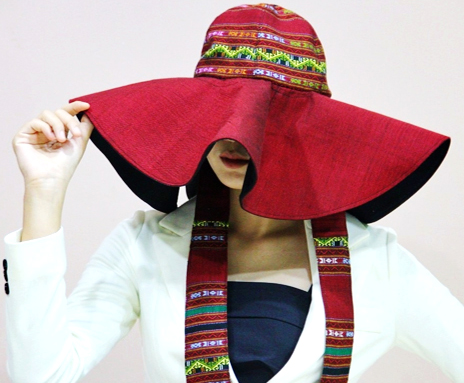
The cluster of Chiang Saen local woven fabrics of Wat Phra That Pha Ngao, Wiang Chiang Saen district, Chiang Rai province is an important learning center and selling headquarter of Chiang Saen woven fabrics. The fabrics have their identity with distinctive patterns but somewhat are unable to attract the target group of customers. This research aims to develop community products based on values and appraisal based on history, culture, and local identity through a participatory research approach.The processes include 1) conceptualization, design, and development of new bag products; 2) design and reinvention of bag products made of Chiang Saen woven fabrics; 3) creating sewing patterns and prototyping with a white cloth; 4) prototype production; and 5) promoting a variety of product processing skills which increase the value of Chiang Saen woven cloth. The project aims at launching new types of bag products with a higher value. The outcome is expected to penetrate the market and to attract contemporary target groups. Ultimately, the local products will promote Chiang Saen cultural tourism. The cluster of Chiang Saen local woven fabrics from Wat Phra That Pha Ngao take part in prototype selection and attend training sessions to enhance their bag-making skills in producing Chiang Saen woven fabrics products for sale. One piece of Chiang Saen woven fabrics can be processed into one collection of 5 bags, which increases the value of woven products by 70 percent. In conclusion, Chiang Saen woven fabric bag products have been new cultural items that support cultural tourism in Wiang Chiang Saen district, Chiang Rai province.
Article Details

This work is licensed under a Creative Commons Attribution-NonCommercial-NoDerivatives 4.0 International License.
Area Based Development Research Journal values copyright protection and licensing to safeguard author rights and facilitate the appropriate dissemination of research. Our policies ensure openness, accessibility, and attribution. Authors retain copyright ownership, and articles are published under a Creative Commons Attribution License (CC BY), allowing sharing, adaptation, and proper attribution. Authors have the freedom to publish under the CC BY license, granting broad reuse and distribution permissions. The journal supports posting articles on third-party repositories, adhering to institutional and funding restrictions. Author guidelines detail copyright and licensing requirements, empowering authors with knowledge about their rights and responsibilities. These policies cultivate an environment of collaboration, openness, and responsible sharing, benefiting authors and the research community while honoring intellectual property rights.
References
Deebunmee Na Chumpae, S., & Sodbhiban, P. (2012). Study vernacular materials four region of Thailand for use in furniture production (1st ed). Bangkok: Odian Store. (in Thai).
Jarungjitsuntorn, W. (2005). Theory and concept of design. Bangkok: APPA printing group company limited. (in Thai).
Pinkaeo, K. (2011). Creative economy. Cultural capital and business opportunity. Executive Journal, 31(1), 32-37. (in Thai).
TCDC. (2020). Trend 2021: Reform this moment. Retrieved September 1, 2020, from: https://web.tcdc.or.th/th/Publication/Detail/Trend-2021-Reform-this-Moment. (in Thai).
Wanichakorn, A. (2016). THAI wisdom knowledge: Designed and created the contemporary products. Institute of Culture and Arts Journal, 15(2), 22-28. (in Thai).
Yanyongkasemsuk, R. (2015). Concepts of class and capital of Pierre Bourdieu. Burapha Journal of Political Economy, 2(1), 29-44. (in Thai).
