
A Participatory Model for Enhancing Community Health Literacy to Support New Normal Adaptation among the Pong Sumi Ethnic Group in Chiang Mai Province, Thailand
Article Sidebar
Main Article Content
Abstract
Background
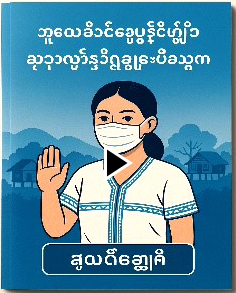
Ethnic minority communities in Thailand often rely on oral tradition and local beliefs for health guidance. In Pong Sumi village, Mae Win Sub‑district, Mae Wang District, Chiang Mai Province, 97% of residents speak Sgaw Karen as a first language and still practise traditional rituals and herbal medicine. While such knowledge is culturally valuable, parts of it diverge from biomedical recommendations, and limited digital access curtails exposure to timely public‑health information—an acute problem during the COVID‑19 pandemic. Previous Thai studies show that community‑coproduced, bilingual media (e.g., Akha‑Thai posters or Hmong parent–child videos) raise disease‑prevention knowledge and strengthen local ownership of health messages. Building on this evidence, the present project sought to create Sgaw Karen–Thai audio and video media that merge scientific facts with cultural narratives and are disseminated by a locally trained health‑media team.
Objectives
Assess community health concerns, media habits, and literacy barriers. Co‑design culturally resonant, bilingual media prototypes (audio for elders, video for multi‑age audiences). Build capacity of 72 household representatives in health literacy (HL) and media production. Evaluate changes in knowledge of medicinal‑herb use and epidemic‑prevention practices. Establish a sustainable village media system integrated with schools and health posts.
Methods
Design Mixed‑methods participatory action research framed by the ADDIE instructional‑design model (Analysis, Design, Development, Implementation, Evaluation) and the HAC Framework (Health, Accessibility, Culture).
Phase 1 – Analysis: Focus‑groups with leaders, elders, youth, and health volunteers defined priority topics: safe herbal use, COVID/post‑pandemic hygiene, and childhood infection control. A SWOT matrix revealed strengths (rich herbal lore, strong clan leadership), weaknesses (low Thai literacy, scarce ICT devices), opportunities (post‑pandemic funding, school partnerships), and threats (misinformation, future outbreaks).
Phase 2 – Design: Workshops (Thai + Sgaw interpreters) introduced basic HL concepts (access, cognitive, communication, self‑management, decision, media‑literacy skills). Participants storyboarded two media formats: Radio‑card audio spots (4 min each) using folk‐song hooks and elder narration. Five‑minute videos with voice‑over, on‑screen Sgaw captions, infographics, and dramatized vignettes.
Phase 3 – Development: Community media team (10 youth + 4 elders) recorded, translated, and edited content with guidance from university media scholars. Prototype review by three external health‑communication experts ensured accuracy and cultural sensitivity.
Phase 4 – Implementation: Audio files broadcast every Monday via village PA towers (“Health‑Sound Day”) and distributed on USB sticks for household radios. Videos screened at monthly village meetings, early‑childhood centres, and uploaded to a closed Facebook group (for smartphone owners).
Phase 5 – Evaluation: Pre/post surveys with the 72 household reps measured knowledge of 15 common herbs (score 0–5) and eight epidemic‑prevention behaviours (score 0–5). Focus‑group reflection captured usability, cultural fit, and suggestions for scale‑up. Paired‑sample t‑tests analysed score changes (α = 0.05).
Results
This study developed a model to enhance community health literacy and support adaptation to the "new normal" through participatory processes involving the Pong Sumi ethnic group in Chiang Mai Province, Thailand. The findings are presented across three key components. First, the current situation and problems related to adapting to the new normal were explored. The data revealed that most community members were farmers and had limited access to public health information, particularly regarding COVID-19 prevention. This lack of access was compounded by language barriers and low health literacy. Community members had difficulties understanding official health guidelines, resulting in inconsistent preventive behaviors. Despite these challenges, there was a strong sense of community cohesion and trust in local leaders and health volunteers, which provided a foundation for community-based intervention. Second, a participatory process was employed to develop a suitable model for enhancing health literacy. This involved collaboration among community leaders, health professionals, and local administrative organizations. The process followed a community empowerment approach, which emphasized listening to the voices of the Pong Sumi people and integrating their cultural practices into the model. The model comprised four phases: (1) community engagement and trust building, (2) identification of specific health literacy needs, (3) co-creation of educational materials in the local dialect, and (4) implementation through culturally appropriate communication channels, such as storytelling, village meetings, and local radio broadcasts. Finally, the model’s implementation and evaluation revealed notable improvements. Community members showed increased understanding of preventive health behaviors, such as proper hand hygiene, mask-wearing, and social distancing. They also became more engaged in health promotion activities. Local health volunteers reported a higher level of participation and more effective communication during outreach sessions. Moreover, the model enhanced the collaboration between community members and health personnel, fostering a more sustainable and culturally sensitive public health response. Importantly, the empowerment of local actors helped ensure the continuity of health-promoting behaviors beyond the scope of the study.
Limitations and Future Work
Sample size was limited to 72 households; longer follow‑up is needed to track actual behaviour change and health outcomes (e.g., infection rates). Future iterations will test mobile‑app push notifications where smartphones are available and evaluate cost‑effectiveness relative to traditional outreach.
Conclusion
Through a systematic ADDIE‑guided, participatory approach, the Pong Sumi community transformed its own cultural assets into powerful health‑communication tools. Statistically significant knowledge improvements, wide media uptake, and the emergence of a local health‑media cadre demonstrate how bilingual, culturally rooted media can elevate health literacy and resilience in remote ethnic settings—offering an adaptable blueprint for post‑pandemic public‑health promotion across Thailand’s diverse highland communities.
Article Details

This work is licensed under a Creative Commons Attribution-NonCommercial-NoDerivatives 4.0 International License.
Area Based Development Research Journal values copyright protection and licensing to safeguard author rights and facilitate the appropriate dissemination of research. Our policies ensure openness, accessibility, and attribution. Authors retain copyright ownership, and articles are published under a Creative Commons Attribution License (CC BY), allowing sharing, adaptation, and proper attribution. Authors have the freedom to publish under the CC BY license, granting broad reuse and distribution permissions. The journal supports posting articles on third-party repositories, adhering to institutional and funding restrictions. Author guidelines detail copyright and licensing requirements, empowering authors with knowledge about their rights and responsibilities. These policies cultivate an environment of collaboration, openness, and responsible sharing, benefiting authors and the research community while honoring intellectual property rights.
References
Arnstein, S. R. (1969). A ladder of citizen participation. Journal of the American Institute of Planners, 35(4), 216–224.
Bandura, A. (1986). Social foundations of thought and action: A social cognitive theory. Englewood Cliffs, NJ: Prentice Hall.
Chiang Mai Provincial Public Health Office. (2020). COVID-19 surveillance report and public health situation in Chiang Mai province. Chiang Mai: Ministry of Public Health. (in Thai).
Chuchat, C. (2018). Health beliefs and traditional healing practices among highland ethnic communities in northern Thailand. Chiang Mai: Ethnic Health Research Center. (in Thai).
Council for Steering the National Reform of Public Health and the Environment. (2016). Strategic communication for health and environmental reform. Bangkok: Office of the Prime Minister. (in Thai).
Department of Health. (2018). Health literacy development and evaluation framework for Thai people. Bangkok: Ministry of Public Health. (in Thai).
Health Education Division, Department of Health Service Support. (2018). Manual for promoting individual health literacy in local communities. Bangkok: Ministry of Public Health. (in Thai).
Nutbeam, D. (2000). Health literacy as a public health goal: A challenge for contemporary health education and communication strategies into the 21st century. Health Promotion International, 15(3), 259–267.
Pretty, J. N. (1995). Participatory learning for sustainable agriculture. World Development, 23(8), 1247–1263.
Prompatima, C., Longlai, K., Kasemsukpaisan, M., Tadi, P., Talayrobdoy, A., Talaytara, M. & Sukjainaiwana, M. (2022). Beliefs in rituals and changes in group life of Sa-kow Karen ethnicity, Ban Huai Tong, Mae Win sub-district, Mae Wang district, Chiang Mai. Khuang Paya Journal, 16(2), 37–52. (in Thai).
Seels, B., & Glasgow, Z. (1998). Making instructional design decisions (2nd edition). Upper Saddle River, NJ: Merrill Prentice Hall.
Thai Health Promotion Foundation. (2023). Media consumption behavior of Thai people 2023. Retrieved August 18, 2023, from: https://www.thaihealth.or.th. (in Thai).
The Royal College of Psychiatrists of Thailand. (2020). Mental health impact from media overexposure during the COVID-19 pandemic. Bangkok: Department of Mental Health. (in Thai).
United Nations. (2020). Policy brief: COVID-19 and the need for action on mental health. Retrieved January 23, 2023, from: https://unsdg.un.org/sites/default/files/2020-05/UN-Policy-Brief-COVID-19-and-mental-health.
World Health Organization. (2022). Living with COVID-19: A roadmap for navigating the transition. Retrieved January 6, 2025, from: https://www.who.int/publications.
