
Poverty Alleviation through Sweet Corn Value Chain Enhancement: the Tanohputae Model in Bannang Sata District, Yala Province, Thailand
Article Sidebar
Main Article Content
Abstract
Background: Tanorpute Subdistrict, Bannang Sata District, Yala Province, Thailand is characterized by a large number of economically vulnerable households. Of the households in the subdistrict, 401 are classified as poor, and most depend on agricultural labor without owning farmland. Limited access to productive resources, unstable employment, and restricted opportunities for income generation have contributed to persistent livelihood insecurity. Sweet corn is an important short-term agricultural crop in the community and occupies the largest cultivated area in the district. However, production is generally small-scale and is normally limited to a single production cycle during July–September. Farmers have faced difficulties in improving productivity, adding value to agricultural products, organizing collective production, and accessing stable markets. These constraints have limited the ability of poor households to generate continuous income from agriculture. This study therefore applied an area-based and participatory approach to develop a community mechanism that could mobilize local resources, strengthen household capacities, and create employment opportunities along the sweet corn value chain.
Objectives: The study aimed to develop a community-based poverty alleviation model using the resources, capacities, and networks available in Tanorpute Subdistrict. More specifically, it sought to create employment and income opportunities for poor households, improve their occupational and entrepreneurial capabilities, strengthen their self-reliance, and establish a sustainable mechanism through which local government agencies, community organizations, and households could jointly address poverty.
Methodology: The study employed a participatory action research approach involving poor households, government agencies, community organizations, and local development networks. The participatory process resulted in the development of the Tanorpute Model, an area-based poverty alleviation mechanism centered on the creation of a new value chain for sweet corn. The model consisted of five interconnected processes. First, a sweet corn value chain was established and target households were integrated into appropriate activities according to their capacities and interests. Second, positive attitudes and motivation for self- development were promoted, drawing upon Islamic principles and locally meaningful approaches to strengthen commitment to occupational development. Third, communal farmland and shared food-production facilities were organized to improve access to productive resources for households without their own agricultural land. Fourth, vocational skills were developed and occupational groups were encouraged to facilitate collective production, processing, and income generation. Fifth, marketing networks and market channels were developed to connect community products with local consumers and markets beyond the immediate community. These processes were implemented through collaboration and continuous learning among participating households and partner organizations.
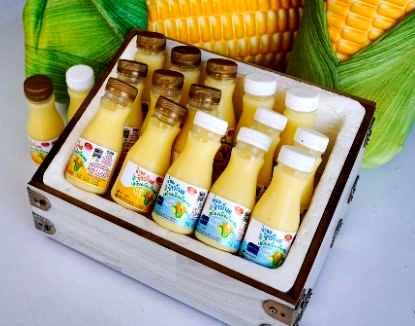
Results: and Finding: The Tanorpute Model successfully integrated 20 poor households, representing 4.98% of the total poor households in the subdistrict, into the newly established sweet corn value chain. The intervention generated opportunities for households to participate in different stages of production and value addition according to their capabilities. Among the participating households, 11 engaged in fresh sweet corn cultivation. Their selling price increased by 1.25 times, generating an income of approximately 2,136–3,775 THB (approximately 65-115 USD) per household per production cycle. Another seven households participated in sweet corn milk processing, where value addition increased by 5.45 times. Members involved in processing obtained additional income of approximately 150 THB (approximately 4.6 USD) per day. Beyond these economic outcomes, the participating households developed greater awareness of the importance of stable occupations and established individual and collective development goals. They also gained practical experience in sweet corn cultivation, processing, marketing, and group-based economic activities. The use of communal farmland increased access to cultivation opportunities for households without land ownership, while standardized food-production facilities strengthened confidence in product quality and food safety.
Outcome, Impacts and Sustainability: The Tanorpute Model generated impacts beyond immediate income improvement by strengthening human and social capital within the community. Poor households acquired new occupational skills and became more capable of participating continuously in agricultural production and value-added activities. Fresh sweet corn and processed corn milk products were marketed within the local community and in Yala city, expanding market opportunities beyond the immediate production area. The development of collective activities also strengthened cooperation among households and local organizations and contributed to the establishment of a community enterprise. Importantly, the model demonstrated the value of integrating poverty alleviation with local resource management, vocational development, value-chain creation, and market networking rather than treating income generation as an isolated intervention. Institutional support further reinforced the sustainability of the initiative. The Tanorpute Subdistrict Administrative Organization allocated 300,000 THB (approximately 9153 USD) to improve the corn milk processing facilities and establish a community sales outlet. This commitment demonstrates local ownership and provides an institutional foundation for continuing and expanding the initiative. Overall, the Tanorpute Model illustrates how participatory, area-based development can transform locally available agricultural resources into employment and livelihood opportunities for poor households. By linking communal resources, skills development, value addition, market access, and local government support, the model offers a potentially replicable approach to poverty alleviation and community self-reliance in other rural areas facing similar constraints.
Article Details

This work is licensed under a Creative Commons Attribution 4.0 International License.
Area Based Development Research Journal values copyright protection and licensing to safeguard author rights and facilitate the appropriate dissemination of research. Our policies ensure openness, accessibility, and attribution. Authors retain copyright ownership, and articles are published under a Creative Commons Attribution License (CC BY), allowing sharing, adaptation, and proper attribution. Authors have the freedom to publish under the CC BY license, granting broad reuse and distribution permissions. The journal supports posting articles on third-party repositories, adhering to institutional and funding restrictions. Author guidelines detail copyright and licensing requirements, empowering authors with knowledge about their rights and responsibilities. These policies cultivate an environment of collaboration, openness, and responsible sharing, benefiting authors and the research community while honoring intellectual property rights.
References
Bashma, E. K., & Vandana, V. (2025). Nutrient management in sweet corn: A key to productivity and sustainability. International Journal of Research in Agronomy, 8(8S), 120–125. DOI: https://www.doi.org/10.33545/2618060X.2025.v8.i8Sb.3508
Dechjiraratthanasiri, C., Junwong, S., & Inthasan, J. (2025). Effect of bio-fertilizer management on sweet corn production in an organic system. Journal of Science and Technology Mahasarakham University, 44(5), 427–434. (in Thai).
Department of Agricultural Extension. (2025). Agricultural statistics report for stinky bean (classified by region and province), 2023-2025. Retrieved May 6, 2026, from: https://production.doae.go.th/service/report-product-statistic/index.
Fahrurrozi, F., Setyowati, N., Sudjatmiko, S., Muktamar, Z., & Chozin, M. (2024). Weed-based liquid organic fertilizer increased growth and yields of organically grown sweet corn. International Journal of Agricultural Technology, 20(6), 2259-2270.
Gao, L., Wu, L., Ashraf, U., Lu, W., Li, Y., Li, C., ..., & Hu, J. (2020). Nitrogen fertilizer management and maize straw return modulate yield and nitrogen balance in sweet corn. Agronomy, 10(3), 362. DOI: https://doi.org/10.3390/agronomy10030362
Hou, P. F., Chang, Y. T., Lai, J. M., Chou, K. L., Tai, S. F., Tseng, K. C., ..., & Chang, W. C. (2020). Long-term effects of fertilizers with regional climate variability on yield trends of sweet corn. Sustainability, 12(9), 3528. DOI: https://doi.org/10.3390/su12093528
Karatepe, I. D., & Scherrer, C. (2024). Smallholder challenges of social and economic upgrading in agricultural value chains: A cross-country, cross-crop comparison. Agrarian South: Journal of Political Economy, 13(3), 317-340. DOI: https://doi.org/10.1177/22779760241261445
Khaoklom, U., Sangthong, M., & Phutornpukdee, M. (2022). Potential development of value chain of edible fern community enterprise, Ban Sema, Nakhon Si Thammarat. Journal of MCU Nakhondhat, 9(2), 156–170. (in Thai).
Kueanoon, C., Udpuay, S., & Wiwatwittaya, P. (2024). Nitrogen response and uptake of sweet corn grown on clay loam soil. Thai Agricultural Research Journal, 42(1), 2–13. (in Thai). DOI: https://doi.org/10.14456/thaidoa-agres.2024.1
Lhamkaek, J., & Pienkhuntod, A. (2021). An integrated approach for poverty alleviation: A case of the Siew Partnerships Against Poverty Project in Khon Kaen. Dhammathas Academic Journal, 21(2), 109–122. (in Thai).
Ørtenblad, S. B., Larsen, M. N., Bruun, T. B., & Ortiz-Gonzalo, D. (2023). Smallholder participation in modernising agri-food value chains in Thailand: The role of traditional markets. European Journal of Development Research, 35, 1419–1439. DOI: https://doi.org/10.1057/s41287-023-00587-9
Phimphisan, S., Laosaard, S., & Ngamwong, N. (2024). The poverty situation in Thailand. In: Conquering poverty: Harnessing the power of knowledge and partnerships (pp. 2–15). Bangkok: Program Management Unit for Area-Based Development. (in Thai).
Promthep, N., & Siriamornpun, S. (2020). Effect of carrageenan content on physical, chemical, sensory properties and antioxidant activity of sweet corn milk. Science and Technology Nakhon Sawan Rajabhat University Journal, 12(16), 37–49. (in Thai).
Purohit, S., Mishra, G., Mohapatra, K. K., & Mishra, G. C. (2020). A critical review on integrated nutrient management (INM) in sweet corn. Journal of Pharmacognosy and Phytochemistry, 9(3), 2213–2219.
Suwanmaneepong, S., Llones, C., Kerdsriserm, C., Khermkhan, J., Sabaijai, P. E., Samanakupt, T., …, & Dana, L. P. (2024). Participatory value chain development. Insights from community-based enterprise in rural Thailand. International Journal of Agricultural Sustainability, 22(1), 2371703. DOI: https://doi.org/10.1080/14735903.2024.2371703
Tancharoen, S., Nobuntou, W., Luanmanee, S., Thaweenut, N., Ratanavirakul, P., & Udpuay, S. (2026). Effect of integrated fertilizers management on yield of sweet corn on loam soil at Nakhon Sawan Province. King Mongkut’s Agricultural Journal, 44(2), e0265496. (in Thai). DOI: https://doi.org/10.55003/kmaj.2026.265496
Tongkaemkaew, U., Wonglom, P., Pengman, H., Suwanarat, E., Chusong, J., Amornwiriyachai, W., & Eakphaknak, S. (2023). Process of raising sustainable livelihood for Pan Pan Goat Raising Group, Manora Waterfall, Khlong Chalerm Subdistrict, Phatthalung Province. Area Based Development Research Journal, 15(4), 266–280. (in Thai).
Tophan, W., Sirivajrasuka, B., & Pongpetch, N. (2023). Solving poverty through the bamboo-based economic recovery for sustainable livelihood poverty alleviation model in Tha Li District, Loei Province. Area Based Development Research Journal, 15(4), 296–313. (in Thai).
Wongpaisanrit, R., & Pongsankeeree, W. (2020). Antioxidant activity of 3 varieties of corn milk. RMUTP Research Journal Sciences and Technology, 14(2), 152-159. (in Thai).
Wongpratheep, N., Phohirun, W., Noitup, P., & Sirisan, P. (2022). Development of pineapple value chain system of Ban Tham Phrik, Phitsanulok Province. Area Based Development Research Journal, 14(1), 14–26. (in Thai).
