Grand Palace: the Origin of Rattanakosin-period Art and the Royal Court
Keywords:
Grand Palace, Monarch, Royal Ceremony, Royal Court, Artistic WorkAbstract
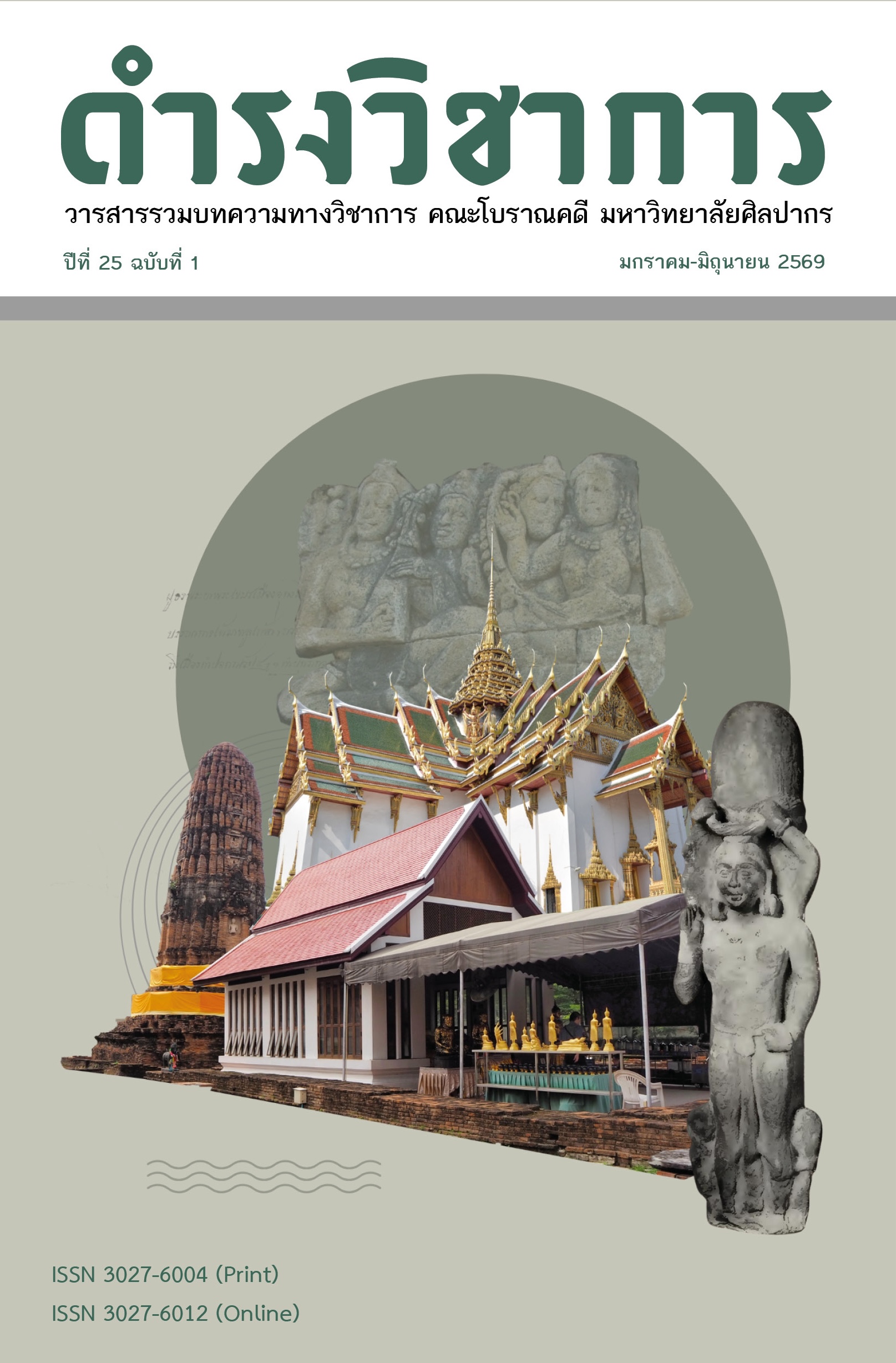
The artistic creations within the Grand Palace were commissioned by royal command and executed by court artisans, serving as a focal point of national prosperity during the Rattanakosin period. These works embody distinctive aesthetic qualities, exceptional beauty, and cultural significance that are unmatched by any other artistic sources. Each piece was created with a functional and ceremonial purpose, intimately connected to royal rites and traditions of the era. Moreover, the art and architecture within the Grand Palace reflect profound religious concepts concerning the institution of monarchy. Central to these are the notions of Devaraja (the divine king), Chakravartin (the universal monarch), and the ancient cosmological belief in the king as the axis mundi—the center of the universe. These ideas are deeply rooted in religious doctrines and are inherently linked to the political and administrative framework of Thailand, wherein the monarch has been the sovereign head from the past to the present.
Downloads
Published
Issue
Section
License
Copyright (c) 2026 Damrong Journal of The Faculty of Archaeology Silpakorn University

This work is licensed under a Creative Commons Attribution-NonCommercial-NoDerivatives 4.0 International License.
บทความนี้เป็นผลงานของข้าพเจ้าแต่เพียงผู้เดียว และ/หรือเป็นผลงานของข้าพเจ้าและผู้ร่วมงาน ตามชื่อที่ระบุในบทความจริง และเป็นผลงานที่มิได้ถูกนำเสนอหรือตีพิมพ์ที่ใดมาก่อน



