ภาพเหมือนของจักรพรรดิโรมันปริทรรศน์และกรณีราชวงศ์เนอร์วา-แอนโทนิน
คำสำคัญ:
จักรพรรดิ, จักรวรรดิโรมัน, ภาพเหมือน, ประติมากรรมบทคัดย่อ
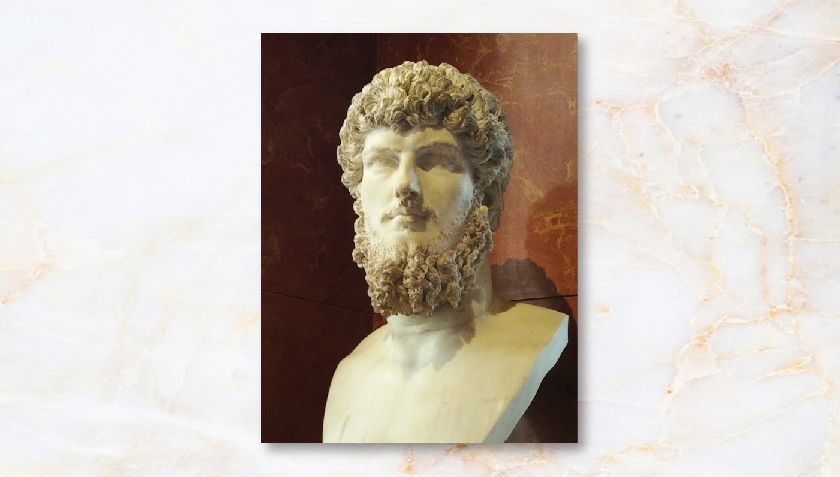
บทความวิชาการนี้สำรวจกระบวนการสร้างภาพเหมือนของจักรพรรดิโรมันโบราณ โดยเฉพาะราชวงศ์เนอร์วา-แอนโทนินและกรณีของจักรพรรดิลูซิอุส เวรุส ผู้เขียนแบ่งเป็น 3 ประเด็น ได้แก่ 1. แนวคิดเรื่องการสร้างภาพของจักรพรรดิโรมัน โดยได้ศึกษาการสร้างภาพเหมือนของจักรพรรดิองค์แรกแห่งจักรวรรดิโรมันคือออกุสตุส ที่มีลักษณะเฉพาะคือทรงผมหน้าม้า และความหนุ่มไร้หนวดเคราอันสื่อถึงยุคใหม่ และได้ศึกษาการสร้างภาพของจักรพรรดิคอนสแตนตินซึ่งความเหมือนจริงถูกตัดทอนออกไปเนื่องจากเป็นผลพวงจากวิวัฒนาการการสร้างภาพเหมือนและบริบททางการเมืองและศาสนาที่เปลี่ยนแปลงในต้นศตวรรษที่ 3 2. ภาพเหมือนของราชวงศ์เนอร์วา-แอนโทนิน มีการนำเสนอภาพของจักรพรรดิที่น่าสนใจจากรูปแบบตาม ออกุสตุส โดยเฉพาะการหยิบยืมทรงผมและความอ่อนเยาว์ของใบหน้า พัฒนาไปจนถึงรูปแบบกรีกที่ทรงผมและหนวดเคราเริ่มยาวและมีความวิจิตร สีหน้าและสายตามีความชัดเจนทางอารมณ์ และ 3. กรณีภาพเหมือนของจักรพรรดิลูซิอุส เวรุส จักรพรรดิในราชวงศ์เนอร์วา-แอนโทนิน โดยเน้นงานเลขทะเบียน MA 1170 เก็บรักษาที่พิพิธภัณฑ์ลูฟวร์ งานมีลักษณะ “บาโรค” จากทรงผมและหนวดเครา พร้อมทั้งเปรียบเทียบกับผลงานชิ้นอื่นที่เป็นรูปของพระองค์ และรูปของจักรพรรดิคู่มาร์คุส ออเรลิอุสที่สร้างพร้อมกันอันแสดงถึงความเป็นหนึ่งเดียวของอำนาจ
เอกสารอ้างอิง
Balty J.-Ch., 1996. “Dietrich Boschung, Die Bildnisse des Augustus.” L’antiquité classique 65: 580-581.
Baratte F., 1983. “Les portraits impériaux de Markouna et la sculpture officielle dans l’Afrique romaine.” Mélanges de l’École française de Rome. Antiquité 95 (2): 785-815.
Baratte F., 2011. Histoire de l’art antique : L’art romain. Paris: RMN.
Beard M., & Henderson J., 2001. Classical Art From Greece to Rome. Oxford: Oxford University Press.
Collins A. W., 2009. “The palace revolution: The assassination of Domitian and the accession of Nerva.” Phoenix 63 (1/2): 73-106.
Cornwell H., 2017. Pax and the Politics of Peace: Republic to Principate. Oxford: Oxford University Press.
De Bruyn G., 2016. “À propos du groupe statuaire imperial du theater de Bulla Regia. L’apport de la documentation épigraphique à l’analyse iconographique.” Kentron 32: 85-112.
De Grummond N., 1990. “Pax Augusta and the Horae on the Ara Pacis Augustae.” American Journal of Archaeology 94(4): 663-677.
De Kersauson K., 1996. Catalogue des portraits romains Tome 2. Paris: RMN.
Dodd C. H., 1911. “Chronology of the Eastern campaigns of the emperor Lucius Verus.” The Numismatic Chronicle and Journal of the Royal Numismatic Society 11: 209-267.
Elsner J., & Meyer M., 2004. Art and Rhetoric in Roman Culture. Cambridge: Cambridge University Press.
Eusebius, 1999. Life of Constantine (Translated by A. Cameron & S.G. Hall). Oxford: Clarendon. (Original work written in the 4 th Century)
Fejfer J., 2008. Roman Portraits in Context. Berlin-New York: W. de Gruyter.
Gibbon E., 1840. The History of the Decline and Fall of the Roman Empire Volume 1. Paris: Baudry’s European Library.
Goldsworthy A. K., 2009. How Rome Fell: Death of a Superpower. New Haven: Yale University Press.
Greatrex G., Elton H., & McMahon L., 2015. Shifting Genres in Late Antiquity. Surrey: Ashgate.
Holloway R. R., 2004. Constantine and Rome. New Haven: Yale University Press.
Kelly Ch., 2006. The Roman Empire: A Very Short Introduction. Oxford: Oxford University Press.
Lee Sh. E., 1953. “A Roman Imperial Portrait of Lucius Verus.” The Bulletin of the Cleveland Museum of Art 40(3): 47-50.
Machiavelli N., 1996. Discourses on Livy. (Translated by H.C. Mansfield & N. Tarcov). Chicago: University of Chicago Press. (Original work published 1531)
Momigliano A., 1942. “The Peace of the Ara Pacis.” Journal of the Warburg and Courtauld Institutes 5: 228-231.
Morley N., 2010. The Roman Empire: Roots of Imperialism. London: Pluto Press.
Osgood J., 2011. Claudius Caesar: Image and Power in the Early Roman Empire. New York: Cambridge University Press.
Pollini J., 1999. “Die Bildnisse des Augustus by Dietrich Boschung.” The Art Bulletin 81(4): 723-35.
Rees R., 1993. “Images and Image: A Re-Examination of Tetrarchic Iconography.” Greece & Rome 40(2): 181-200.
Roger D., & Giroire C. (eds.), 2007. Roman Art from the Louvre. Manchester: Hudson Hills Press.
Sabino R. C., 2017. Cat. 6 Portrait Head of Emperor Hadrian. Roman Art at the Art Institute of Chicago. Chicago: The Art Institute of Chicago.
Schnapp A. (ed.), 2011. Préhistoire et Antiquité. Des origins de l’humanité au monde classique. Paris: Flammarion.
Smith R. R. R., 1997. “The Public Image of Licinius I: Portrait Sculpture and Imperial Ideology in the Early Fourth Century.” The Journal of Roman Studies 87: 170-202.
Stanton G. R., 1969. “Marcus Aurelius, Emperor and Philosopher.” Historia: Zeitschrift für Alte Geschichte 18(5): 570-587.
Thompson N. L., De Montebello Ph., Lydecker J. K., & PicónC. A., 2007. Roman Art: A Resource for Educators. New York: The Metropolitan Museum of Art.
Toral-Niehoff I., 20 13. “Constantine’s Baptism Legend: a ‘Wandering’ Story between Byzantium, Rome, the Syriac and the Arab World.” In B. Crostini & S. La Porta (eds.), Negotiating Co-existence: Communities, Cultures and Convivencia in Byzantine Society (pp. 131-143). Trier: Wissenschaftlicher Verlag.
Van Heesch J., 2011. “Quantifying Roman Imperial Coinage.” In F. de Callataÿ (ed.), Proceedings of the Third Francqui 2010: Conference Quantifying monetary supplies in greco-roman times (pp. 311-328). Bari: Edipuglia.
Wolfram H., 1997. The Roman Empire and Its Germanic Peoples. (Translated by T. Dunlap). Los Angeles: University of California Press.
Wright D. H., 1987. “The True Face of Constantine the Great.” Dumbarton Oaks Papers 41: 493–507.
Zanker P., 2016. Roman Portraits: Sculptures in Stone and Bronze in the Collection of The Metropolitan Museum of Art. New York: The Metropolitan Museum of Art.
Capus P., 2019. Tête de Lucius Verus. Toulouse: Les sculptures de la villa romaine de Chiragan. Retrieved April 19, 2020, from https://villachiragan.saintraymond.toulouse.fr/ark:/87276/a_ra_63
Gaffiot F.,1934. Dictionnaire latin français. Paris: Hachette. Retrieved February 24, 2020, from https://www.lexilogos.com/latin/gaffiot.php?q=augustus
Historia Augusta, Volume I: Hadrian. Aelius. Antoninus Pius. Marcus Aurelius. L. Verus. Avidius Cassius. Commodus. Pertinax. Didius Julianus. Septimius Severus. Pescennius Niger. Clodius Albinus, 1921. (Translated by D. Magie). Cambridge: Harvard University Press. (Original work published in the 4th Century). Retrieved June 24, 2019, from https://archive.org/details/scriptoreshistor01camb/page/n11
Lightfoot Ch., 2000. The Roman Empire (27 B.C.–393 A.D.). Heilbrunn Timeline of Art History. New York: The Metropolitan Museum of Art. Retrieved December 10, 2018, from http://www.metmuseum.org/toah/hd/roem/hd_roem.htm
Tranquillus S., 1909. The Lives of the Twelve Caesars: to which are added, his Lives of the Grammarians, Rhetoricians, and Poets. (Translated by A. Thomson & T. Forester). London: George Bell and Sons. Retrieved May 7, 2019, from https://oll.libertyfund.org/titles/1888
Trentinella R., 2003. Roman Portrait Sculpture: Republican through Constantinian. New York: The Metropolitan Museumof Art. Retrieved September 7, 2018, from https://www.metmuseum.org/toah/hd/ropo/hd_ropo.htm
ดาวน์โหลด
เผยแพร่แล้ว
ฉบับ
ประเภทบทความ
สัญญาอนุญาต
บทความนี้เป็นผลงานของข้าพเจ้าแต่เพียงผู้เดียว และ/หรือเป็นผลงานของข้าพเจ้าและผู้ร่วมงาน ตามชื่อที่ระบุในบทความจริง และเป็นผลงานที่มิได้ถูกนำเสนอหรือตีพิมพ์ที่ใดมาก่อน



