
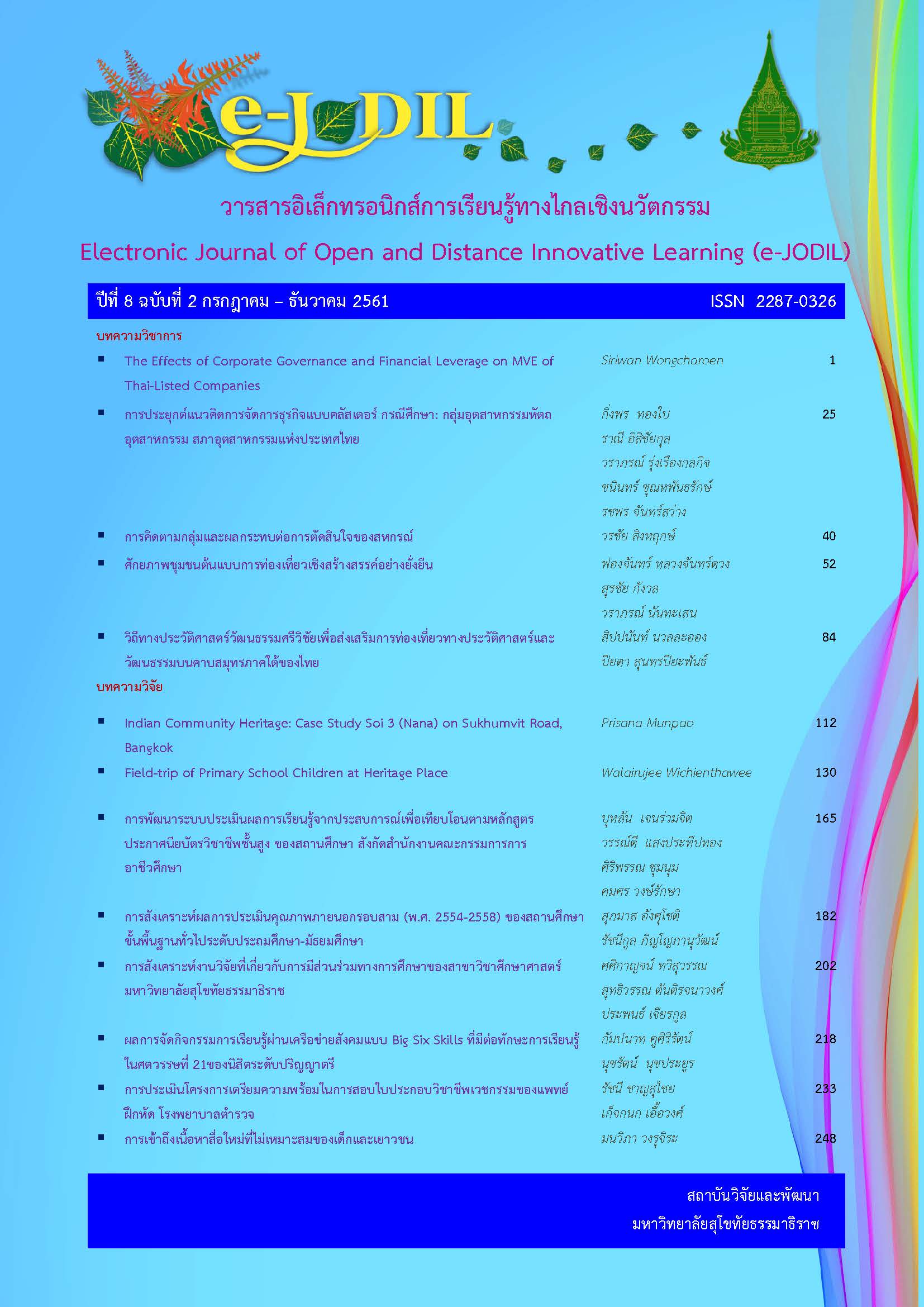
การสังเคราะห์ผลการประเมินคุณภาพภายนอกรอบสาม (พ.ศ. 2554-2558) ของสถานศึกษาขั้นพื้นฐานทั่วไประดับประถมศึกษา-มัธยมศึกษา
Article Sidebar
Main Article Content
บทคัดย่อ
การวิจัยนี้มีวัตถุประสงค์เพื่อ (1) สังเคราะห์ผลการประเมินคุณภาพภายนอกรอบสาม (พ.ศ. 2554-2558) และ (2) เปรียบเทียบพัฒนาการผลการประเมินคุณภาพภายนอกรอบสองและรอบสาม และสังเคราะห์ข้อเสนอแนะของผู้ประเมินภายนอก ข้อมูลที่นำมาใช้ในการสังเคราะห์ประกอบด้วยผลการประเมินคุณภาพภายนอกรอบสอง (พ.ศ. 2549-2553) และผลการประเมินคุณภาพภายนอกรอบสาม (พ.ศ. 2554-2558) ของสถานศึกษาขั้นพื้นฐานทั่วไปที่เปิดสอนระดับประถมศึกษา-มัธยมศึกษา และได้รับการรับรองผลการประเมินจากคณะกรรมการบริหารสำนักงานรับรองมาตรฐานและประเมินคุณภาพการศึกษา (สมศ.) แล้วจำนวนทั้งหมด 32,834 แห่ง และความคิดเห็นของผู้ประเมินภายนอกในเล่มรายงาน จำนวน 329 เล่ม ผู้เข้าร่วมประชุมสนทนากลุ่มประกอบด้วยผู้มีส่วนได้ส่วนเสียรวม 33 คน เครื่องมือที่ใช้ในการวิจัย ได้แก่แบบบันทึกข้อมูลและประเด็นการสนทนากลุ่ม การวิเคราะห์ข้อมูลใช้การแจงนับความถี่ ร้อยละ ค่าเฉลี่ย ส่วนเบี่ยงเบนมาตรฐาน และการวิเคราะห์เนื้อหา ผลการสังเคราะห์สรุปได้ดังนี้ 1. สถานศึกษาขั้นพื้นฐานทั่วไประดับประถมศึกษา-มัธยมศึกษาได้รับการรับรองมาตรฐาน 20,369 แห่ง (ร้อยละ 62.04) ส่วนใหญ่มีผลการประเมินระดับดี (ร้อยละ 54.20) รองลงมาคือระดับดีมาก (ร้อยละ 7.83) สถานศึกษาที่ไม่รับรองมาตรฐาน 12,465 แห่ง (ร้อยละ 37.96) สถานศึกษาสังกัดสำนักงานคณะกรรมการการอุดมศึกษา (สกอ.) สถานศึกษาขนาดใหญ่พิเศษ และสถานศึกษาในกรุงเทพฯและปริมณฑลได้รับการรับรองมาตรฐานมากที่สุด ผลการประเมินตามมาตรฐานที่ 2 ด้านการบริหารจัดการศึกษาอยู่ในระดับดีมาก ส่วนมาตรฐานอื่นๆ อยู่ในระดับดี มาตรฐานที่ 1 ด้านผลการจัดการศึกษามีคะแนนเฉลี่ยต่ำที่สุด ตัวบ่งชี้ที่ 5 ผลสัมฤทธิ์ทางการเรียนของผู้เรียนอยู่ในระดับต้องปรับปรุงเร่งด่วน 2. สถานศึกษาร้อยละ 30.35 มีผลการประเมินลดลง 2 ระดับแบบรับรองมาตรฐานลดลงเป็นไม่รับรองมาตรฐาน และส่วนใหญ่เป็นสถานศึกษาสังกัดสำนักงานการศึกษาขั้นพื้นฐาน (สพฐ.) องค์การบริหารส่วนท้องถิ่น (อปท.) สถานศึกษาขนาดเล็ก ขนาดกลาง และขนาดใหญ่ สถานศึกษาทั้งในเมืองและนอกเมือง และสถานศึกษาในส่วนภูมิภาค ส่วนสถานศึกษาสังกัด สกอ. และกรุงเทพมหานคร (กทม.) มีผลการประเมินคงที่สามรอบแบบ ดี ดีมาก และดีมาก และแบบดี ดี และดี ตามลำดับ สถานศึกษาขนาดใหญ่พิเศษ และสถานศึกษาในกรุงเทพฯและปริมณฑลมีผลการประเมินลดลงแบบดีมากลดลงเป็นดี
Downloads
Article Details
บทความ ข้อความ ภาพประกอบ ตารางประกอบ ที่ตีพิมพ์ในวารสารเป็นความคิดเห็นและความรับผิดชอบของผู้เขียนแต่เพียงผู้เดียว ไม่เกี่ยวข้องกับมหาวิทยาลัยสุโขทัยธรรมาธิราชแต่อย่างใด
บทความที่เสนอพิจารณาในวารสาร e-JODIL ต้องเป็นบทความที่ไม่เคยส่งไปลงพิมพ์ เผยแพร่ หรืออยู่ระหว่างการพิจารณาของวารสารอื่น
กองบรรณาธิการขอสงวนสิทธิ์ในการพิจารณาและตัดสินการตีพิมพ์บทความในวารสาร
เอกสารอ้างอิง
วิทยากร เชียงกูล. (2552). สภาวะการศึกษาไทยปี 2550/2551 “ปัญหาความเสมอภาคและคุณภาพของการศึกษาไทย”, (พิมพ์ครั้งที่ 2). กรุงเทพมหานคร: วี.ที.ซี.คอมมิวนิเคชั่น.
สุภมาส อังศุโชติ และรัชนีกูล ภิญโญภานุวัฒน์. (2559). การสังเคราะห์ผลการประเมินภายนอกรอบสาม(พ.ศ. 2554 - 2558) ระดับการศึกษาขั้นพื้นฐาน. กรุงเทพมหานคร: สำนักงานรับรองมาตรฐานและประเมินคุณภาพการศึกษา (องค์การมหาชน).
สำนักงานคณะกรรมการการศึกษาแห่งชาติ. (2553). พระราชบัญญัติการศึกษาแห่งชาติ แก้ไขเพิ่มเติม.พ.ศ. 2553 (ฉบับที่ 3). กรุงเทพมหานคร: พริกหวานกราฟฟิค.
สำนักงานรับรองมาตรฐานและประเมินคุณภาพการศึกษา (องค์การมหาชน). (2554). คู่มือการประเมินคุณภาพภายนอกรอบสาม (พ.ศ. ๒๕๕๔–๒๕๕๘) ระดับการศึกษาขั้นพื้นฐานฉบับสถานศึกษา (แก้ไขเพิ่มเติมพฤศจิกายน ๒๕๕๔). สืบค้นเมื่อ 10 กุมภาพันธ์ 2560, จาก http://www.onesqa.or.th/th/content-view/921/1204/
