Journal Information
Author Guidelines
Manuscript Preparation and Submission Guidelines
Author Guidelines
Economics and Business Administration Journal Thaksin University (ECBA Journal)
Revised November 19, 2026 / Revised November 2026
About the Journal
Economics and Business Administration Journal Thaksin University (ECBA Journal) is an academic journal that accepts manuscripts in the fields of Economics, Business Administration, and Accounting, with sub-subject areas in accordance with the journal’s Aims and Scope as follows:
- General Business, Management and Accounting
- Marketing
- Organizational Behavior and Human Resource Management
- Tourism, Leisure and Hospitality Management
- General Economics, Econometrics and Finance
ECBA Journal is an Open Access (OA) journal that employs a Double-Blind Peer Review system between authors and reviewers, evaluated by at least two peer reviewers. The journal publishes 4 issues per year, with 12–15 articles per issue, as follows:
- Issue 1: January – March
- Issue 2: April – June
- Issue 3: July – September
- Issue 4: October – December
However, effective November 20, 2026, the journal will accept only Research Articles.
Manuscript Format and Components
Authors must submit their manuscripts in either Thai or English using the journal’s template, with a maximum length not exceeding 20 pages including references. Manuscripts that do not conform to the required format will be returned or rejected prior to peer review. Furthermore, authors must strictly adhere to the Publication Ethics for Authors specified at [https://so01.tci-thaijo.org/index.php/ecbatsu/PublicationEthicsnMalpracticeStatement].
1) Title
The title must be provided in both Thai and English and aligned to the left margin.
- The Thai title must be formatted in 20-point bold font.
- For the English title, the first letter of every word must be capitalized, and formatted in 20-point bold font.
2) Authors
The list of authors, authorship order, roles, and contributions must be determined in accordance with the journal’s authorship criteria (Contributor Roles Taxonomy: CRediT).
- Full names of all authors must be provided in both Thai and English, formatted in 14-point regular font, aligned to the right margin, with superscript numbers placed after each name.
- Titles or academic ranks and institutional affiliations must be placed in the footnote section (Page 1), formatted in 12-point regular font. Institutional affiliations must specify the department, faculty, and university—or proceed from the sub-unit to the highest organizational level—corresponding to the superscript numbers indicated on the same page, and must be provided in both Thai and English.
3) Abstract
Both the Thai and English abstracts must not exceed 300 words, be formatted in 16-point regular font, and appear exclusively on Page 1 of the manuscript. A well-crafted abstract must link key research findings to managerial or academic implications. The structure of the abstract should comprise Purpose, Design/Methodology, Findings, Implications, and Originality, accompanied by key figures such as sample size and main statistical results.
4) Keywords
Keywords in both Thai and English must consist of no more than 5 terms relevant to the manuscript, placed immediately following the abstract body, formatted in 16-point regular font, and aligned to the left margin.
5) Introduction
The introduction must state the significance and background of the research problem, cite credible data or evidence, identify the knowledge gap from previous studies, and explain how the present study demonstrates originality or contributes to the body of knowledge. The final paragraph of the introduction must state the research objectives or research questions, which must align with the presented research findings.
6) Literature Review
The literature review must present concepts, theories, and previous studies relevant to the research topic. Studies should be synthesized and interconnected rather than summarized individually, leading to the development of the conceptual framework or research hypotheses. Up-to-date domestic and international literature should be cited.
7) Methodology
The methodology section must describe the research procedures with sufficient clarity to allow readers to verify or replicate the study, including research design, population and sample or key informants, research instruments and instrument quality verification, data collection methods, and data analysis methods.
Authors must strictly include an Ethical Statement in accordance with [https://so01.tci-thaijo.org/index.php/ecbatsu/EthicalinHuman]. The following are illustrative examples:
Case 1: Involving Human Subjects and Approved — The research collects data directly from human participants (questionnaires, interviews, focus groups, experiments, observations) or utilizes personally identifiable data, and has received approval from a Human Research Ethics Committee.
Sample Statement: "This study was approved by [Name of Committee] (Approval No. [Number], dated [Date]). Participants received study information in Thai, participated voluntarily, and signed a written informed consent form prior to completing the questionnaire. Participants were informed that they could withdraw from the study at any time without any negative consequences. All data were kept strictly confidential using coded identifiers in place of personal names, and the research findings are presented solely in aggregate form."
Case 2: Not Involving Human Subjects or Exempted (with Exemption Certificate) — The research utilizes solely publicly available, aggregate-level secondary data (e.g., financial statements of listed companies, stock prices, macroeconomic statistics), involves no direct data collection from individuals, and uses no personally identifiable data.
Sample Statement 1: "This study utilizes solely publicly available aggregate secondary data from [Source]. No data were collected from human participants; therefore, ethical approval for research involving human subjects was not required."
Sample Statement 2: "This study utilizes solely publicly available aggregate secondary data from [Source]. No data were collected from human participants; therefore, it received exemption certification (Exemption Review) from [Name of Committee] (Certificate No. [Number], dated [Date])."
Case 3: Involving Human Subjects Without a Certificate — The statement provided must cover the nature of the research, the data used, and the data collection methods, along with a clear justification explaining why ethical approval for research involving human subjects was not required.
The journal reserves the right to reject manuscripts that fail to comply with this requirement and may request additional supporting documentation at a later stage.
8) Results
Authors must present the research findings systematically and accurately in accordance with the sequence of the research objectives or hypotheses. Tables or figures may be used; however, authors should not repeat all numerical values from the tables in the text. The Results section must present only the empirical findings without interpretation.
9) Discussion
Authors must interpret and explain the rationale behind the research findings, compare them with relevant concepts, theories, and prior studies to demonstrate consistencies or discrepancies, and explain potential reasons for such outcomes in order to highlight the academic value of the findings.
10) Theoretical and Managerial Implications
Recommendations must be derived directly from the research findings and specify how stakeholders can apply the results, divided into two aspects:
- Theoretical Implications: How this research contributes to, extends, or modifies existing bodies of knowledge and theories.
- Managerial Implications: How executives, organizations, or policymakers can apply the research findings in practice.
11) Limitations and Future Research
Authors should identify the limitations of the study that may affect the interpretation or generalizability of the findings to other contexts, such as limitations regarding the sample, data collection methods, or scope of the study.
12) Conclusion
Authors should concisely summarize the key findings of the study, address all research objectives completely, and reflect the new knowledge gained from the research without introducing new data or citations not previously mentioned.
13) Conflict of Interest
Authors must disclose any financial or personal relationships that could potentially influence the conduct of the research, the interpretation of results, or the preparation of the manuscript. If none exist, authors must state: "The authors declare no conflict of interest."
14) Funding
Authors must specify the funding sources or organizations supporting the research along with the grant number (if applicable). If no funding was received, authors must state: "This research received no external funding."
15) Use of Generative Artificial Intelligence (Generative AI)
Authors must disclose the use of Generative Artificial Intelligence (Generative AI) tools in the preparation of the manuscript to ensure transparency and academic integrity, specifying the name of the tool or platform used, the purpose of its use, and the sections of the manuscript where the tool was utilized.
The use of Generative AI may include assisting with text refinement, language editing, content summarization, language translation, generating images, tables, diagrams, or visual materials, as well as assisting with data analysis or organization. Authors must personally verify the accuracy, completeness, and appropriateness of all content generated by Generative AI and bear full responsibility for the entire content of the manuscript.
However, Generative AI cannot be listed as a co-author of the manuscript, as it cannot take responsibility for academic content or meet authorship criteria. If Generative AI was not used, authors must state: "The authors did not use Generative Artificial Intelligence (Generative AI) in the preparation of this manuscript."
16) CRediT Author Statement
All authors must meet the authorship criteria established by COPE (Committee on Publication Ethics), utilizing CRediT (Contributor Roles Taxonomy) solely to specify the roles and contributions of each author. A manuscript may have only one First Author and one Corresponding Author, whose roles must align with the Announcement of the Civil Service Commission in Higher Education (OHEC) on Criteria and Procedures for Appointing Individuals to Academic Positions of Assistant Professor, Associate Professor, and Professor (No. 3), B.E. 2568 (2025), as follows:
|
Role |
Definition per OHEC Announcement |
Journal Requirements |
|
First Author |
The first-listed author on the work who is responsible for conducting the research and writing the manuscript independently. |
Must write the manuscript draft: Writing – Original Draft (per CRediT criteria). |
|
Corresponding Author |
Plays a major role in the research and publication, serves as the primary coordinator with the editor, and acts as the primary point of contact with readers. |
Must be the same individual who submits the manuscript in the ThaiJO system. May be the same person as the First Author. |
|
Co-author |
A contributor to the academic work. |
Must hold at least one substantive role according to CRediT; funding acquisition or supervision alone is insufficient. |
The nature and scope of contributions to academic work according to the CRediT (Contributor Roles Taxonomy) criteria comprise 14 primary roles as follows:
|
Role |
Definition / Description |
|
Conceptualization |
Ideas; formulation or evolution of overarching research goals and aims. |
|
Methodology |
Development or design of methodology; creation of models. |
|
Software |
Programming, software development; designing computer programs; implementation of the computer code and supporting algorithms; testing of existing code components. |
|
Validation |
Verification, whether as a part of the activity or separate, of the overall replication/reproducibility of results/experiments and other research outputs. |
|
Formal Analysis |
Application of statistical, mathematical, computational, or other formal techniques to analyze or synthesize study data. |
|
Investigation |
Conducting a research and investigation process, specifically performing the experiments, or data/evidence collection. |
|
Resources |
Provision of study materials, reagents, materials, patients, laboratory samples, animals, instrumentation, computing resources, or other analysis tools. |
|
Data Curation |
Management activities to annotate (produce metadata), scrub data and maintain research data (including software code, where it is necessary for interpreting the data itself) for initial use and later reuse. |
|
Writing – Original Draft |
Preparation, creation and/or presentation of the published work, specifically writing the initial draft (including substantive translation). |
|
Writing – Review & Editing |
Preparation, creation and/or presentation of the published work by those from the original research group, specifically critical review, commentary or revision – including pre- or post-publication stages. |
|
Visualization |
Preparation, creation and/or presentation of the published work, specifically visualization/data presentation. |
|
Supervision |
Oversight and leadership responsibility for the research activity planning and execution, including mentorship external to the core team. |
|
Project Administration |
Management and coordination responsibility for the research activity planning and execution. |
|
Funding Acquisition |
Acquisition of the financial support for the project leading to this publication. |
A single research study does not need to include all 14 roles; each contributor may be assigned multiple roles, and each role may be assigned to more than one contributor.
17) Acknowledgments (if any)
Authors may acknowledge individuals or organizations that provided assistance in conducting the research or preparing the manuscript who do not qualify as co-authors of the article.
18) References
Authors must follow the APA 7th Edition citation style (effective from Volume 16, Issue 2/2024) and write all references exclusively in English, following the formatting details provided in Section 3 (Reference Formatting). Cited research articles or studies should ideally have been published within the past 5–7 years. Authors must avoid excessive citation of multiple sources for a single point (citation overkill), while ensuring that the number of references is sufficient and comprehensive.
Manuscript Submission: Authors must submit the manuscript as a single file containing the full names, affiliations, and complete information of all authors in accordance with the journal template. The editorial office will anonymize all author-identifying information (names, affiliations, contact details, funding sources, acknowledgments, and names of institutions or ethics committees in the Ethical Statement) prior to sending the manuscript to peer reviewers in compliance with the Double-Blind Peer Review system. Additionally, authors should cite their own previous works in the third person and refrain from including any self-identifying information within the main text of the manuscript.
Reference Formatting
Citation of Thai-Language Sources. To ensure that each reference can be traced to its original source, authors should not translate titles themselves where an official English title already exists. Authors must adhere to the following requirements:
- Thai-language sources for which the publisher provides an official English title (e.g., journal articles, conference papers, and theses) must be cited using the English title exactly as it appears in the original publication. Authors should not produce their own translation, and must provide a DOI or another verifiable link.
- Thai-language books and websites for which no English original is available may be cited with an English translation of the title prepared by the author, accompanied by a verifiable link, such as the publisher's webpage, a library catalogue record, or the website of the issuing organization.
- In all cases, the official English names of authors, universities, and organizations must be verified when translating or transliterating, so as to ensure the accuracy of the citation. Where no official English name exists, names should be transliterated according to the Royal Thai General System of Transcription (RTGS) of the Royal Society of Thailand.
- Each Thai-language reference entry must be followed by the notation "(in Thai)," placed before the DOI or URL.
1. In-Text Citations
When citing Thai-language sources, convert the citation into English by stating only the author’s surname followed by the publication year in A.D., for example:
- Three or more authors:
Example: Nawarat Chouyboonchoo, Orachan Sirichote, and Jetsada Noknoi (B.E. 2562 / 2019)
Narrative citation: Chouyboonchoo et al. (2019)
Parenthetical citation: (Chouyboonchoo et al., 2019)
- Two authors:
Example: ThuyUyen H. Nguyen and Teresa S. Waring (2013)
Narrative citation: Nguyen and Waring (2013)
Parenthetical citation: (Nguyen & Waring, 2013)
2. Reference List
Citations must follow the APA 7th Edition format for both In-Text Citations and the Reference List. Any cited Thai-language documents must be translated exclusively into English.
2.1 Book:
กัลยา วานิชย์บัญชา. (2560). การวิเคราะห์สถิติขั้นสูงด้วย SPSS for Windows (พิมพ์ครั้งที่ 12). โรงพิมพ์แห่งจุฬาลงกรณ์มหาวิทยาลัย.
Translated into:
Vanichbuncha, K. (2017). Advanced Statistical Analysis with SPSS for Windows (12th ed.). Chulalongkorn University Press.
Cooper, D.R., & Schindler, P.S. (2014). Business Research Methods (12th ed.). McGraw-Hill/Irwin.
2.2 Articles from Journals – DOI must always be included:
Sawanglok, R., & Thaweepaiboonwong, J. (2024). The Influence of Transformational Leadership, Psychological Capital and Psychological Empowerment on Employees’ Innovative Work Behavior. Economics and Business Administration Journal Thaksin University, 16(1), 187–204. https://doi.org/10.55164/ecbajournal.v16i1.265518
Tsang, K. K., Du, Y., & Teng, Y. (2022). Transformational Leadership, Teacher Burnout, and Psychological Empowerment: A Mediation Analysis. Social Behavior and Personality, 50(1), e11041. https://doi.org/10.2224/sbp.11041
2.3 Articles from Conference Papers:
Puttaisong, S., & Tosila, C. (2019). Effects of Learning Organization using Thinking Actively in a Social Context Wheel Model on using Social Studies Knowledge Ability of Eight Grade Students. Proceedings of the 15th National Conference on Education (p.716-726). Faculty of Education, Silpakorn University.
Zegwaard, K. E., & Hoskyn, K. (2015). New Zealand Association for Cooperative Education 2015 Conference Proceedings. Proceedings of the 18th New Zealand Association for Cooperative Education Conference. New Zealand Association for Cooperative Education. https://www.nzace.ac.nz/wp-content/uploads/2016/06/2015-wellington.pdf
2.4 Thesis:
Rodhirun, N. (2010). Public Relations Knowledge and Implementation for Marketing Success [Master Thesis, Chulalongkorn University]. The Chulalongkorn University Intellectual Repository. https://cuir.car.chula.ac.th/handle/123456789/19769
Zambrano-Vazquez, L. (2016). The Interaction of State and Trait Worry on Response Monitoring in those with Worry and Obsessive-compulsive Symptoms [Doctoral dissertation, University of Arizona]. UA Campus Repository. https://repository.arizona.edu/handle/10150/620615
2.5 Website:
บัลลังก์ โรหิตเสถียร. (2560, 2 เมษายน). Growth Mindset กับการปฏิรูปการศึกษา. กระทรวง ศึกษาธิการ. https://www.moe.go.th/growth-mindset-กับการปฏิรูปการศึกษา
Translated into:
Rohitsatien, B. (2017, April 2). Growth Mindset and Education Reform. Ministry of Education. https://www.moe.go.th/growth-mindset-กับการปฏิรูปการศึกษา
Centers for Disease Control and Prevention. (2018, August 22). Preventing HPV–associated Cancers. https://www.cdc.gov/cancer/hpv/basic_info/prevention.htm
Note: If there are two or more references by the same author(s) with the same publication date, distinguish the entries by adding lowercase letters immediately after the year (A.D.) in both the in-text citations and the reference list, such as (Bloggs, 1997a) and (Bloggs, 1997b).
Inserting Figures in the Text
Figures must be centered within the column. The figure caption must be placed below the figure. Both the figure caption and all text within the figure must be entirely in English, formatted in 14-point regular TH SarabunPSK font.
Example:

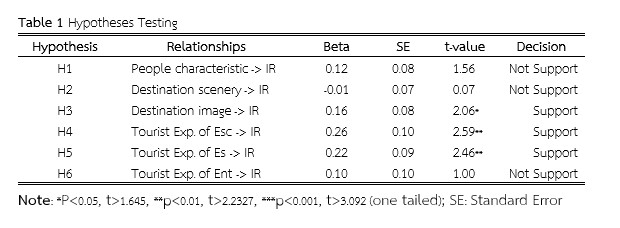
Inserting Tables in the Text
Tables must be aligned to the left margin of the column. The table title must be placed above the table. Both the table title and all text within the table must be entirely in English, formatted in 14-point regular TH SarabunPSK font.
Example: