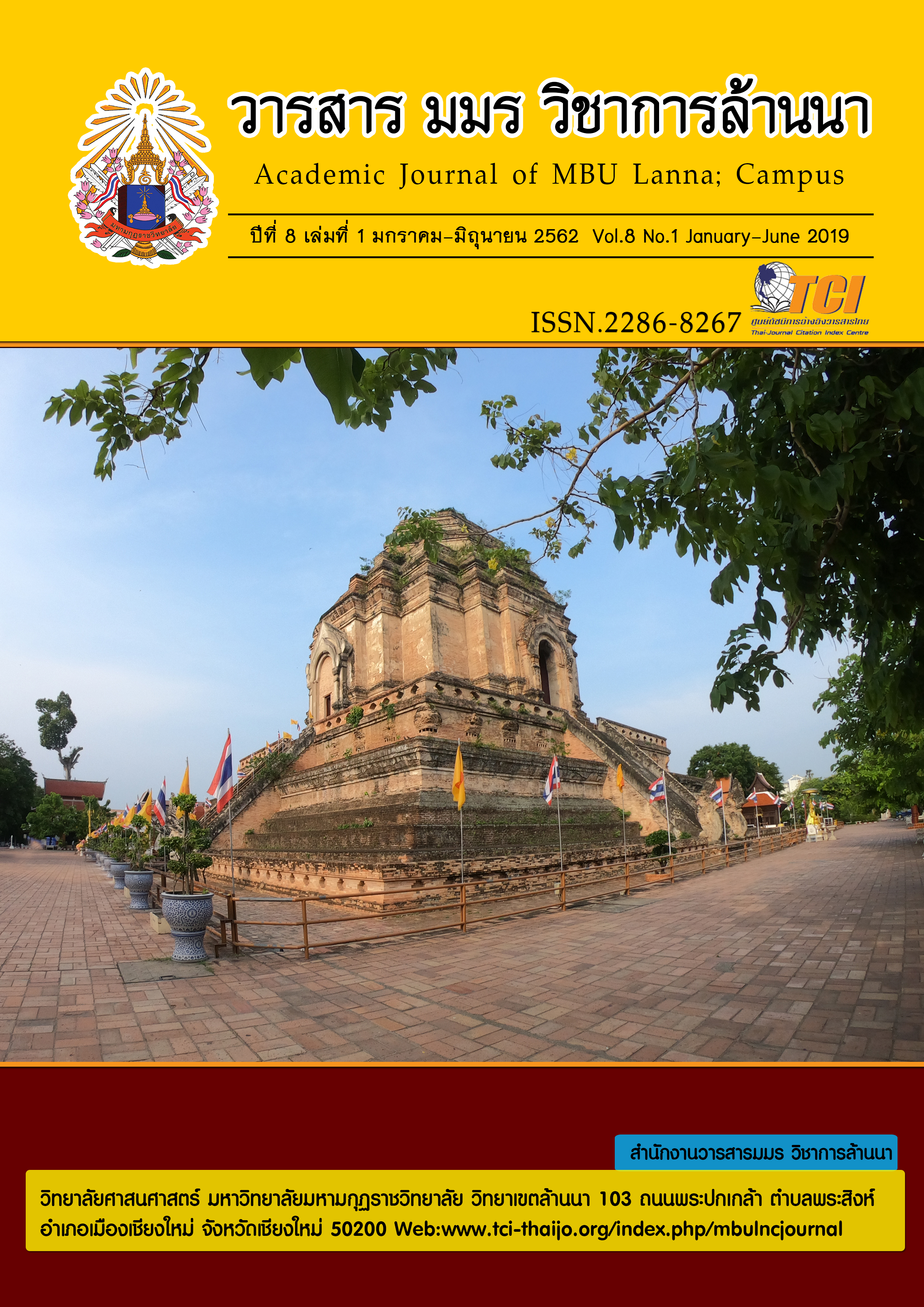
บทบาทพระสงฆ์ในการอนุรักษ์โบราณสถานเวียงกุมกาม ตำบลท่าวังตาล อำเภอสารภี จังหวัดเชียงใหม่
คำสำคัญ:
พระสงฆ์, การอนุรักษ์, โบราณสถาน, เวียงกุมกามบทคัดย่อ
งานวิจัยนี้มีวัตถุประสงค์ 1.เพื่อศึกษาบทบาทของพระสงฆ์ ในการอนุรักษ์โบราณสถานเวียงกุมกาม 2) เพื่อศึกษาปัญหาอุปสรรคของพระสงฆ์ ในการการอนุรักษ์โบราณสถานเวียงกุมกาม 3) เพื่อศึกษาแนวทางการพัฒนาบทบาทของพระสงฆ์ ในการการอนุรักษ์โบราณสถานเวียงกุมกาม ดำเนินการวิจัยโดยวิธีการสัมภาษณ์เชิงลึกกับกลุ่มเป้าหมาย คือ เจ้าอาวาสวัดในตำบลท่าวังตาล อำเภอสารภี จังหวัดเชียงใหม่ ประชากรศึกษาได้แก่ ผู้นำชุมชน ผู้นำทางบุญ ในพื้นที่เวียงกุมกาม ผู้แทนหน่วยงานที่เกี่ยวข้อง จำนวน 15 รูป/คนโดยใช้เครื่องมือในการเก็บรวบรวมข้อมูลเป็นแบบสัมภาษณ์เชิงลึก
ผลการวิจัยพบว่า 1) พระสงฆ์มีบทบาทในการอนุรักษ์โบราณสถานเวียงกุมกาม โดยมุ่งเน้นในด้านการดูแลรักษาอนุรักษ์โบราณสถาน โบราณวัตถุ ศิลปวัตถุ ด้านการให้ความรู้ในการดูแลรักษาอนุรักษ์โบราณสถาน โบราณวัตถุ ศิลปวัตถุ และด้านความร่วมมือในการดูแลรักษาอนุรักษ์โบราณสถาน โบราณวัตถุ ศิลปวัตถุ ร่วมกับหน่วยงานราชการ ผู้นำชุมชน กลุ่มองค์กรต่างๆ ที่เกี่ยวข้อง 2) ปัญหาอุปสรรคของพระสงฆ์ ในการการอนุรักษ์โบราณสถานเวียงกุมกามในปัจจุบัน คือ การดูแลรักษาความสะอาดโบราณสถาน โบราณวัตถุ ศิลปวัตถุเวียงกุมกามที่อยู่ในวัด ชาวบ้านในชุมชนยังไม่ให้ความสำคัญเท่าที่ควร และพระสงฆ์ขาดความรู้ความเข้าใจในเรื่องของการดูแลรักษาโบราณสถาน โบราณวัตถุ ศิลปวัตถุในด้านต่างๆ 3) แนวทางการพัฒนาบทบาทของพระสงฆ์ ในการการอนุรักษ์โบราณสถานเวียงกุมกาม พระสงฆ์ถือได้ว่าเป็นผู้มีแนวคิดริเริ่มในการอนุรักษ์โบราณวัตถุสถาน ดังนั้น พระสงฆ์ควรร่วมมือประสานความคิดระหว่างผู้นำชุมชนและชาวบ้าน และ โดยประสานความร่วมมือกับกรมศิลปากร สำนักงานวัฒนธรรม และหน่วยงานที่มีส่วนเกี่ยวข้อง จัดอบรมถวายความรู้แก่คณะพระสงฆ์ตำบลท่าวังตาล ซึ่งเป็นที่ตั้งเก็บรักษาโบราณสถานเวียงกุมกาม ถ่ายทอดองค์ความรู้เพื่อนำไปสู่การพัฒนาในการอนุรักษ์โบราณสถาน โบราณวัตถุ ศิลปวัตถุ เวียงกุมกาม ได้อย่างมีประสิทธิภาพและยั่งยืนสืบต่อไป
เอกสารอ้างอิง
ที่ 3). กรุงเทพฯ: สมาพันธ์.
การท่องเที่ยวแห่งประเทศไทย. (2544). คู่มือการจัดทัศนศึกษาสําหรับเยาวชน. กรุงเทพฯ: การท่องเที่ยวแห่งประเทศไทย.
ไกรสิน อุ่นใจ. (2548). ประวัติศาสตร์เวียงกุมกาม. สืบค้นเมื่อ 1 สิงหาคม 2561, จาก https://th.wikipedia.com
พระปลัดเกษม ฐิติสมฺปนฺโน. (2554). บทบาทพระสงฆในการอนุรักษโบราณสถาน โบราณวัตถุ ศิลปวัตถุใน อําเภอบ้านลาด จังหวัดเพชรบุรี. (วิทยานิพนธ์ปริญญาพุทธศาสตรมหาบัณฑิต, มหาวิทยาลัยมหาจุฬาลงกรณราชวิทยาลัย).
พระราชบัญญัติโบราณสถาน โบราณวัตถุ ศิลปวัตถุ และพิพิธภัณฑสถานแห่งชาติ พ.ศ.2504. (2548). กรุงเทพฯ: สํานักพิมพสมาพันธ์.
พระราชวรมุนี (ประยุทธ์ ปยุตฺโต). (2526). พระพุทธศาสนากับสังคมไทย. กรุงเทพฯ: เจริญวิทยการพิมพ์.
วีรวุฒิ โอตระกูล. (2520). มาอนุรักษ์กันเถิด ฉบับ 200 ปีกรุงรัตนโกสินทร์. กรุงเทพฯ: โอเดียนสโตร.
ดาวน์โหลด
เผยแพร่แล้ว
รูปแบบการอ้างอิง
ฉบับ
ประเภทบทความ
สัญญาอนุญาต
ผลการวิจัยและความคิดเห็นที่ปรากฏในบทความ ถือเป็นความคิดเห็นและอยู่ในความรับผิดชอบของผู้เขียนบทความ มิใช่ความเห็นหรือความรับผิดชอบของกองบรรณาธิการ หรือมหาวิทยาลัยมหามกุฏราชวิทยาลัย วิทยาเขตล้านนา ทั้งนี้ไม่รวมความผิดพลาดอันเกิดจากการพิมพ์
บทความที่ได้รับการเผยแพร่โดยวารสาร มมร วิชาการล้านนาถือเป็นสิทธิ์ของวารสารฯ