
การวิเคราะห์การใช้โวหารภาพพจน์ของโฆษณาผลิตภัณฑ์ดูแลผิวหน้าในอินสตาแกรม
Article Sidebar
Main Article Content
บทคัดย่อ
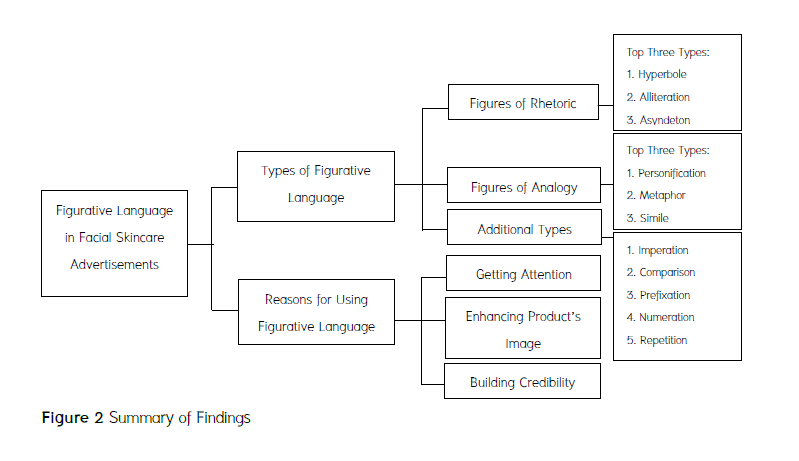
งานวิจัยนี้มีวัตถุประสงค์เพื่อศึกษาประเภทและเหตุผลในการใช้ภาพพจน์ในโฆษณาผลิตภัณฑ์ดูแลผิวหน้าผ่านสื่ออินสตาแกรม ผู้วิจัยเก็บข้อมูลโดยใช้คำบรรยายโฆษณา จำนวน 100 ชิ้น จากผลิตภัณฑ์แบรนด์ขายดีห้าอันดับที่นำเสนอระหว่างปี พ.ศ. 2567 ถึง พ.ศ. 2568 โดยมีกระบวนการสุ่มกลุ่มตัวอย่างแบบเจาะจง วิเคราะห์ข้อมูลโดยใช้วิธีการแบบผสมผสานระหว่างการวิจัยเชิงปริมาณโดยใช้สถิติเชิงพรรณนาเพื่อศึกษาประเภทของภาพพจน์ในภาษาโฆษณาตามกรอบแนวคิดของ Keraf และการวิจัยเชิงคุณภาพได้ทำการวิเคราะห์เนื้อหาเพื่ออธิบายเหตุผลในการใช้ภาพพจน์ในรูปแบบดังกล่าว ผลการวิจัยพบว่า จากคำบรรยายโฆษณาผลิตภัณฑ์ดูแลผิวหน้า 100 ชิ้นในอินสตาแกรม มีการใช้ภาพพจน์ 406 ครั้ง โดยพบการใช้ภาพพจน์ 28 ประเภทตามกรอบแนวคิดของ Keraf นอกจากนั้นพบการใช้ภาพพจน์เพิ่มเติมอีก 5 ประเภท และพบว่า ภาพพจน์ที่ใช้มากที่สุดสามอันแรก ได้แก่ อติพจน์ (Hyperbole) จำนวน 64 ครั้ง (15.96%) บุคลาธิษฐาน (Personification) จำนวน 44 ครั้ง (10.83%) และสัมผัสอักษร (Alliteration) จำนวน 37 ครั้ง (9.11%) นอกจากนี้พบการใช้วาทวิทยา (Figures of Rhetoric) มากที่สุดสามอันดับแรก ได้แก่ อติพจน์ (Hyperbole) จำนวน 64 ครั้ง (27.11%) สัมผัสอักษร (Alliteration) จำนวน 37 ครั้ง (15.67%) และการละคำสันธาน (Asyndeton) จำนวน 35 ครั้ง (14.83%) และโวหารเชิงเปรียบเทียบ (Figures of Analogy) มากที่สุดสามอันดับแรก คือ บุคลาธิษฐาน (Personification) จำนวน 44 ครั้ง (46.80%) อุปลักษณ์ (Metaphor) จำนวน 11 ครั้ง (11.70%) รวมทั้งอุปมาโวหาร (Simile) และการเปรียบเทียบ (Comparison) ประเภทละ 10 ครั้ง (10.63%) นอกจากนี้ ผลจากการวิเคราะห์เนื้อหาพบว่า เหตุผลในการใช้ภาพพจน์ในโฆษณาเพื่อการดึงดูดความสนใจ สร้างภาพลักษณ์ผลิตภัณฑ์ และสร้างความเชื่อถือของแบรนด์
Downloads
Article Details

อนุญาตภายใต้เงื่อนไข Creative Commons Attribution-NonCommercial-NoDerivatives 4.0 International License.
บทความที่ได้รับการตีพิมพ์เป็นลิขสิทธิ์ของบัณฑิตวิทยาลัย มหาวิทยาลัยราชภัฎเชียงใหม่
ข้อความที่ปรากฏในบทความแต่ละเรื่องในวารสารวิชาการเล่มนี้เป็นความคิดเห็นส่วนตัวของผู้เขียนแต่ละท่านไม่เกี่ยวข้องกับมหาวิทยาลัยราชภัฎเชียงใหม่ และคณาจารย์ท่านอื่นๆ ในมหาวิทยาลัยฯ แต่อย่างใด ความรับผิดชอบองค์ประกอบทั้งหมดของบทความแต่ละเรื่องเป็นของผู้เขียนแต่ละท่าน หากมีความผิดพลาดใด ๆ ผู้เขียนแต่ละท่านจะรับผิดชอบบทความของตนเองแต่ผู้เดียว
เอกสารอ้างอิง
Alexander, B. N. (2025, November 25). What is Instagram? Everything you can do on the popular photo-sharing app. Reader’s Digest. https://www.rd.com/article/what-is-instagram/
Amalina, A. (2023). Language use in skincare product advertisements found in Instagram to persuade buyers based on Fairclough’s three-dimensional frameworks. International Journal of Multicultural and Multireligious Understanding, 10(7), 45-52. http://dx.doi.org/10.18415/ijmmu.v10i7.4782
Anastari, I., Agustina, H. N., & Suharto, R. P. (2024). An Analysis of Figurative Language Used in Fashion and Beauty Advertisements of Red Digital Magazine. British (Jurnal Bahasa dan Sastra Inggris), 13(1), 65-76. https://doi.org/10.31314/british.13.1.65-76.2024
Arjulayana, A., & Enawar, E. (2022). Cosmetics advertisement language through discursive psychology. Linguists Journal of Linguistics and Language Teaching, 8(2), 205-215. https://doi.org/10.29300/ling.v8i2.8016
Atmaja, K. (2022). Internet analysis of figurative language in automotive advertisement slogans. Journal of Pragmatics Research, 4(1), 18-28. https://doi.org/10.18326/jopr.v4i1.18-28
Bahadur, S. A., Ahmed, R. Z., & Iqbal, R. H. (2025). Analyzing Conceptual Metaphors in Beauty Cream Advertisements: A Corpus-Based Study. ACADEMIA International Journal for Social Sciences, 4(3), 825-850. https://doi.org/10.63056/ACAD.004.03.0417.
Caesary, A.D. P., Sunra, L., & Mustikawati, Y. (2022). Language style at advertisement in CNN. Journal of English Literature and Linguistic Studies, 1(1), 1-12. https://doi.org/10.26858/jells.v1i1.40859
Chamba, M., Reinoso, M., & Rengifo, E. (2019). Authentic materials to foster writing skills in college EFL learners. English Language Teaching, 12(6), 112-127. https://doi.org/10.5539/elt.v12n6p112
Gong, N., & Seo, J. (2025). The influence of advertising language and brand loyalty on consumers’ purchase intentions. Asia Pacific Journal of Marketing and Logistics, 37(11), 3464–3481. https://doi.org/10.1108/APJML-09-2024-1282
Hesti, H., Tang, M. R., & Aj, A. A. (2022). Functions of rhetoric and figurative language in Instagram social media skin care ads. Journal of Asian Multicultural Research for Social Sciences Study, 3(2), 44-48. https://doi.org/10.47616/jamrsss.v3i2.282
Hutagalung, N. A., Buulolo, S., & Purba, D. (2023). An analysis of figurative language used in Cosmetic Advertisement on Indonesian Television. JURNAL LITTERA: Fakultas Sastra Darma Agung, 2(1), 1-8. https://doi.org/10.46930/littera.v2i1.3172
Keraf, G. (2005). Definition of language. Smarapradipha
Keraf, G. (2010). Diksi dan gaya bahasa. Gramedia Pustaka Utama.
Ketaren, S. V., Sipahutar, S. R., Marpaung, E. M., & Saragih, E. (2021). Figurative language use in song lyrics in English textbook senior high school. Linguistic, English Education and Art (LEEA) Journal, 4(2), 300-305. https://doi.org/10.31539/leea.v4i2.1997
Lakkam, P. (2017). The lexical collocations used in facial skincare product online advertisements [Master thesis, Thammasat University]. ttp://ethesisarchive.library.tu.ac.th/thesis/2017/TU_2017_5921040373_9112_7285.pdf
Larasati, C. A., & Pariyanto. (2022). An analysis of word formation process on cosmetic product descriptions in U.S celebrities’ beauty brands. Journal of English Teaching, 7(2), 179-188. https://doi.org/10.36456/jet.v7.n02.2022.6332
Mandala AI. (2025, July 10). Updated analysis of the cosmetics market structure. https://blog.mandalasystem.com/th/cosmetics-market-in-thailand
Meredith, E. (2022). Figure of speech. EBSCO Knowledge Advantage. https://www.ebsco.com/research-starters/literature-and-writing/figure-speech
Merriam-Webster Dictionary. (2025, October 10). Figurative language. https://www.merriam-webster.com/grammar/figurative-language
Mukhammadovna, J. M., & Matluba, A. (2025). The use of imperative verbs in radio advertising texts. Journal of Innovation in Educational and Social Research, 3(3), 59-62. https://journals.proindex.uz/index.php/JIESR/article/view/2270
Naser, H. S. (2021). A multimodal analysis of hyperbolic devices in advertisements of health and beauty products. Journal of the College of Languages, 44, 94-118. https://doi.org/10.36586/jcl.2.2021.0.44.0094
Nurlanbek Kyzy, M. (2025) Multimodal advertising strategies in the beauty industry: A case of cosmetic brand. Open Access Library Journal, 12(11), 1-18. https://doi.org/10.4236/oalib.1114420
Pathumratanathan, P., & Tapinta, P. (2012). An investigation on figurative language employed in English advertisements in in-flight magazines. Journal of Studies in the Field of Humanities, 19(1), 215-232.
Pho-Klang, K. (2020). Figurative language in social media captions for clothing advertisements. Rangsit Journal of Social Sciences and Humanities, 7(2), 33-40. https://so12.tci-thaijo.org/index.php/jcsh/article/view/3681/2634
Qader, K. S., Hamza, P. A., Othman, R. N., Anwer, S. A., Hamad, H. A., Gardi, B., & Ibrahim, H. K. (2022). Analyzing different types of advertising and its influence on customer choice. International Journal of Humanities and Education Development (IJHED), 4(6), 8-21. https://doi.org/10.22161/jhed.4.6.2
Salim, S., & Purwaningtyas, I. (2022). Analysis of language styles: Rhetoric and figurative language in makeup advertisement on Instagram. Proceedings of the 2nd International Conference on Language, Literature, Education, and Culture, ICOLLEC 2022 (pp. 1-10). ICOLLEC. https://doi.org/10.4108/eai.11-11-2022.2329359
Septiana, A. K. (2022). The Use of Language Function in Maybelline New York Cosmetic Advertisements. Wacana Saraswati Majalah Ilmiah Tentang Bahasa Sastra Dan Pembelajarannya, 22(1). https://doi.org/10.46444/wacanasaraswati.v22i1.398
Shi, J. (2021). On application of rhetorical devices to cosmetic advertisements. Open Journal of Modern Linguistics, 11(3), 315-326. https://doi.org/10.4236/ojml.2021.113025
Srichaiwong, P. (2020). English for communication in cosmetic advertisements from web pages. Academy Journal of Northern, 7(2), 29-39. https://so09.tci-thaijo.org/index.php/AJntc/article/view/1440
Statista. (2025, June 12). Number of Instagram users worldwide from 2013 to 2025. https://www.statista.com/statistics/183585/instagram-number-of-global-users
Today Bizview. (2024, July 11). 10 Most valuable skincare and cosmetics brands in the world. https://www.workpointtoday.com
Trakulkasemsuk, W. (2018). Roles of English in facial cosmetic advertisements in Thai magazines. Journal of English Studies, 13(1), 24-43. https://so04.tci-thaijo.org/index.php/jsel/article/view/159271
Yusuf, A. H. S. M., & Abas, N. M. (2024). Exploring the impact of language in advertising on consumers’ purchase intentions: A thematic literature analysis. International Journal of Research and Innovation in Social Science, 8(9), 3560-3572. https://dx.doi.org/10.47772/IJRISS.2024.8090297
Zuhriani, V. (2022). The analysis of cosmetic advertising language by using presupposition approach. Journal of Languages Studies, 10(2), 20-28. https://doi.org/10.26740/lh.v10n2.p20-28
