
THE IMPACT OF PERCEIVED OVERQUALIFICATION ON LAWYERS’ TASK PERFORMANCE: THE MEDIATING ROLE OF EMOTIONAL LABOR
Article Sidebar
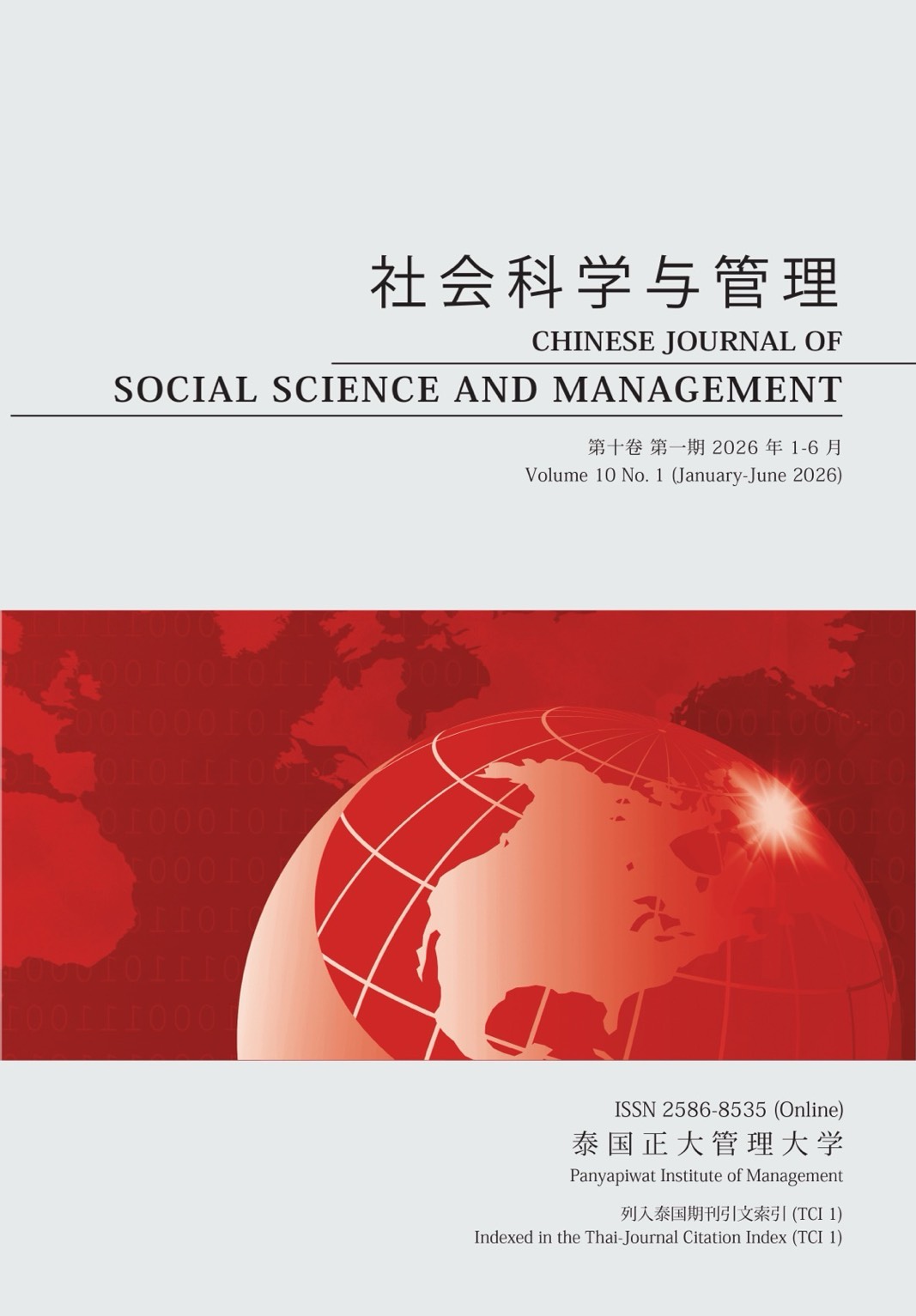
Main Article Content
Abstract
Purpose: In an increasingly specialized and highly competitive legal services market, more highly educated lawyers are performing low-complexity and repetitive work, undermining their sense of job value and intensifying perceived overqualification. Although previous research has examined the emotional and behavioral consequences of perceived overqualification, the extent to which it affects lawyers’ task performance remains unclear, particularly given the lack of systematic tests of the mediating role of emotional labor. Grounded in Cognitive Evaluation Theory, this study investigates the effect of perceived overqualification on lawyers’ task performance and examines the mediating role of emotional labor.
Study Design/Methodology/Approach: A survey of practicing lawyers in Shaanxi Province, yielding 473 valid questionnaires (approximately 2.5% of the province’s roughly 19,000 practicing lawyers). Multiple regression analyses were conducted using SPSS, and Structural Equation Modeling (SEM) and mediation tests were performed using AMOS.
Findings: Perceived overqualification has a significant negative effect on lawyers’ task performance. Emotional labor mediates this relationship: surface acting has a positive mediating effect, whereas deep acting has a negative mediating effect.
Originality/Value: This study examined the performance consequences of perceived overqualification among lawyers and refined the underlying mechanism through a dual-path perspective on emotional labor, thereby extending existing theoretical explanations. Practically, the findings indicated that law firms should improve person-job fit and relieve perceived overqualification through measures such as case grading, job rotation, and career development support, while strengthening emotion management training to enhance task performance and job satisfaction.
Article Details

This work is licensed under a Creative Commons Attribution-NonCommercial-NoDerivatives 4.0 International License.
Chinese Journal of Social Science and Management Editorial Division
The Office of Research and Development, Panyapiwat Institute of Management
85/1 Moo 2, Chaengwattana Rd., Bang Talat, Pakkred, Nonthaburi 11120, Thailand
Tel. 02 855 01048 E-mail: cjssm@pim.ac.th
References
Borman, W. C., & Motowidlo, S. J. (1993). Expanding the criterion domain to include elements of contextual performance. In N. Schmitt, & W. C. Borman (Eds.), Personnel selection in organizations (pp. 71-98). Jossey-Bass.
Cheng, B., Zhou, X., & Guo, G. (2021). The impact of perceived overqualification on employees’ emotional labor: A moderated mediation model. Nankai Business Review, 24(1), 192-245. [in Chinese]
Deci, E. L., & Ryan, R. M. (2000). The “what” and “why” of goal pursuits: Human needs and the self-determination of behavior. Psychological Inquiry, 11(4), 227-268. https://doi.org/10.1207/S15327965PLI1104_01
Erdogan, B., & Bauer, T. N. (2009). Perceived overqualification and its outcomes: The moderating role of empowerment. Journal of Applied Psychology, 94(2), 557-565. https://doi.org/10.1037/a0013528
Grandey, A. A. (2000). Emotional regulation in the workplace: A new way to conceptualize emotional labor. Journal of Occupational Health Psychology, 5(1), 95-110. https://doi.org/10.1037/1076-8998.5.1.95
Hochschild, A. R. (1983). The managed heart: Commercialization of human feeling. University of California Press.
Hu, J., Shu, Y., Dou, Y., Jiang, G., Xue, C., & Bai, L. (2023). Study on the relationship between nurses’ perceived overqualification, psychological contract breach and emotional labor. Military Nursing, 40(4), 36-39. [in Chinese]
Lazarus, R. S., & Folkman, S. (1984). Stress, appraisal, and coping. Springer.
Luksyte, A., Spitzmueller, C., & Maynard, D. C. (2011). Why do overqualified incumbents deviate? Examining multiple mediators. Journal of Occupational Health Psychology, 16(3), 279-296.
Maynard, D. C., Joseph, T. A., & Maynard, A. M. (2006). Underemployment, job attitudes, and turnover intentions. Journal of Organizational Behavior, 27(4), 509-536. https://doi.org/10.1002/job.389
Qu, Y., Gao, M., & Yu, G. (2025). The impact of perceived overqualification on emotional labor of the new generation of employees: An analysis based on the service industry. Zhejiang Academic Journal, (1), 168-177. https://doi.org/10.16235/j.cnki.33-1005/c.2025.01.006 [in Chinese]
The State Council Information Office of the People’s Republic of China. (2025). The State Council Information Office holds a thematic press conference on “Completing the 14th Five-Year Plan with high quality”: Progress in promoting socialist rule of law and judicial administration during the 14th Five-Year Plan period to serve economic and social development. Xinhuanet. https://www.xinhuanet.com/zt/gxbsswfbh/sfb/ [in Chinese]
Wang, J., Feng, P., Xing, N., Yang, C., & Li, M. (2021). The impact of hotel employees’ emotional labor strategies on task performance: An ERP-based study. Tourism Science, 35(4), 37-52. https://doi.org/10.16323/j.cnki.lykx.2021.04.003 [in Chinese]
Williams, L. J., & Anderson, S. E. (1991). Job satisfaction and organizational commitment as predictors of organizational citizenship and in-role behaviors. Journal of Management, 17(3), 601-617. https://doi.org/10.1177/014920639101700305
Xu, H., Ge, S., Tian, J., & Li, F. (2020). A cross-level study on the mechanism of entrepreneurial team’s emotional labor affecting entrepreneurial performance. Soft Science, 34(7), 43-47. https://doi.org/10.13956/j.ss.1001-8409.2020.07.08 [in Chinese]
Yang, W., & Li, C. (2021). The effects and mechanisms of perceived overqualification on individual performance: A meta-analysis based on emotional-cognitive processing system and cultural context. Acta Psychologica Sinica, 53(5), 527-554. [in Chinese]
Zhang, Y., Shang, G., Zhang, J., & Zhou, F. (2019). Perceived overqualification and employee performance: A psychological entitlement perspective. Management Review, 31(12), 194-206. https://doi.org/10.14120/j.cnki.cn11-5057/f.2019.12.017 [in Chinese]
Zhao, C., Chen, L., & Tao, M. (2019). The impact of perceived overqualification on emotional labor among service industry employees: The mediating role of organizational self-esteem and the moderating role of psychological empowerment. Economic Management Journal, 41(1), 89-105. https://doi.org/10.19616/j.cnki.bmj.2019.01.006 [in Chinese]
