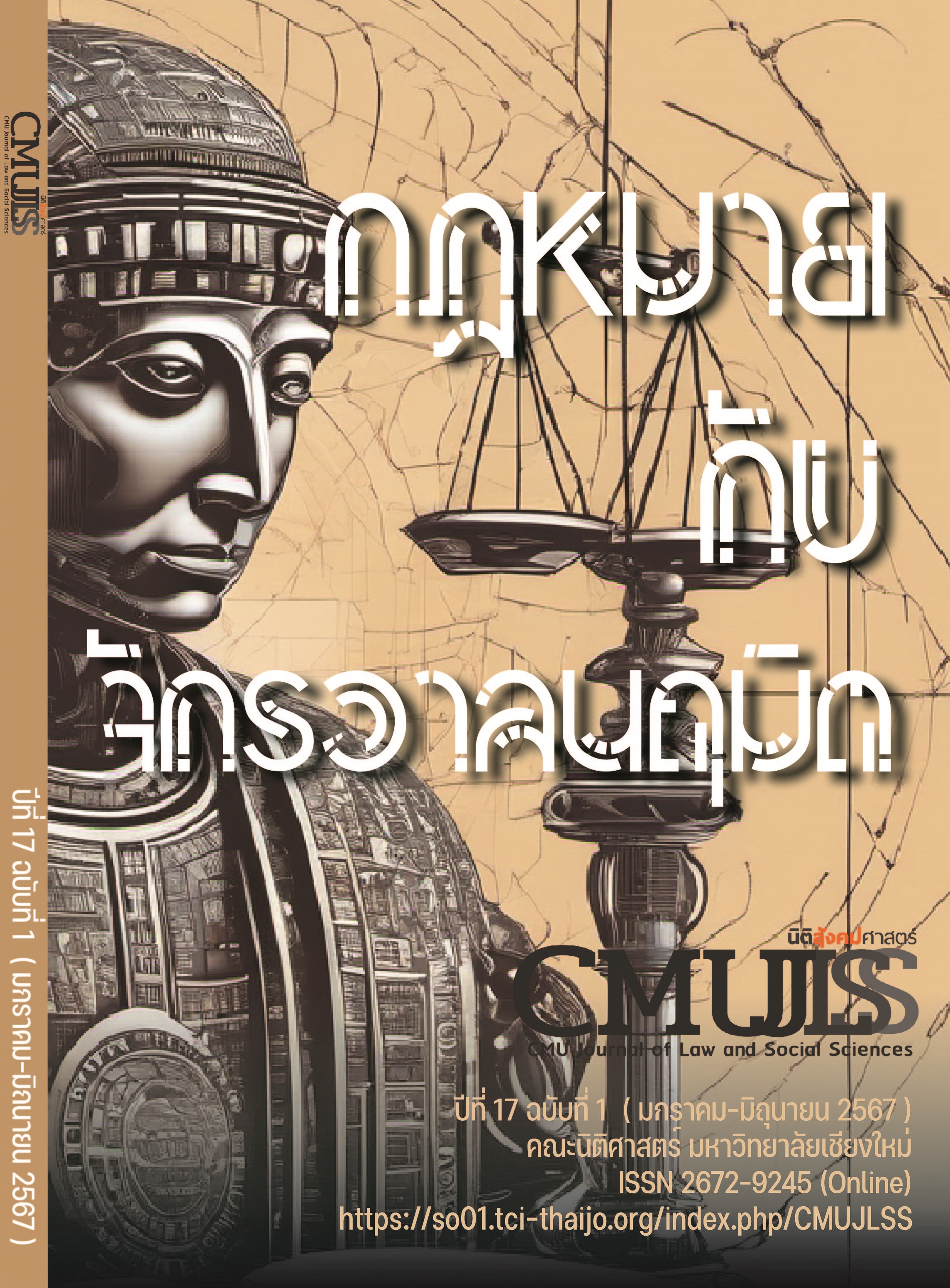
ปัญหาการคุ้มครองสิทธิบัตรที่เกี่ยวข้องกับสินทรัพย์ดิจิทัลในจักรวาลนฤมิต
Article Sidebar
Main Article Content
บทคัดย่อ
การออกแบบสถาปัตยกรรมระบบและรูปลักษณ์ของสินทรัพย์ดิจิทัลในจักรวาลนฤมิตล้วนเกิดจากการคิดค้นและความคิดสร้างสรรค์สิ่งใหม่ๆ ของผู้ออกแบบตรงตามวัตถุประสงค์ การคุ้มครองสิทธิบัตร แต่ทว่าลักษณะของสินทรัพย์ดิจิทัลนั้นเป็นหน่วยข้อมูลอิเล็กทรอนิกส์ที่ไม่สามารถจับต้องและมองเห็นด้วยตาเปล่าได้ ในขณะที่กฎหมายสิทธิบัตรไทยมุ่งคุ้มครอง การประดิษฐ์และการออกแบบไปที่ผลิตภัณฑ์ทางกายภาพ
บทความนี้มีวัตถุประสงค์ในการวิเคราะห์ปัญหาการคุ้มครองสิทธิบัตรที่เกี่ยวข้องกับสินทรัพย์ดิจิทัลในจักรวาลนฤมิตโดยการศึกษาข้อมูลทางเทคโนโลยีของสินทรัพย์ดิจิทัลในจักรวาลนฤมิต ทฤษฎี หลักการ กฎหมายสิทธิบัตร และกฎหมายอื่นที่เกี่ยวข้องทั้งของประเทศไทย สหภาพยุโรป ประเทศสหรัฐอเมริกา ประเทศสาธารณรัฐประชาชนจีน (จีน) และประเทศสาธารณรัฐจีน (ไต้หวัน) จากการศึกษาพบว่า พระราชบัญญัติสิทธิบัตร พ.ศ. 2522 คำจำกัดความ “การประดิษฐ์”และ“กรรมวิธี” ตามมาตรา 3 ไม่ครอบคลุมถึงการคิดค้นหรือกระบวนการเพื่อให้ได้มาซึ่งผลิตภัณฑ์ที่จับต้องไม่ได้หรือผลิตภัณฑ์เสมือนอันเป็นส่วนหนึ่งของสินทรัพย์ดิจิทัลในจักรวาลนฤมิต แม้ลักษณะของ“กรรมวิธี” ที่ไม่เป็นนามธรรมควรได้รับการคุ้มครองก็ตาม ทั้งนี้ ความเป็นผลิตภัณฑ์ของสิทธิบัตรการประดิษฐ์มุ่งไปที่ผลิตภัณฑ์อย่างทรัพย์แตกต่างจากการออกแบบผลิตภัณฑ์ที่สามารถตีความผลิตภัณฑ์อย่างทรัพย์สินได้ อย่างไรก็ตาม “แบบผลิตภัณฑ์” ไม่ชัดเจนว่าให้รวมถึงการออกแบบดิจิทัล อีกทั้ง หากมีการนำเอารูปลักษณ์ของผลิตภัณฑ์ทางกายภาพมาออกแบบสินทรัพย์ดิจิทัลในจักรวาลนฤมิตถือว่ามีความใหม่ตามมาตรา 56 ซึ่งขาดความสร้างสรรค์และขัดแย้งกับความจริงที่เป็นการโอนถ่ายรูปลักษณ์ไปยังสินค้าคนละประเภทเท่านั้น
ด้วยเหตุผลดังกล่าว ผู้เขียนจึงมีข้อเสนอแนะให้ควรแก้ไขเพิ่มเติมพระราชบัญญัติสิทธิบัตร พ.ศ. 2522 ให้ครอบคลุมกรรมวิธีในการแก้ไขปัญหาทางเทคนิคอย่างเฉพาะเจาะจง แม้จะไม่ส่งผลโดยตรงต่อการทำงานหลักของผลิตภัณฑ์ทางกายภาพ ส่วนสิทธิบัตรการออกแบบผลิตภัณฑ์ให้รวมถึงการออกแบบดิจิทัล รวมถึงข้อเสนอแนะอื่นที่เหมาะสม เพื่อเป็นการพัฒนากฎหมายให้สอดคล้องกับความเจริญก้าวหน้าทางเทคโนโลยีโดยเฉพาะที่เกี่ยวกับสินทรัพย์ดิจิทัลในจักรวาลนฤมิตร
Article Details

อนุญาตภายใต้เงื่อนไข Creative Commons Attribution 4.0 International License.
O ความคิดเห็นใดๆ ที่ลงตีพิมพ์ใน CMU Journal of Law and Social Sciences เป็นของผู้เขียน (ความคิดเห็นใดๆ ของผู้เขียน กองบรรณาธิการ CMU Journal of Law and Social Sciences ไม่จำเป็นต้องเห็นด้วย)
O กองบรรณาธิการ CMU Journal of Law and Social Sciences ไม่สงวนสิทธิ์ในการคัดลอกแต่ให้อ้างอิงแหล่งที่มาด้วย
เอกสารอ้างอิง
“2. Examination Practice.” EPO. Accessed April 10, 2023. https://www.epo.org/en/legal/guidelines-epc/2023/g_ii_2.html.
“Computer-Generated Icons.” USPTO. Accessed March 25, 2023. https://www.uspto.gov/web/offices/pac/mpep/s1504.html#d0e152415.
“Index for Computer-Implemented Inventions.” EPO. Accessed April 10, 2023. https://new.epo.org/en/legal/guidelines-epc/2023/j.html.
CNIPA. “专利审查指南 2021.” December 12, 2020. Accessed August 20, 2022. http://zjpaa.cn/upload/attachments/draft/2c9f82a5-797e-3aa0-017a-e6fac48b-0037.pdf.
ECTA AISBL. “Design Protection for Graphical User Interfaces (GUIs) Working Paper.” ECTA, September 2022. https://ecta.org/ECTA/documents/ECTADesignCommitteeWorkingPaperonGUIs4412.pdf.
European Patent Academy. “Learning Path for Patent Examiners Claim Formulation for Computer-Implemented Inventions (CII): Advanced Level.” EPO, July 2022. https://e-courses.epo.org/wbts_int/lppe/cii-7_advanced_script.pdf.
Hamilton, James, Olivier Poulin, Philippe Signore, and Christopher Ward. “Design Patent Protection in the United States.” Epi Information Journal no. 2 (June 2001): 82. https://patentepi.org/assets/uploads/documents/epi-information/2001_02_epi_info.pdf.
Ishukatiyar16 [pseud.]. “What is a Cryptographic Token?” GeeksforGeeks. Accessed October 11, 2022. https://www.geeksforgeeks.org/what-is-a-cryptographic-token.
TIPO. “The Relationship between the Metaverse and Design Patents.” June 13, 2022. https://www.tipo.gov.tw/tw/dl-282258-477dd67ac935450fb7a7c72ef31d7d0c.html.
TIPO. “第十二章 電腦軟體相關發明.” July 07, 2021. Accessed October 6, 2022. https://topic.tipo.gov.tw/patents-tw/cp-673-893182-61f5d-101.html.
USPTO. “Patent Subject Matter Eligibility.” Uspto.gov. Accessed October 15, 2022. https://www.uspto.gov/web/offices/pac/mpep/s2106.html#ch2100_d29a1b_139b2_397html.
WIPO. “Class9 (090918)” in Nice Classification. Last modified January 12, 2023. https://www.wipo.int/classifications/nice/nclpub/en/fr/?class_number=9&gors=&lang=en&menulang=en&mode=flat¬ion=modifications&version=20230101.
WIPO. “Locarno Classification Class14-04.” Accessed July 20, 2023. https://www.wipo.int/classifications/locarno/locpub/en/fr/?class_number=14&explanatory_notes=show&id_numbers=show&lang=en&menulang=en&mode=loc¬ion=&version=20230101.html.
แทร์รี่ วินเทอร์ส. Metaverse 101. แปลโดย ประเวศ หงส์จรรยา. พิมพ์ครั้งที่ 1. กรุงเทพฯ: อมรินทร์ฮาวทู อมรินทร์พริ้นติ้ง แอนด์ พับลิชชิ่ง, 2565.
โอภาส เอี่ยมสิริวงศ์. การวิเคราะห์และออกแบบระบบ. กรุงเทพฯ: ซีเอ็ดยูเคชั่น, 2566.
ไมตรี สุเทพากุล. “กฎหมายทรัพย์สินทางปัญญา (สิทธิบัตร).” ใน รวมคำบรรยาย ภาคหนึ่ง สมัยที่ 68, 5. กรุงเทพฯ: สำนักอบรมศึกษากฎหมายแห่งเนติบัณฑิตยสภา, 2558.
กรมทรัพย์สินทางปัญญา. คู่มือการขอรับสิทธิบัตรและอนุสิทธิบัตร ฉบับประชาชน. นนทบุรี: กรมทรัพย์สินทางปัญญา, 2563. สืบค้นเมื่อวันที่ 13 ตุลาคม 2565. https://www.ipthailand.go.th/images/3534/2564/Patent/people-s-guide.pdf.
กรมทรัพย์สินทางปัญญา. คู่มือการตรวจสอบคำขอรับสิทธิบัตรการประดิษฐ์และอนุสิทธิบัตร. หมวด 6 การตรวจสอบคำขอรับสิทธิบัตรการประดิษฐ์และอนุสิทธิบัตร ระบบข้อมูลสำหรับการทำงานของเครื่องคอมพิวเตอร์ หรือโปรแกรมคอมพิวเตอร์. นนทบุรี: กรมทรัพย์สินทางปัญญา, 2562. สืบค้นเมื่อวันที่ 13 ตุลาคม 2565. https://www.ipthailand.go.th/th/คู่มือ-คำแนะนำ-ขั้นตอน-สิทธิบัตร/item/คู่มือการตรวจสอบคำขอรับสิทธิบัตรการประดิษฐ์และอนุสิทธิบัตร-ฉบับปี-๒๕๖๒.html.
กรมทรัพย์สินทางปัญญา. คู่มือคำขอรับสิทธิบัตรการออกแบบผลิตภัณฑ์. สืบค้นเมื่อวันที่ 20 กรกฎาคม 2566. https://www.ipthailand.go.th/images/780/Manual_The_application_design.pdf.
จักรกฤษณ์ ควรพจน์. กฎหมายสิทธิบัตร แนวความคิดและบทวิเคราะห์. พิมพ์ครั้งที่ 4. กรุงเทพฯ: นิติธรรม, 2560.
ทำเนียบรัฐบาล. “Thailand 4.0 ขับเคลื่อนอนาคตสู่ความมั่นคง มั่งคั่ง ยั่งยืน.” วารสารไทยคู่ฟ้า 33 (มกราคม-มีนาคม 2560): 4. สืบค้นเมื่อวันที่ 13 ตุลาคม 2565. https://spm.thaigov.go.th/FILEROOM/spm-thaigov/DRAWER004/GENERAL/DATA0000/00000368.PDF.
ปานใจ ธารทัศนวงศ์. Fundamental of Software Engineering & Digital Transformation. พิมพ์ครั้งที่ 1. นนทบุรี: บริษัท ไอดีซี พรีเมียร์ จำกัด, 2565.
พีรพัฒน์ หาญคงแก้ว และอัครเดช เดี่ยวพาณิช. Digital Asset Investment 101 จาก Bitcoin สู่การลงทุนยุคใหม่ในสินทรัพย์ดิจิทัล. พิมพ์ครั้งที่ 3. กรุงเทพฯ: สต็อคทูมอร์โรว์, 2564.
มณฑล อรรถบลยุคล. พระราชบัญญัติสิทธิบัตร พ.ศ. 2522 (แก้ไขเพิ่มเติม พ.ศ. 2562) ฉบับอ้างอิง. กรุงเทพฯ: วิญญูชน, 2565.
มนพะงา เล็กขาว. “เปิดมุมมองระบบราชการไทยผ่านหน้าต่าง Society 5.0.” สำนักงาน ก.พ.ร. สืบค้นเมื่อวันที่ 5 ตุลาคม 2566. https://wiki.ocsc.go.th/_media/มนพะงา_เล็กขาว8_.pdf.
ศูนย์เทคโนโลยีอิเล็กทรอนิกส์และคอมพิวเตอร์แห่งชาติ. “NETPIE: Internet of Things.” NECTEC. สืบค้นเมื่อวันที่ 2 มกราคม 2566. https://www.nectec.or.th/innovation/innovation-software/netpie.html.
