
Enhancing the Value of OTOP Manee Chao Phraya Handwoven Madmee Fabric, Pathum Thani Province, Thailand
Article Sidebar
Main Article Content
Abstract
The OTOP (One Tambon, One Product) Manee Chao Phraya handwoven textile products in Pathum Thani Province, Thailand have been experiencing a significant decline in production orders due to shifts in market trends, particularly the increasing dominance of digital sales channels. This study identifies three major challenges affecting the competitiveness of these products: 1) a lack of contemporary pattern development, 2) inadequate online marketing communication channels, and 3) insufficient brand and packaging strategies for value addition. To address these issues, a comprehensive community-driven product transformation approach was implemented, focusing on three key areas: 1) product development, 2) online marketing enhancement, and 3) brand and packaging innovation.
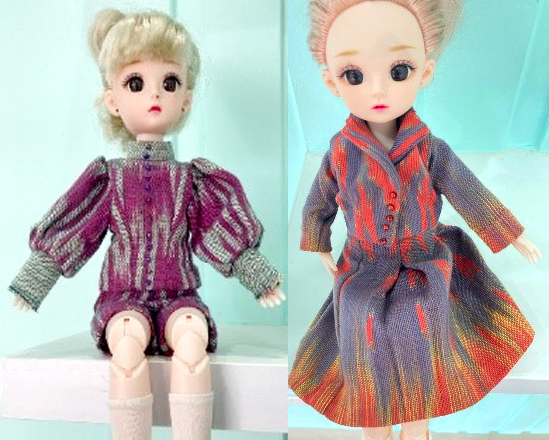
Product development through innovation and sustainability: The product development strategy pursued two distinct approaches: 1) upgrading existing products by modernizing textile patterns and designs for men’s suits and women’s dresses and 2) introducing an upcycling initiative by repurposing fabric waste into doll outfits. The textile production process was rooted in traditional craftsmanship, utilizing naturally dyed, handwoven Madmee fabric. The natural dyeing process, which includes indigo from Indigofera tinctoria, red hues from lac resin and roots of Morinda citrifolia, yellow from Artocarpus heterophyllus heartwood, and brown from Pterocarpus indicus bark, provides unique coloration to the fabric, enhancing its appeal in sustainable fashion. Traditional weaving techniques, such as intricate supplementary weft patterns like Dork Pikul (Bullet Wood Flower), Dork Kaew (Orange Jasmine), and Kanok (Thai flame motifs), were integrated into modern designs to cater to contemporary consumer preferences.
To ensure that the new product designs align with evolving fashion trends while preserving cultural heritage, the study explored fashion identity development using archetype branding principles. The fashion design process incorporated both hand-drawn and computer-aided design (CAD) techniques to create garments that enhance the wearer's personality and confidence. Men's apparel designs were inspired by geometric structures to improve silhouette elegance, while women’s dresses featured modernized traditional patterns to cater to fashion-forward consumers. The combination of aesthetic appeal and sustainable craftsmanship strengthened the market positioning of these textile products.
Digital marketing enhancement for greater market reach: Recognizing the growing importance of digital platforms in consumer engagement, this study focused on equipping entrepreneurs with digital marketing skills to enhance online visibility and sales. A central aspect of this initiative was the creation of a digital product catalog showcasing the redesigned textile products. Additionally, an Instagram-based sales channel, MANEEHAND, was launched to reach broader customer segments, including international buyers interested in sustainable and heritage textiles.
Social media strategies included content creation emphasizing storytelling around the heritage and craftsmanship behind each piece, engaging customers through live demonstrations, and leveraging influencer marketing to build brand credibility. Online engagement analytics revealed increased visibility and interaction, leading to a steady rise in product inquiries and sales conversions. The combination of digital accessibility and a compelling narrative helped bridge the gap between traditional craftsmanship and modern consumer expectations.
Brand and packaging development to enhance value and identity: A significant challenge for OTOP textile products has been the lack of a distinctive brand identity and packaging design that resonates with modern consumers. To address this, the study introduced branding elements inspired by local cultural symbols, including lotus flowers, water ripples, and traditional Manee Chao Phraya weaving motifs. These elements were incorporated into both the product branding and packaging design to create a cohesive and recognizable identity.
Packaging was developed based on extensive feedback from 30 entrepreneurs and members of the Manee Chao Phraya OTOP group. The new designs prioritized user convenience, sustainability, and brand recognition. The packaging materials were selected with an emphasis on eco-friendliness, utilizing recycled and biodegradable options to align with global sustainability trends. A satisfaction assessment, conducted through structured questionnaires, revealed a high level of approval, with an average rating of 4.45 out of 5. Respondents particularly appreciated the ease of use, enhanced brand visibility, and comprehensive product information provided on the packaging, which facilitated repeat purchases and improved market expansion potential.
Economic and environmental impact: The implementation of the product transformation strategy yielded measurable economic benefits. Monthly production orders increased, averaging 15 men’s suits, 22 women’s dresses, and 7 doll outfits, with each doll outfit generating an added value of 700-1,200 Baht per set. The adoption of upcycling practices contributed to waste reduction by repurposing fabric scraps into high-value artisan products. This sustainable approach not only minimized environmental impact but also positioned the products within the eco-conscious consumer segment, further enhancing their market appeal. Additionally, bundling strategies, such as pairing doll outfits with fabric swatches to highlight craftsmanship, were introduced to increase perceived value and encourage higher purchase rates. The combined effects of improved design, digital outreach, and branding led to increased market competitiveness, reaffirming the viability of traditional textiles in modern fashion markets.
Conclusion: This research underscores the importance of an integrated approach to revitalizing traditional textile products in the digital economy. By addressing key challenges in product design, online marketing, and branding, the study demonstrates that traditional craftsmanship can be effectively adapted to contemporary consumer needs. The findings suggest that empowering local artisans with digital marketing tools and sustainable design strategies can lead to greater economic sustainability and cultural preservation. Future research may explore further applications of AI-driven fashion forecasting and consumer behavior analytics to optimize product development and market positioning. The success of this initiative highlights a replicable model for other OTOP communities seeking to innovate while maintaining their cultural heritage.
Article Details

This work is licensed under a Creative Commons Attribution-NonCommercial-NoDerivatives 4.0 International License.
Area Based Development Research Journal values copyright protection and licensing to safeguard author rights and facilitate the appropriate dissemination of research. Our policies ensure openness, accessibility, and attribution. Authors retain copyright ownership, and articles are published under a Creative Commons Attribution License (CC BY), allowing sharing, adaptation, and proper attribution. Authors have the freedom to publish under the CC BY license, granting broad reuse and distribution permissions. The journal supports posting articles on third-party repositories, adhering to institutional and funding restrictions. Author guidelines detail copyright and licensing requirements, empowering authors with knowledge about their rights and responsibilities. These policies cultivate an environment of collaboration, openness, and responsible sharing, benefiting authors and the research community while honoring intellectual property rights.
References
Aaker, D. A. (1996). Brand equity. New York: The Free Press.
Bank of Thailand. (2022). Report on innovation investment of Thai SMEs for the year 2021. Retrieved January 31, 2025, from: https://www.bot.or.th/content/dam/bot/documents/th/research-and-publications/reports/bot-report/other-report/ARBOT2022.pdf. (in Thai).
Bhrammanachote, W. (2021). Chomthong hand-made cotton and value-added approaches for product enhancement in the modern market: A qualitative research. Journal of Yala Rajabhat University, 16(1), 1 – 10. (in Thai).
Chaijan, K. (2024). Identity and cultural relations of mudmee silk patterns: A case study in Chonnabot districts, Khon Kaen Province, and Khwao Sinarin District, Surin Province. Journal of Cultural Approach, 25(47), 72 – 83. (in Thai).
Chomcharoen, N. (2014). Costume design for men to upgrade personality inspired by geometric. Retrieved December 12, 2024, from https://nuir.lib.nu.ac.th/dspace/bitstream/123456789/4318/1/NuntiyaChomcharoen.pdf. (in Thai).
Eaknarajindawat, N. (2020). Guidelines for the development of the special economic zone to support the effective policy of the special economic zone on the border of Mukdahan Province. Journal of Pacific Institute of Management Science, 6(3), 196 – 207. (in Thai).
Ellen Macarthur Foundation. (2023). A new textiles economy: Redesigning fashion's future. Retrieved January 31, 2025, from: https://www.ellenmacarthurfoundation.org/publications/a-new-textiles-economy-redesigning-fashions-future.
Keativipak, K. (2022). Analysis of industrial crafts design framework to identify weaknesses for future creative design. Journal of Asia Arts and Design, 3(2), 122 – 152. (in Thai).
Keeler, K. (2022). Marketing management. (14th edition). New Jersey: Pearson Prentice Hall.
Knapp, D. E. (2000). The brand mindset. New York: McGraw-Hill.
Kotler, P. (2022). Marketing management. (Global edition). Upper Saddle River: Person Education Limited.
Markoto, O. (2022). Ureru package design 150 no tessoku. Bangkok: Nation Book. (in Thai).
McKinsey Global Institute. (2021). The future of work after Covid-19. Retrieved January 31, 2025, from: https://www.mckinsey.com/featured-insights/future-of-work/the-future-of-work-after-covid-19.
Office of the National Economic and Social Development Council. (2022). The thirteenth plan (2023 – 2027). Retrieved November 25, 2024, from: https://www.nesdc.go.th/ewt_news.php?nid=13651. (in Thai).
Pollution Control Department. (2023). Thailand's solid waste wituation report 2023, Ministry of natural resources and environment. Retrieved January 31, 2025, from: https://www.pcd.go.th/publication/32944/. (in Thai).
Ponjananoon, A. (2016). Promoting strategy for independent artists via social network: A case study of Youtube. (Master’s thesis) Faculty of Music, Silpakorn University. (in Thai).
Roonreangjai, R. (2024). Designing and developing apparel products from local woven fabric of Nan Province, Thailand. Area Based Development Research Journal, 16(2), 154 – 174. (in Thai).
Sirikudta, S. (2014). Guidelines in value added creation for destination and tourism products In Singburi Province, Thailand. Journal of Social Sciences Srinakharinwirot University, 17, 215-230. (in Thai).
Spring News. (2022). Upcycling leftover silk scraps into multiple new products: Reducing waste, creating value. Retrieved October 15, 2024, from: https://www.springnews.co.th/keep-the-world/832039. (in Thai).
Subsrisunjai, W., Utiswannakul, P., & Musikapan, R. (2017). Fashion design identity by using the brand archetype concept. Institute of Culture and Arts Journal, 18(2), 107 – 114. (in Thai).
Sujkird, A. (2024). Development of natural dyed fabric products to create added value for the Mud Yom Mud Yim professional group, Bang khayang subdistricts, Mueang district, Pathum Thani Province. Journal of Management Science Review, 26(1), 39 – 52. (in Thai).
Thanarak, R., & Phromnoi, S. (2024). Innovation in participatory communication for creating perception and utilizing identity in Phraya Phichai Dap Hak’s Khiew-phalee chickens in Uttaradit Province. Area Based Development Research Journal, 16(1), 31 – 50. (in Thai).
Theerakitmanuntachai, S. (2020). The effectiveness of Instagram and Facebook communication on consumers’ decisions to online purchase during the Covid-19 situation: A case study of YogaAum. (Master’s thesis) Faculty of Communication Arts, Bangkok University. (In Thai).
Thailand Textile Institute. (2022). Thai textile industry situation report 2022. Retrieved January 31, 2025, from https://www.thaitextile.org/. (in Thai).
Yutyunyong, T. (2017). The use of creativity for building Thai fashion brand. Journal of Community Development Research (Humanities and Social Sciences), 10(3), 48 – 52. (in Thai).
United Nations. (2022). The UN alliance for sustainable fashion. Retrieved January 31, 2025, from: https://unfashionalliance.org/.
Wiphawin, R. (2021). 3 ways to add value to second-hand goods: Turning old items into treasure. Retrieved January 31, 2025, from: https://www.smethailandclub.com/entrepreneur/7255.html. (in Thai).
