
การสร้างมูลค่าเพิ่มผลิตภัณฑ์ผ้าฝ้ายทอมือมัดหมี่สีธรรมชาติ โอทอปมณีเจ้าพระยา จังหวัดปทุมธานี
Article Sidebar
Main Article Content
บทคัดย่อ
ผลิตภัณฑ์โอทอปมณีเจ้าพระยา อำเภอคลองสี่ จังหวัดปทุมธานี ประสบปัญหาผลิตภัณฑ์ผ้าฝ้ายทอมือมัดหมี่สีธรรมชาติมียอดการสั่งผลิตลดลงอย่างต่อเนื่อง เนื่องจากไม่มีการพัฒนาแพทเทิร์นเสื้อสูทบุรุษและชุดสตรีที่ทันสมัย ไม่มีช่องทางการสื่อสารการตลาดออนไลน์ช่องทางดิจิทัล และไม่มีการพัฒนาตราสินค้าและบรรจุภัณฑ์ที่สร้างมูลค่าเพิ่ม งานวิจัยนี้จึงเพิ่มมูลค่าผลิตภัณฑ์ผ้าฝ้ายทอมือมัดหมี่สีธรรมชาติ โดยมีขั้นตอนดังนี้ 1) การพัฒนาผลิตภัณฑ์ผ้าฝ้ายทอมือมัดหมี่สีธรรมชาติ โดยการสำรวจข้อมูลเบื้องต้นจากการสัมภาษณ์ผู้ประกอบการและรวบรวมข้อมูลจากกลุ่มลูกค้า
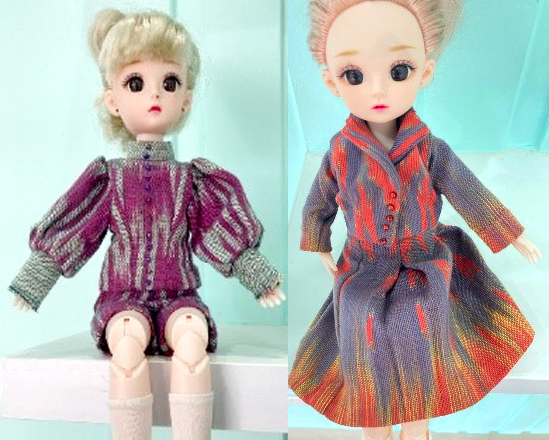
การสะท้อนปัญหาที่ส่งผลให้ยอดการสั่งผลิตลดลงอย่างต่อเนื่อง โดยการยกระดับผลิตภัณฑ์เดิมให้มีความน่าสนใจและตอบโจทย์ตามความต้องการของผู้บริโภคในปัจจุบัน และการพัฒนาออกแบบแพทเทิร์นเสื้อสูทลำลองและชุดกระโปรงสตรี และการตัดเย็บชุดตุ๊กตาจากเศษผ้าเหลือทิ้ง 2) การพัฒนาการตลาดออนไลน์ โดยการพัฒนาศักยภาพผู้ประกอบการด้านการตลาดออนไลน์ จัดทำแคตตาล็อกสินค้าเผยแพร่ผ่านระบบออนไลน์ และสร้างช่องทางการจำหน่ายสินค้าออนไลน์ และ 3) การออกแบบและพัฒนาตราสินค้าและบรรจุภัณฑ์ โดยเก็บข้อมูลจากผู้ประกอบการและสมาชิกของกลุ่มโอทอปมณีเจ้าพระยาจำนวน 30 คน ส่งผลให้ยอดสั่งผลิตเสื้อสูทเฉลี่ย 15 ตัวต่อเดือน ชุดสตรี 22
ชุดต่อเดือน และชุดตุ๊กตาจำนวน 7 ชุด ซึ่งสร้างมูลค่าเพิ่ม 700 - 1,200 บาทต่อชุด การเข้าถึงข้อมูลสินค้าของลูกค้าเพิ่มขึ้นจากกลยุทธ์การขายแบบจับคู่ผลิตภัณฑ์และการสื่อสารผ่านช่องทางออนไลน์บนแพลตฟอร์มอินสตาแกรม MANEEHAND และแพลตฟอร์มติ๊กตอก และตราสินค้าและบรรจุภัณฑ์ที่สะท้อนอัตลักษณ์ท้องถิ่น ผ่านสัญลักษณ์ดอกบัวหลวง ลายสายน้ำ และลวดลายผ้าทอมณีเจ้าพระยา คำนึงถึงความสะดวกในการใช้งาน สร้างการจดจำ และมีข้อมูลผลิตภัณฑ์ครบถ้วน เพื่อสร้างโอกาสการซื้อซ้ำและการขยายตลาดในอนาคต เป็นการเพิ่มมูลค่าทางเศรษฐกิจ และลดผลกระทบต่อสิ่งแวดล้อม
Article Details

อนุญาตภายใต้เงื่อนไข Creative Commons Attribution-NonCommercial-NoDerivatives 4.0 International License.
Area Based Development Research Journal values copyright protection and licensing to safeguard author rights and facilitate the appropriate dissemination of research. Our policies ensure openness, accessibility, and attribution. Authors retain copyright ownership, and articles are published under a Creative Commons Attribution License (CC BY), allowing sharing, adaptation, and proper attribution. Authors have the freedom to publish under the CC BY license, granting broad reuse and distribution permissions. The journal supports posting articles on third-party repositories, adhering to institutional and funding restrictions. Author guidelines detail copyright and licensing requirements, empowering authors with knowledge about their rights and responsibilities. These policies cultivate an environment of collaboration, openness, and responsible sharing, benefiting authors and the research community while honoring intellectual property rights.
เอกสารอ้างอิง
Aaker, D. A. (1996). Brand equity. New York: The Free Press.
Bank of Thailand. (2022). Report on innovation investment of Thai SMEs for the year 2021. Retrieved January 31, 2025, from: https://www.bot.or.th/content/dam/bot/documents/th/research-and-publications/reports/bot-report/other-report/ARBOT2022.pdf. (in Thai).
Bhrammanachote, W. (2021). Chomthong hand-made cotton and value-added approaches for product enhancement in the modern market: A qualitative research. Journal of Yala Rajabhat University, 16(1), 1 – 10. (in Thai).
Chaijan, K. (2024). Identity and cultural relations of mudmee silk patterns: A case study in Chonnabot districts, Khon Kaen Province, and Khwao Sinarin District, Surin Province. Journal of Cultural Approach, 25(47), 72 – 83. (in Thai).
Chomcharoen, N. (2014). Costume design for men to upgrade personality inspired by geometric. Retrieved December 12, 2024, from https://nuir.lib.nu.ac.th/dspace/bitstream/123456789/4318/1/NuntiyaChomcharoen.pdf. (in Thai).
Eaknarajindawat, N. (2020). Guidelines for the development of the special economic zone to support the effective policy of the special economic zone on the border of Mukdahan Province. Journal of Pacific Institute of Management Science, 6(3), 196 – 207. (in Thai).
Ellen Macarthur Foundation. (2023). A new textiles economy: Redesigning fashion's future. Retrieved January 31, 2025, from: https://www.ellenmacarthurfoundation.org/publications/a-new-textiles-economy-redesigning-fashions-future.
Keativipak, K. (2022). Analysis of industrial crafts design framework to identify weaknesses for future creative design. Journal of ASIA Arts and Design, 3(2), 122 – 152. (in Thai).
Keeler, K. (2022). Marketing management. (14th edition). New Jersey: Pearson Prentice Hall.
Knapp, D. E. (2000). The brand mindset. New York: McGraw-Hill.
Kotler, P. (2022). Marketing management. (Global edition). Upper Saddle River: Person Education Limited.
Markoto, O. (2022). Ureru package design 150 no tessoku. Bangkok: Nation Book. (in Thai).
McKinsey Global Institute. (2021). The future of work after Covid-19. Retrieved January 31, 2025, from: https://www.mckinsey.com/featured-insights/future-of-work/the-future-of-work-after-covid-19.
Office of the National Economic and Social Development Council. (2022). The thirteenth plan (2023 – 2027). Retrieved November
, 2024, from: https://www.nesdc.go.th/ewt_news.php?nid=13651. (in Thai).
Pollution Control Department. (2023). Thailand's solid waste wituation report 2023, Ministry of natural resources and environment. Retrieved January 31, 2025, from: https://www.pcd.go.th/publication/32944/. (in Thai).
Ponjananoon, A. (2016). Promoting strategy for independent artists via social network: A case study of Youtube. (Master’s thesis) Faculty of Music, Silpakorn University. (in Thai).
Roonreangjai, R. (2024). Designing and developing apparel products from local woven fabric of Nan Province, Thailand. Area Based Development Research Journal, 16(2), 154 – 174. (in Thai).
Sitikodta, S. (2014). Approaches to adding value to tourist attractions and tourism products in Sing Buri Province, Thailand. Journal of Social Sciences Srinakharinwirot University, 17(17), 215-230. (in Thai).
Smith, R., & Kang, J. (2022). Digital consumer behavior: Navigating the shift from custom-tailored to ready-to-wear. Journal of Retailing and Consumer Services, 66, 65-73.
Spring News. (2022). Upcycling leftover silk scraps into multiple new products: Reducing waste, creating value. Retrieved October 15, 2024, from: https://www.springnews.co.th/keep-the-world/832039. (in Thai).
Subsrisunjai, W., Utiswannakul, P., & Musikapan, R. (2017). Fashion design identity by using the brand archetype concept. Institute of Culture and Arts Journal, 18(2), 107 – 114. (in Thai).
Sujkird, A. (2024). Development of natural dyed fabric products to create added value for the Mud Yom Mud Yim professional group, Bang khayang subdistricts, Mueang district, Pathum Thani Province. Journal of Management Science Review, 26(1), 39 – 52. (in Thai).
Thanarak, R., & Phromnoi, S. (2024). Innovation in participatory communication for creating perception and utilizing identity in Phraya Phichai Dap Hak’s Khiew-phalee chickens in Uttaradit Province. Area Based Development Research Journal, 16(1), 31 – 50. (in Thai).
Theerakitmanuntachai, S. (2020). The effectiveness of Instagram and Facebook communication on consumers’ decisions to online purchase during the Covid-19 situation: A case study of YogaAum. (Master’s thesis) Faculty of Communication Arts, Bangkok University. (In Thai).
Thailand Textile Institute. (2022). Thai textile industry situation report 2022. Retrieved January 31, 2025, from https://www.thaitextile.org/. (in Thai).
Yutyunyong, T. (2017). The use of creativity for building Thai fashion brand. Journal of Community Development Research (Humanities and Social Sciences), 10(3), 48 – 52. (in Thai).
United Nations. (2022). The UN alliance for sustainable fashion. Retrieved January 31, 2025, from: https://unfashionalliance.org/.
Wiphawin, R. (2021). 3 ways to add value to second-hand goods: Turning old items into treasure. Retrieved January 31, 2025, from: https://www.smethailandclub.com/entrepreneur/7255.html. (in Thai).
