
การใช้ประโยชน์ใบลำไยหลังการเก็บเกี่ยวเพื่อการย้อมผ้าไหม ตำบลยุหว่า จังหวัดเชียงใหม่
Article Sidebar
Main Article Content
บทคัดย่อ
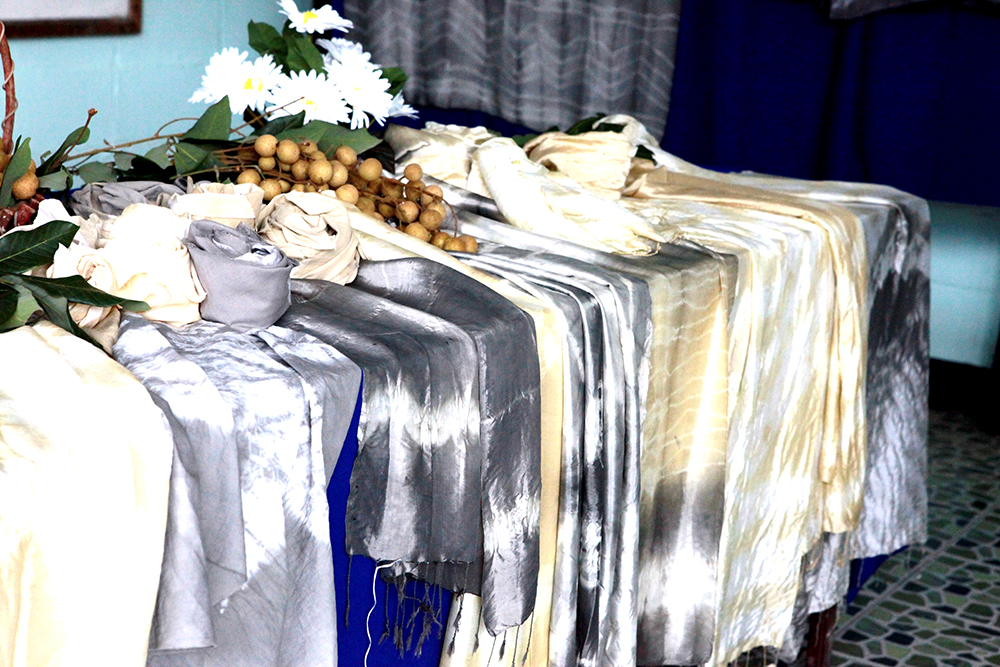
การกำจัดขยะใบลำไยจากการเก็บเกี่ยวที่ดำเนินการโดยการทิ้ง ทำปุ๋ยหมักหรือการเผา ซึ่งส่งผลให้เกิดปัญหาฝุ่นควันในชุมชน งานวิจัยนี้จึงนำแนวคิดขยะเหลือศูนย์มาใช้ออกแบบการกำจัดขยะใบลำไยจากการเก็บเกี่ยวโดยนำกลับมาใช้ประโยชน์ด้วยการสกัดสีจากใบลำไยเพื่อนำมาย้อมผ้าไหมในตำบลยุหว่า จังหวัดเชียงใหม่ กระบวนการวิจัยมีขั้นตอนดังนี้ 1) ศึกษาปัญหา และคัดเลือกพื้นที่กลุ่มเป้าหมาย 2) ทดลองย้อมผ้า และทดสอบผ้าที่ย้อมสีจากใบลำไย 3) การทำความเข้าใจกับชุมชน 4) ระดมความคิด วิเคราะห์ และวางแผน และ 5) การถ่ายทอดองค์ความรู้ จากการทดลองและทดสอบการย้อมผ้าไหม พบว่า ผ้าไหมที่ย้อมจากใบลำไยมีเฉดสีเหลืองถึงสีน้ำตาลอ่อน เมื่อทำมอร์แดนท์ก่อนการย้อม พร้อมการย้อม และหลังการย้อม พบว่าการทำมอร์แดนท์หลังการย้อมให้ผลดีที่สุด เมื่อใช้สารมอร์แดนท์ประเภทสแตนนัสคลอไรด์ สารส้ม และจุนสี จะได้เฉดสีเหลืองถึงสีน้ำตาลเข้ม เมื่อใช้สนิมเหล็กเป็นสารมอร์แดนท์ ได้เฉดสีน้ำตาลถึงสีดำ การทดสอบความคงทนของสีต่อการซัก การขัดถู เหงื่อ น้ำ และแสง อยู่ในระดับดีถึงดีมาก ผลการถ่ายทอดความรู้การย้อมผ้าไหมในชุมชนพบว่า สมาชิกในชุมชนสามารถนำความรู้ไปใช้ประโยชน์ในการประกอบอาชีพในระดับดีมาก จากการระดมความคิดสู่การพัฒนาผลิตภัณฑ์ พบปัญหาด้านการขึ้นรูปผลิตภัณฑ์ในชุมชน จึงนำผลิตภัณฑ์สำเร็จรูปมามัดย้อมสีจากใบลำใย และให้ความรู้เรื่องการสร้างแนวคิดการออกแบบและพัฒนาผลิตภัณฑ์จากวัฒนธรรมท้องถิ่น ซึ่งทำให้ชุมชนสามารถตั้งกลุ่มผลิตภัณฑ์ย้อมผ้าไหมจากใบลำไย มีรายได้เพิ่มเฉลี่ยเดือนละ 2,500 - 3,000 บาท และชุมชนเห็นถึงความสำคัญของการรักษาสิ่งแวดล้อม
Article Details

อนุญาตภายใต้เงื่อนไข Creative Commons Attribution-NonCommercial-NoDerivatives 4.0 International License.
Area Based Development Research Journal values copyright protection and licensing to safeguard author rights and facilitate the appropriate dissemination of research. Our policies ensure openness, accessibility, and attribution. Authors retain copyright ownership, and articles are published under a Creative Commons Attribution License (CC BY), allowing sharing, adaptation, and proper attribution. Authors have the freedom to publish under the CC BY license, granting broad reuse and distribution permissions. The journal supports posting articles on third-party repositories, adhering to institutional and funding restrictions. Author guidelines detail copyright and licensing requirements, empowering authors with knowledge about their rights and responsibilities. These policies cultivate an environment of collaboration, openness, and responsible sharing, benefiting authors and the research community while honoring intellectual property rights.
เอกสารอ้างอิง
Academic Services Group 3. (2019). Waste management in thailand. Bangkok: Secretariat of the House of Representatives. (in Thai).
Bureau of Community Empowerment. (2016). Community’s knowledge management guidebook. Bangkok: Department of Community Development. (in Thai).
Chantara, S. (2012). Haze and air pollution from biomass burning in the northern areas of thailand, haze in the northern areas of thailand, volence, impact, causes and solutions (Research project for health policy and environment system health phase 2). Health Systems Research Institute, Nonthaburi. (in Thai).
Environment Promotion Division, Regional Environment Office 1. (2018). Summary of haze and forest fires condition 2018 (Chaing Mai, Chiang Rai, Lampoon, Mae Hong Son). Chaing Mai: Ministry of Natural Resources and Environment. (in Thai).
Mongkholrattanasit, R., Klaichoi, C., Changmuang, W., Sasitorn, N., Manarungwit, K., Maha-in, K. ..., & Tiyasri, S. (2017). New natural indigo dyeing on silk and cotton yarn commercially. (Knowledge guide). National Research Council of Thailand. (In Thai).
Mongkholrattanasit, R., Klaichoi, C., Maha-In, K., Ariyakuare, K., Chonsakorn, S., & Rungruangkitkrai, N. (2014). Utilization of longan leaf extract for dyeing and UV protection of silk fabric using pre-mordanting method. Advanced Materials Research Journal, 1030, 438-441.
Patcharametha, T. (2014). Product design for environment friendly. Silpakorn University Journal, 34(1), 119–135. (in Thai).
Phiphatpanyanukul, K. (1994). Quality control textile preparation work for printing. Bangkok: People Public Company Limited. (in Thai).
Punrattanasin, N., Nakpathom, M., Somboon, B., Narumol, N., Rungruangkitkrai, N., & Mongkholrattanasit, R. (2013). Silk fabric dyeing with natural dye from mangrove bark (Rhizophora apiculata Blume) extract. Industrial Crops and Products Journal, 49, 122-129.
Roger, E.M. (1983). Diffusion of innovation (3th ed.). The Fress. New York: Collier Macmillan.
Tungnitiboon, A., & Ketkaew, N. (2019). Community role model for solid waste management according to zero waste by participation of punbumpen community phasi charoen district bangkok. (Research report). National Research Council of Thailand. (in Thai).
Wijitkosum, S., & Leknoi, O. (2014). Research innovation and technology transfer for applications. Environmental Journal, 21(3), 19–28. (in Thai).
Yosying, N. (2014). Color fastness and shades cotton fabric dyed with natural dye. (Research report). Bangkok: Rajamangala University of Technology Krungthep. (in Thai).
Yu Wa Sub-district Municipality. (2019). Summary of economic crops and product quantity in Yu Wa sub-district municipality for the year 2019. Chaing Mai: Yu Wa Sub-district. (in Thai).
