
รูปแบบการจัดการของเหลือทิ้งจากไผ่เพื่อสร้างความเข้มแข็งชุมชนบ้านโพธิ์งาม จังหวัดปราจีนบุรี
Article Sidebar
Main Article Content
บทคัดย่อ
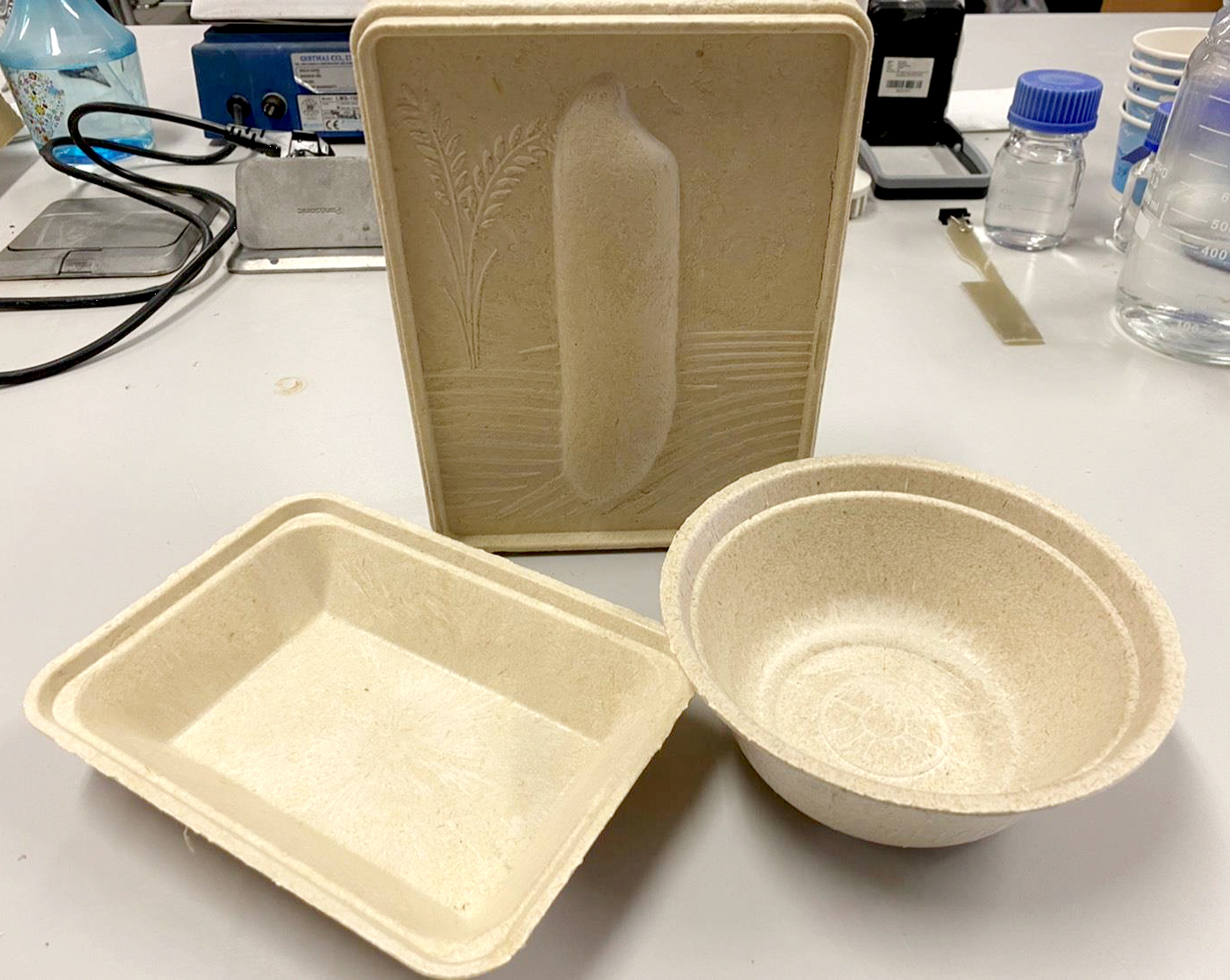
ชุมชนบ้านโพธิ์งาม อำเภอประจันตคาม จังหวัดปราจีนบุรี มีอาชีพเพาะปลูกไผ่และมีปราชญ์ชุมชนที่มีความรู้ความสามารถด้านการผลิตงานหัตถกรรมจากภูมิปัญญาท้องถิ่น การผลิตผลิตภัณฑ์จากไม้ไผ่ของชุมชนทำให้มีของเหลือทิ้ง เช่น เศษไผ่ ท้องไผ่ เศษเส้นตอกที่ไม่ได้คุณภาพจำนวนมาก ซึ่งชุมชนกำจัดของเหลือทิ้งจากไผ่โดยการเผา ทำให้เกิดมลภาวะและส่งผลต่อสุขภาวะในระยะยาวของคนในชุมชน งานวิจัยนี้มีวัตถุประสงค์เพื่อพัฒนารูปแบบการจัดการของเหลือทิ้งจากไผ่ในงานหัตถกรรม เพื่อสร้างความเข้มแข็งของชุมชนบ้านโพธิ์งาม ด้วยกระบวนการทำงานแบบมีส่วนร่วม ดังนี้ 1) การสำรวจ วิเคราะห์อัตลักษณ์พื้นที่และปัญหา 2) การออกแบบการบริหารจัดการของเหลือทิ้งจากไผ่ 3) การคัดแยกชนิดและขนาดผงไผ่เหลือทิ้ง 4) การผสมผงไผ่เหลือทิ้งกับวัสดุต่างๆ และทดลองขึ้นรูปชิ้นงานและผลิตภัณฑ์ และ 5) การเชื่อมโยงภาคอุตสาหกรรมและชุมชน ส่งผลให้ชุมชนสามารถจัดการของเหลือทิ้งจากไผ่ โดยการแยกชนิดและขนาดผงไผ่ และจำหน่ายผงไผ่ขนาด 0.5 และ 1.0 mm ให้กับโรงงานเอกชน ทำให้ชุมชนมีรายได้เพิ่มขึ้นจากการจำหน่ายผงไผ่ 10 บาทต่อกิโลกรัม และโรงงานเอกชนลดต้นทุนการผลิตได้ 3,000 บาทต่อเดือน และชุมชนมีผลิตภัณฑ์ภาชนะบรรจุอาหารรักษ์โลกจากผงไผ่ที่ย่อยสลายได้เพื่อใช้งานภายในชุมชนหรือจำหน่าย ผลิตภัณฑ์ภาชนะบรรจุอาหารเป็นเทอร์โมพลาสติกสตาร์ชที่มีกระบวนการขึ้นรูปไม่ซับซ้อน มีค่าความแข็งที่ 25.3-28.7 Shore D และค่าการทนแรงกระแทกที่ 4.0-4.5 J/m ดังนั้นรูปแบบการจัดการของเหลือทิ้งจากเศษไผ่ทำให้เกิดห่วงโซ่คุณค่าใหม่แก่ชุมชน คือ 1) สร้างอาชีพการคัดแยกผงไผ่เพื่อจำหน่ายให้โรงงานเอกชน และ 2) มีภาชนะบรรจุอาหารรักษ์โลกจากกระบวนการแปลงขยะเป็นผลิตภัณฑ์ใหม่ ก่อให้เกิดการเปลี่ยนแปลงด้านความคิดของคนในชุมชน สร้างรายได้จากอาชีพเสริมและลดปริมาณของเหลือทิ้งจากไผ่ในพื้นที่ได้อย่างเหมาะสม และสามารถนำรูปแบบการจัดการของเหลือทิ้งไปใช้งานในพื้นที่อื่น ๆ
Article Details

อนุญาตภายใต้เงื่อนไข Creative Commons Attribution-NonCommercial-NoDerivatives 4.0 International License.
Area Based Development Research Journal values copyright protection and licensing to safeguard author rights and facilitate the appropriate dissemination of research. Our policies ensure openness, accessibility, and attribution. Authors retain copyright ownership, and articles are published under a Creative Commons Attribution License (CC BY), allowing sharing, adaptation, and proper attribution. Authors have the freedom to publish under the CC BY license, granting broad reuse and distribution permissions. The journal supports posting articles on third-party repositories, adhering to institutional and funding restrictions. Author guidelines detail copyright and licensing requirements, empowering authors with knowledge about their rights and responsibilities. These policies cultivate an environment of collaboration, openness, and responsible sharing, benefiting authors and the research community while honoring intellectual property rights.
เอกสารอ้างอิง
Boonmasongsung, D. T., Rodpon, P., Vasupen, K., Wongsorn, D., Doosanthia, N., Montee, A., & Pianpumepong, P. (2019). Community participation in adding value to Rajamangala Isan village’s rice paddy seeds: Ban Sala, Nakhon Ratchasima province. Area Based Development Research Journal, 11(4), 305–317. (in Thai).
Cazón, P., Velazquez, G., Ramírez, José A., & Vázquez, M. (2017). Polysaccharide-based films and coatings for food packaging: A review. Food Hydrocolloids, 68(1), 136-148.
Chaipong, S. (2020). Quantity bamboo production on demand of bamboo production’ OTOP in Prachinburi province. Life Sciences and Environment Journal, 21(1), 245–254. (in Thai).
Curvelo, A. A. S., Carvalho, A. J. F. De., & Agnelli, J. A. M. (2001). Thermoplastic starch–cellulosic fibers composites: preliminary results. Carbohydrate Polymers, 45(2), 183-188.
Department of Environmental Quality Promotion (DEQP). (2017). Zero waste. Retrieved June 22, 2022, from: http://www.mnre.go.th/attachment/iu/download.php?WP=nKI4nKNmoGA3ZxkCoMOahKGtn Jg4WaN2oGA3ZRj1oH9axUF5nrO4MNo7o3Qo7o3Q. (in Thai).
Horngren, C., Datar, S., & Rajan, M. (2015). Cost accounting: A managerial emphasis. (15th edition). Essex, UK: Pearson Education.
Jenjai, N. (2020). Upgrading Kai-weaved textiles for cultural products of the Mae Loi Luang community, Chiang Rai province. Area Based Development Research Journal, 12(2), 144-155. (in Thai).
Kersey, J., McCue, M., & Skidmore, E. (2020). Domains and dimensions of community participation following traumatic brain injury. Brain Injury, 34(6), 708-712.
Khamkerd, T., Chaiyo, P., Sangiemsilp, P., Therawat, J., Rueangrit, U., & Chuayphen, P. (2020). Development of community agricultural tourism by multilateral organization in Wang Yang community, Suphan Buri province. Area Based Development Research Journal, 12(6), 432–450. (in Thai).
Ma, X., Yu, J., & Ma, Y. (2005). Urea and formamide as a mixed plasticizer for thermoplastic wheat flour. Carbohydrate Polymers, 60(1), 111-116.
Marchoo, W., Jaikrajang, B., & Thitithanakul, S. (2022). Development of agritourism program of Pattana Maipon Permpoonsap community enterprise, Surat Thani province. Area Based Development Research Journal, 14(2), 159–172. (in Thai).
Martins, I. M., Magina, S. P., Oliveira, L., Freire, C. S. R., Silvestre, A. J. D., Neto, C. P., & Gandini A. (2009). New biocomposites based on thermoplastic starch and bacterial cellulose. Composites Science and Technology, 69(13), 2163-2168.
Pattanavibool, R. (1998). Bamboo research and development in Thailand, bamboo-conservation, diversity, ecogeography, germplasm, proceedings of training course cum workshop. Retrieved June 22, 2022, from: https://shorturl.asia/o3rkl. (in Thai).
Pho Ngam Sub District. (2021). General information of the agency. Retrieved January 20, 2021, from: https://www. phongam.go.th/index/?page=article1932. (in Thai).
Pollution Control Department. (2016). 3Rs. Retrieved January, 20 2021, from: http://www.kwaeom-.go.th/site/images/stories/file/Garbage/3rs.pdf. (in Thai).
Prachinburi Agricultural Extension Office. (2019). Statistical report on bamboo cultivation in Prachinburi province, 2018-2019. Retrieved June 22, 2022, from: http://www.prachinburi.doae.go.th/main1. (in Thai).
Prachinburi Provincial Agriculture and Cooperatives office. (2020). Bamboo products from Prachinburi province. Retrieved June 22, 2022, from: https://www.opsmoac.go.th/prachinburi-local_wisdom-preview-421591791881. (in Thai).
Rodriguez-Gonzalez, F., Ramsay, B., & Favis, B. (2004). Rheological and thermal properties of thermoplastic starch with high glycerol content. Carbohydrate Polymers, 58(2), 139-147.
Sangkakool, T., Intaraksa, R., Chusilp, N., & Boonradsamee, B. (2022). Nypa fruticans waste for construction of an eco-friendly
pavilion: A learning resource and identity enhancement of green community in Wangwon sub-district, Trang province. Area Based Development Research Journal, 14(2), 134–147.
Thailand Environment Institute Foundation. (2017). Preparation of the national bamboo and rattan resource management master plan. Retrieved June 22, 2022, from: https://www.tei.or.th/th/area_pro-ject_detail.php?area_id=6&project_id=30. (in Thai).
The Stock Exchange of Thailand. (2015). Economic analysis. Retrieved January 20, 2021, from: https://www.set.or.th/education/th/begin/stock_content04.pdf. (in Thai).
