
การพัฒนาสื่ออุปกรณ์การเรียนรู้ด้านการเคลื่อนไหวและการทรงตัวสำหรับเด็กที่มีความบกพร่องทางการมองเห็น โรงเรียนธรรมิกวิทยา จังหวัดเพชรบุรี
Article Sidebar
Main Article Content
บทคัดย่อ
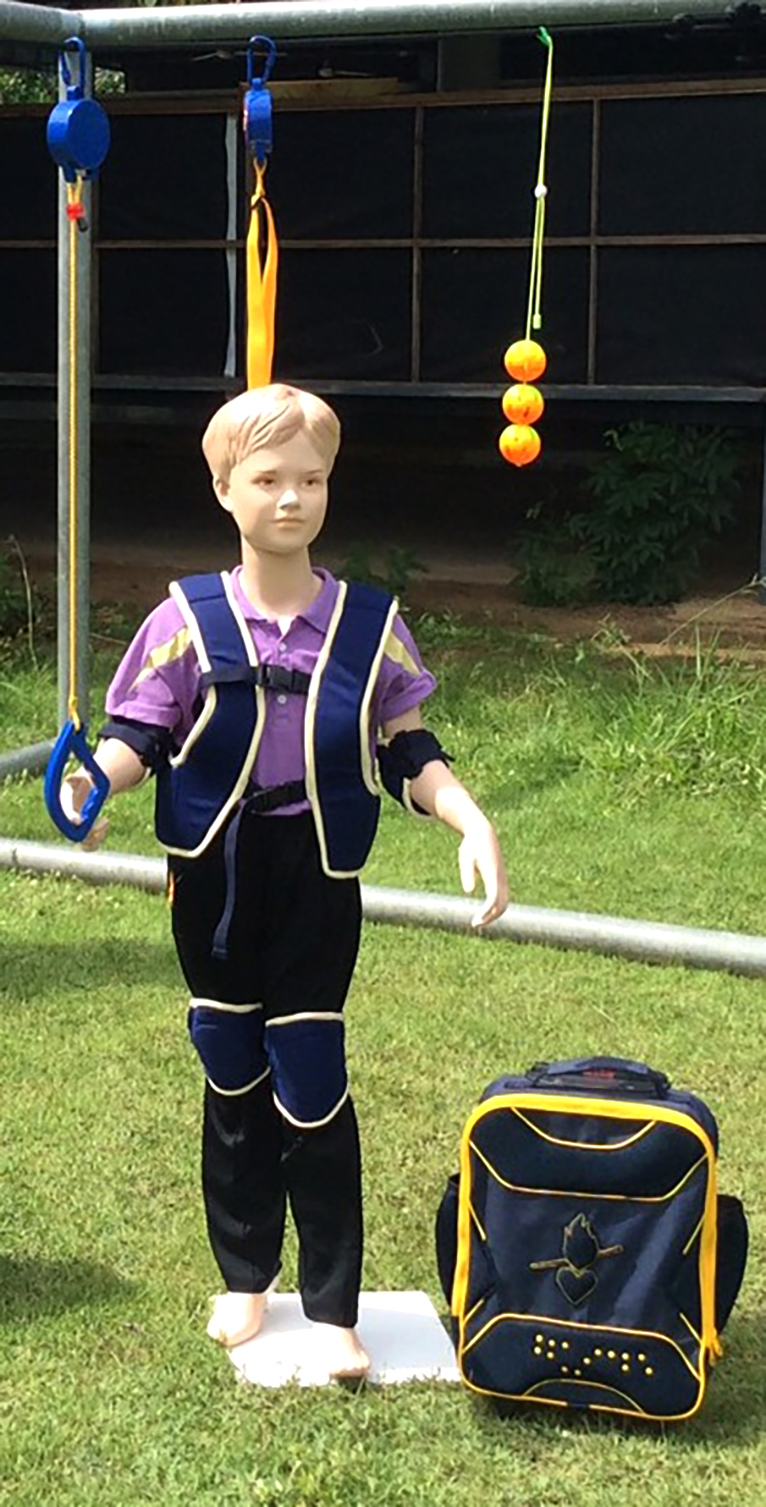
เด็กที่มีความบกพร่องทางการมองเห็นจำเป็นต้องพัฒนาให้มีคุณภาพชีวิตที่ดีและเติบโตเต็มตามศักยภาพ ซึ่งปัจจุบันการออกกำลังกายของเด็กกลุ่มนี้ยังมีความไม่ปลอดภัย เนื่องจากไม่มีอุปกรณ์ที่ออกแบบมาเพื่อใช้งานได้โดยตรง งานวิจัยนี้จึงพัฒนาสื่ออุปกรณ์การเรียนรู้ด้านการเคลื่อนไหวและการทรงตัวสำหรับเด็กที่มีความบกพร่องทางการมองเห็น โรงเรียนธรรมิกวิทยา จังหวัดเพชรบุรี ด้วยการดำเนินการดังนี้ 1) การศึกษาเก็บรวบรวมข้อมูลเพื่อการวิเคราะห์ของกลุ่มตัวอย่างและผู้เกี่ยวข้อง 2) การวิเคราะห์ข้อมูลของกลุ่มตัวอย่างด้านการออกกำลังกาย การเคลื่อนไหวและการทรงตัว 3) การพัฒนาชุดอุปกรณ์สื่อการเรียนรู้ทักษะการออกกำลังกายรูปแบบบูรณาการของการเคลื่อนไหวและการทรงตัว สำหรับเด็กที่มีความบกพร่องทางการมองเห็น 4) ผลการฝึกทักษะออกกำลังกายเพื่อการเคลื่อนไหวและการทรงตัวโดยชุดอุปกรณ์ ส่งผลให้มีชุดอุปกรณ์สื่อการเรียนรู้ทักษะการออกกำลังกายสำหรับเด็กที่มีความบกพร่องทางการมองเห็น ซึ่งประกอบด้วย ชุดอุปกรณ์ที่สวมใส่เข็มขัดเซฟตี้แบบเต็มตัว อุปกรณ์ช่วยประคองตัวและเคลื่อนไหว และชุดอุปกรณ์มือจับที่มีตะขอเกี่ยวกับเชือกที่ยึดกับเสาประตูฟุตบอล ในราคา 13,390 บาทต่อชุด ซึ่ง ชุดอุปกรณ์การเรียนรู้ด้านการเคลื่อนไหวและการทรงตัวมีค่าเฉลี่ยการใช้งานโดยรวมอยู่ในระดับดี เด็กที่ออกกำลังกายโดยใช้อุปกรณ์การเรียนรู้ด้านการเคลื่อนไหวและการทรงตัวมีสมรรถภาพทางกายที่ดี มีการออกกำลังกายที่ถูกต้องตามสรีระของร่างกาย ส่งผลให้ร่างกายมีสุขภาพที่ดี และเป็นการพัฒนาองค์ความรู้เรื่องการเรียนการสอนกิจกรรมออกกำลังกายพัฒนาเด็กได้อย่างถูกต้องให้กับครูผู้สอนโรงเรียนธรรมิกวิทยาเพชรบุรี
Article Details

อนุญาตภายใต้เงื่อนไข Creative Commons Attribution-NonCommercial-NoDerivatives 4.0 International License.
Area Based Development Research Journal values copyright protection and licensing to safeguard author rights and facilitate the appropriate dissemination of research. Our policies ensure openness, accessibility, and attribution. Authors retain copyright ownership, and articles are published under a Creative Commons Attribution License (CC BY), allowing sharing, adaptation, and proper attribution. Authors have the freedom to publish under the CC BY license, granting broad reuse and distribution permissions. The journal supports posting articles on third-party repositories, adhering to institutional and funding restrictions. Author guidelines detail copyright and licensing requirements, empowering authors with knowledge about their rights and responsibilities. These policies cultivate an environment of collaboration, openness, and responsible sharing, benefiting authors and the research community while honoring intellectual property rights.
เอกสารอ้างอิง
Chaiyamang, A. (2020). The development of movement skills of preschoolers, Chiangmai Rajabhat University Demonstration school, Mueang district, Chiang Mai province. Rajabhat Chiang Mai Research Journal, 21(3), 68-83. (in Thai).
Daokrachang, N. (2019). The effect of cycling-tube exercise program on muscular strength and endurance of children's wheelchairs with physical disabilities. Journal of Health, Physical Education and Recreation, 45(2), 87-99. (in Thai).
Hanmanop, S. (2019). Effect of hydrotherapy program and land based exercise program on quality of life in elderly. Journal of Safety and Health, 12(1), 12-23. (in Thai).
Harte, R. (2017). A human-centered design methodology to enhance the usability, human factors, and user experience of connected health systems: A three-phase methodology. Retrieved February 22, 2021, from: https://humanfactors.jmir.org/2017/1/e8/.
Imaram, K. (2005). Documents for teaching media courses and special equipment for visually impaired children. Bangkok: Faculty of Education, Suan Dusit University. (in Thai).
Jensantikul, N. (2022). Universal design: Concepts and characteristics of residential homes for elderly. Journal of Huminites and Social Sciences Mahamakut Buddhist, 3(2), 67-81. (in Thai).
Ministry of Tourism and Sports. (2023). The seventh national sports development plan 2023 – 2027. Retrieved April 16, 2023, from: https://drive.google.com/file/d/1_pngYme-ss9yoELkAIuNbuq6CM8B82oF/view. (in Thai).
Narinthon, P. (2000). Media and technology for the visually impaired. Bangkok: The Bangkok School for The Blind.
Rehabilitation of People with Disabilities Act B.E. (1991). Department of Empowerment of Persons with Disabilities. Retrieved April 10, 2023, from: http://web1.dep.go.th/?q=th/node/436. (in Thai).
Rungadulpisan, C. (2017). Study of results integrated activity, feeling (SI) that concentrates on cerebral palsy children. Thammasat University Hospital Journal Online, 2(3), 12-21. (in Thai).
Siphetrawut, S. (2007). Sensory integration. Faculty of Associated Medical Sciences, Chiang Mai. Retrieved April 20, 2021, from: https://home.kku.ac.th/autistic/th/images/stories/docandpdf/si.pdf. (in Thai).
Sukdee, N. (2019). Development of exercise program using sensory integration theory with Thai wisdom to improve health–related physical fitness and social skills of autistic children. Journal of Education Studies, 47(2), 150-168. (in Thai).
Thongat, T. (2010). Universal design. Retrieved April 10, 2021, from: https://www.bu.ac.th/knowledgecenter/executive_journal/july_sep_10/pdf/aw12.pdf. (in Thai).
Thongruay, R. (2001). A study of the visual perception ability of pre-primary low vision children from visual skills training activities using educational games. (Master's thesis). Srinakharinwirot University, Health Education and Physical Education. (in Thai).
