
ตำรับอาหารพวนฟิวชั่น: การยกระดับอาหารไทยพวนเพื่อการท่องเที่ยว ตำบลหาดเสี้ยว จังหวัดสุโขทัย
Article Sidebar
Main Article Content
บทคัดย่อ
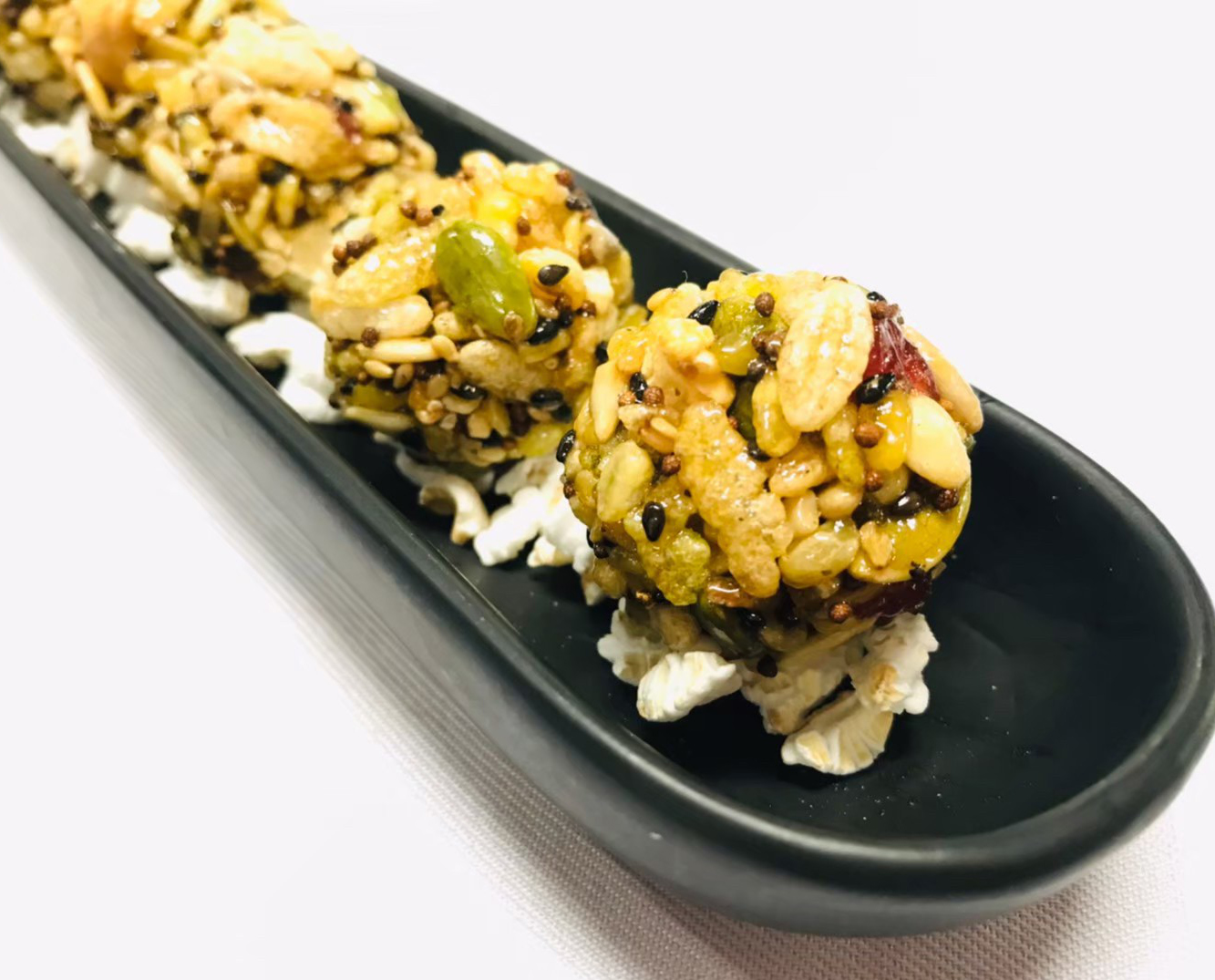
ตำบลหาดเสี้ยว อำเภอศรีสัชนาลัย จังหวัดสุโขทัย มีอาหารไทยพวนที่มีอัตลักษณ์จากการปรุงอาหารด้วยวัตถุดิบในท้องถิ่นจากแบบธรรมชาติ ได้แก่ ปลา ผักพื้นบ้าน และของป่าตามฤดูกาล ไม่ปรุงแต่งรสชาติและเน้นความเรียบง่าย แต่อาหารไทยพวนยังไม่มีการสร้างมูลค่าเพื่อรองรับนักท่องเที่ยว งานวิจัยนี้จึงพัฒนาตำรับอาหารพวนฟิวชั่นเพื่อการท่องเที่ยว และพัฒนากิจกรรมการท่องเที่ยวเชิงสร้างสรรค์ ผ่านกิจกรรมการทำอาหารพวนฟิวชั่น ด้วยกลไกการมีส่วนร่วมของกลุ่มเครือข่าย โดยมีกระบวนการดังนี้ 1) การพัฒนาตำรับอาหารพวนฟิวชั่น 2) การพัฒนากิจกรรมการท่องเที่ยวเชิงสร้างสรรค์ 3) การพัฒนาศักยภาพภาคีเครือข่าย 4) การทดสอบกิจกรรมการท่องเที่ยว และ 5) การถอดบทเรียนร่วมกับภาคีเครือข่าย ส่งผลให้มีตำรับอาหารพวนฟิวชั่นที่มีศักยภาพเพื่อรองรับนักท่องเที่ยว 6 ประเภท รวม 15 ตำรับ เส้นทางการท่องเที่ยว 3 เส้นทาง การทำเกษตรปลอดภัยและการทำฟาร์มสเตย์ และกิจกรรมการท่องเที่ยวเชิงสร้างสรรค์ 3 กิจกรรม ได้แก่ 1) กิจกรรมเที่ยวสวนส้มชมแปลงเกษตรปลอดภัย 2) กิจกรรมเรียนรู้การทำอาหารพวนฟิวชั่น และ 3) กิจกรรมนำเสนอประสบการณ์อาหารพวนฟิวชั่น ส่งผลให้ชุมชนสามารถรักษาอัตลักษณ์อาหารไทยพวนดั้งเดิม และสร้างสรรค์ตำรับอาหารพวนฟิวชั่นสำหรับกิจกรรมการท่องเที่ยวเชิงสร้างสรรค์ ก่อให้เกิดประโยชน์ในทางเศรษฐกิจ สร้างรายได้จากนักท่องเที่ยวคนละ 580 บาท และชุมชนมีรายได้เพิ่มขึ้น 48,333 บาท ต่อเดือน
Article Details

อนุญาตภายใต้เงื่อนไข Creative Commons Attribution-NonCommercial-NoDerivatives 4.0 International License.
Area Based Development Research Journal values copyright protection and licensing to safeguard author rights and facilitate the appropriate dissemination of research. Our policies ensure openness, accessibility, and attribution. Authors retain copyright ownership, and articles are published under a Creative Commons Attribution License (CC BY), allowing sharing, adaptation, and proper attribution. Authors have the freedom to publish under the CC BY license, granting broad reuse and distribution permissions. The journal supports posting articles on third-party repositories, adhering to institutional and funding restrictions. Author guidelines detail copyright and licensing requirements, empowering authors with knowledge about their rights and responsibilities. These policies cultivate an environment of collaboration, openness, and responsible sharing, benefiting authors and the research community while honoring intellectual property rights.
เอกสารอ้างอิง
Akyürek, S. (2019). Recent advances in social sciences chapter 12: A new culinary trend: Fusion cuisine-sample application from some selected countries. UK: Cambridge Scholars Publishing.
Bae, J., & Lee, K. (2012). Effects of fusion-food cooking activity on elementary school students' knowledge, preferences and perceptions of Korean traditional foods. Journal of Community Nutrition, 17, 376-389.
Chamnancha, B. (2018). Gastronomy tourism: Thailand’s competitiveness. APHEIT Journal, 24(1), 103-116. (in Thai).
Collier, A., & Harraway, S. (1997). Principle of tourism. Auckland: Longman.
Danlapol, N. (2018). Arts of Thai fusion food decoration. Graduate Student Journal School Sakon Nakhon Rajabhat University, 15(71), 1-13. (in Thai).
Nadee, P. (2017). The cultural uniqueness of Tai Phuan influencing local tourism at Pak Phi, Nakhonnayok. EAU Heritage Journal Social Science and Humanities, 7(1), 61-69. (in Thai).
Nugkhong, S. (2004). The folklore of novice to be elephant parade. Retrieved November 23, 2023, from: https://www.sac.or.th/databases/rituals/detail.php?id=86. (in Thai).
Office of the National Economic and Social Development Council. (2023). The thirteenth national economic and social development plan (2023-2027). Bangkok: Office of the National Economic and Social Development Council (NESDC). (in Thai).
Office of Tourism and Sports Sukhothai. (2016). Sukhothai Provincial tourism development plan 2017 – 2021. Sukhothai: Office of Tourism and Sports, Sukhothai. (in Thai).
Panyayong, C., & Kobket, S. (2018). Study of food culture and establishment of standard Thai Phuan Cuisine Recipe to promote cultural tourism in Uttaradit and Sukhothai province. (Research report). Bangkok: The Thailand Research Fund (TRF). (in Thai).
Panyayong, C., & Kobket, S. (2019). Let's eat together ancient Thai Phuan food. Bangkok: Chulalongkorn university press. (in Thai).
Punturee, P. (2015). Tourist experience: The creation of food tourism activities in Thailand. Journal of Southern Technology, 8(2), 27-38.
Richards, G., & Marques, L. (2012). Exploring creative tourism: Introduction. Journal of Tourism Consumption and Practice, 4(2), 1-11.
Richards, G., & Raymond, C. (2000). Creative tourism. ATLAS News, 23, 16-20.
Rojrungsat, P. (2010). Community tourism. Bangkok: Odeonstore. (in Thai).
Spence, C. (2018). Contemporary fusion foods: How are they to be defined, and when do they succeed/fail?. International Journal of Gastronomy and Food Science, 13, 101-107.
Stanley, J., & Stanley, L. (2014). Food tourism a practical marketing guide. UK: CABI.
Strategy and Information for Provincial Development Group Sukhothai Provincial Office. (2022). Sukhothai master plan, B.E. 2566- 2570 (2023-2027). Sukhothai: Strategy and Information for Provincial Development Group Sukhothai Provincial Office.
Tippanete, N. (2022). Public participation and patterns of participation affecting the local development of subdistrict municipalities, Nakhonratchasima province. Journal of MCU Nakhondhat, 9(8), 395 – 413. (in Thai).
Torobrum, W., Wongnarat, A., Chanaka, A., & Meesa, B. (2022). Logo design of processed sea bass for fish farmer group in Samed Tai, Chachoengsao province. Area Based Development Research Journal, 14(3), 205-217. (in Thai).
