
การพัฒนาเกษตรกรผู้ปลูกส้มโอด้านการจัดการศัตรูพืชแบบผสมผสาน ชุมชนบ้านแพงพวย จังหวัดบุรีรัมย์
Article Sidebar
Main Article Content
บทคัดย่อ
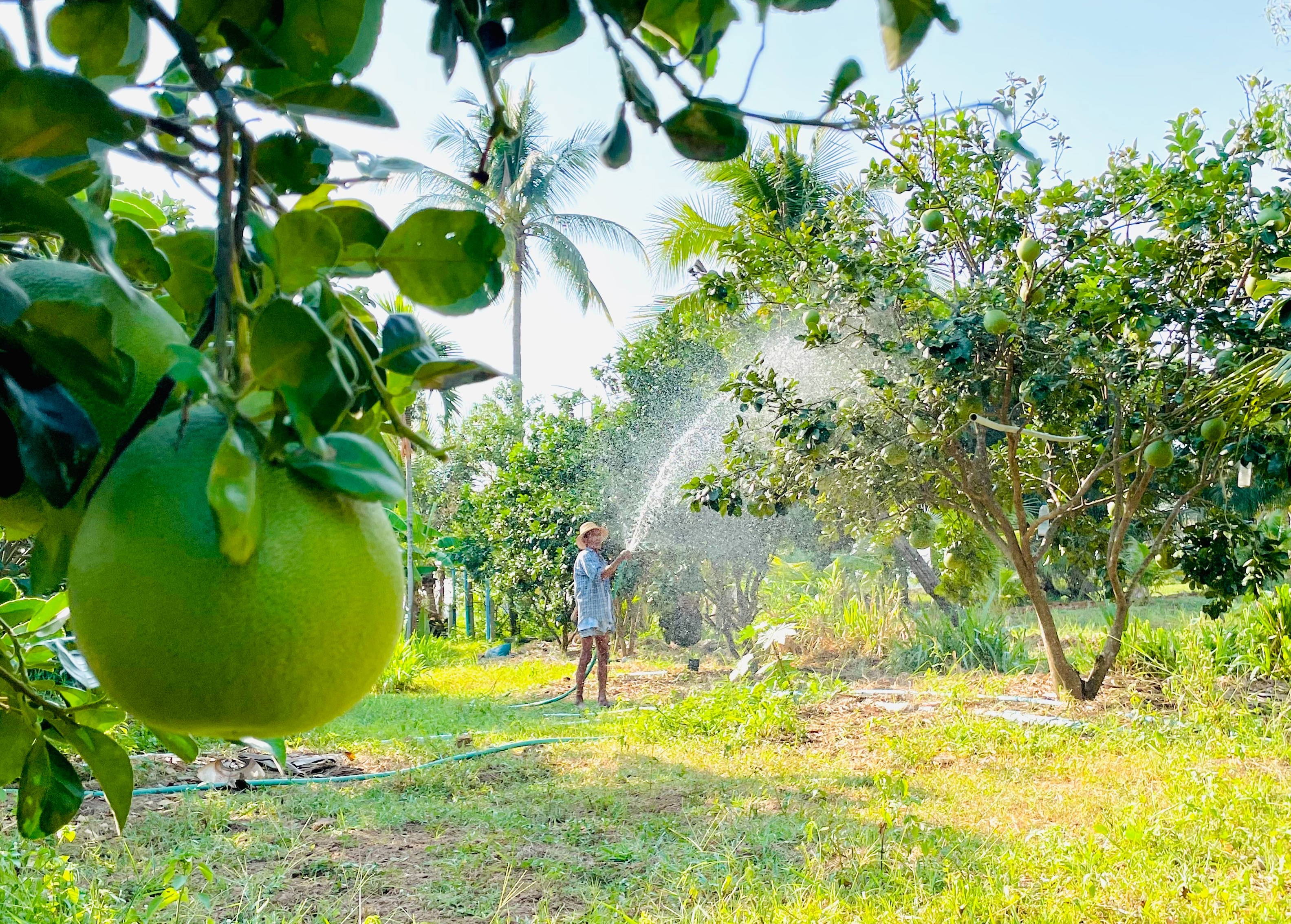
เกษตรกรผู้ปลูกส้มโอบ้านแพงพวย ตำบลนางรอง อำเภอนางรอง จังหวัดบุรีรัมย์ ประสบปัญหาการระบาดของศัตรูพืชส่งผลให้ผลผลิตส้มโอไม่มีคุณภาพและเกษตรกรสูญเสียรายได้ งานวิจัยนี้จึงมีวัตถุประสงค์เพื่อพัฒนาเกษตรกรด้านการจัดการศัตรูพืชแบบผสมผสานและประเมินการเปลี่ยนแปลงของเกษตรกรผู้ปลูกส้มโอที่เข้าร่วม จำนวน 30 ราย กระบวนการดำเนินงานมีดังนี้ 1) การรวบรวมข้อมูลจากชุมชนเพื่อวางแผนการดำเนินงาน ด้วยการเก็บรวบรวมข้อมูลจากชุมชน การจัดเวทีชุมชนระดมความคิดเห็น การวางแผนและถ่ายทอดองค์ความรู้ในการแก้ปัญหา และการพัฒนาเกษตรกรโดยนักวิชาการส่งเสริมการเกษตร เรื่องการวินิจฉัยโรคพืชและศัตรูพืชของส้มโอเบื้องต้น การขาดธาตุอาหารพืชในส้มโอ และการจัดการศัตรูพืชแบบผสมผสานเพื่อประยุกต์ใช้ในแปลงส้มโอ 2) การจัดการศัตรูพืชแบบผสมผสานเพื่อปฏิบัติและประยุกต์ใช้ในแปลงส้มโอ โดยการจัดการศัตรูพืชด้วยวิธีกลดังนี้ กับดักผีเสื้อกลางคืนด้วยกากน้ำตาล กับดักกาวเหนียว การห่อผล และ การจัดการศัตรูพืชด้วยชีววิธีดังนี้ บาซิลลัส ซับทิลิส บาซิลลัส ทูริงจิเอนซิส ไตรโคเดอร์มา เมตาไรเซียมและ 3) การแลกเปลี่ยนเรียนรู้ร่วมกัน ผลจากการดำเนินงานพบว่า ปริมาณผลผลิตส้มโอเพิ่มขึ้นร้อยละ 85.21 การใช้สารเคมีลดลง 1,200–1,400 บาทต่อไร่ ต้นทุนลดลงร้อยละ 2.46-2.67 เกษตรกรที่ได้รับมาตรฐาน GAP เพิ่มขึ้น 11 ราย คิดเป็นร้อยละ 30 และเกษตรกรมีความรู้เพิ่มขึ้นร้อยละ 124.04 สามารถวิเคราะห์ปัญหาและแลกเปลี่ยนความคิดเห็น มีความมั่นใจและมุ่งมั่นในการพัฒนาตนเองและพัฒนาการผลิตส้มโอ
Article Details

อนุญาตภายใต้เงื่อนไข Creative Commons Attribution-NonCommercial-NoDerivatives 4.0 International License.
Area Based Development Research Journal values copyright protection and licensing to safeguard author rights and facilitate the appropriate dissemination of research. Our policies ensure openness, accessibility, and attribution. Authors retain copyright ownership, and articles are published under a Creative Commons Attribution License (CC BY), allowing sharing, adaptation, and proper attribution. Authors have the freedom to publish under the CC BY license, granting broad reuse and distribution permissions. The journal supports posting articles on third-party repositories, adhering to institutional and funding restrictions. Author guidelines detail copyright and licensing requirements, empowering authors with knowledge about their rights and responsibilities. These policies cultivate an environment of collaboration, openness, and responsible sharing, benefiting authors and the research community while honoring intellectual property rights.
เอกสารอ้างอิง
Bashir, M. A., Alvil, A. M., & Naz, H. (2014). Effectiveness of sticky traps in monitoring insects. Journal of Environmental and Agricultural Sciences, 1(5), 1-2.
Buakaew, P., & Panpakdee, C. (2024). Socio-economic factors influencing good agricultural practices of herbal farmers in Buriram province. Journal of Agriculture, 40(1), 101-111. (in Thai).
Chamswarng, J. (2017). Trichoderma is a fungus that affects crop production in the future. Kasetapirom Journal, 4(19), 14-17. (in Thai).
Damrongrak, I. (2007). Plant nutrient elements and fruit quality of Shokun mandarin (Citrus reticulata Blanco cv. Shokun). Journal of Yala Rajabhat University, 2(1), 56-71. (in Thai).
Department of Agricultural Extension. (2012). Biological pests control. (1st edition). Bangkok: Bureau of Technology Transfer Development.
Department of Agricultural Extension. (2020). Utilizing microorganisms (microbial pesticide) to manage pests. (2nd edition). Bangkok: Bureau of Technology Transfer Development.
Department of Agricultural Extension. (2022). Field pest diagnosis. Retrieved October 3, 2022, from: https://k-station.doae.go.th/?s=วิินิิจฉััย. (in Thai).
Food and Agriculture Organization of the United Nations. (2017). Integrated pest management of major pests and diseases in Eastern Europe and the Caucasus. (1st edition). Budapest, Hungary: FAO.
Food and Agriculture Organization of the United Nations. (2020). Integrated pest management of major pests and diseases of grapevine, pepper and tomato in North Macedonia. (1st edition). Budapest, Hungary: FAO.
Food and Agriculture Organization of the United Nations, & University of Bonn. (2021). Climate change impacts on 20 major crop pests in Central Asia, the Caucasus and Southeastern Europe. (1st edition). Ankara, Turkey: FAO.
Holmes, L., & Mandjiny, S. (2016). Biological control of agriculture insect pests. European Scientific Journal, 12(10), 216-225.
Issarakraisila, M., & Intana, W. (2011). Studies on types of bagging materials affected on growth, quality and disease-insect damages in pummelo fruit cv. Tongdee and Tubtim Sayam. (Research report). Bangkok: National Research Council of Thailand. (in Thai)
Jamonman, S., Jongrattanameteekul, W., Sonthirat, S., & Suwannakul, D. (2000). Pests management. Bangkok: Ruaw Khiao.
Namburee, S. (2019). Participation theory in public administration. The Journal of Research and Academics, Mahachulalongkorn-rajavidyalaya University, 2(1), 183-197. (in Thai).
Natongkham, A., Sirimungkararat,S., Saksirirat,W., Urairong, H., & Kaewrat, B. (2010). The efficiency of northeastern isolates of green muscardine fungi metarhizium spp. on controlling economic insect pests. KKU Research Journal, Khon Kaen University, 15(10), 930-940. (in Thai).
Office of Agricultural Research and Development Region. (2021). Utilizing bacillus subtilis for crop production. Retrieved September 8, 2022, from: https://www.opsmoac.go.th/chumphon-dwl-files-432791791819. (in Thai).
Osotspa, Y. (2016). Plant stress and stress relieves. Thai Journal of Soils and Fertilizers, 38(1), 47-78. (in Thai).
Phawasut, A., Chaemkerd, P., Sakpreechakul, T., Uttama, K., Kamol, N., & Chansawee, N. (2020). Research and development of safety citrus production. Retrieved August 30, 2022, from: https://research.hrdi.or.th/research/detail/432/. (in Thai).
Plant Protection Research and Development Office. (2012). Pomelo pests management for exports. Retrieved October 25, 2022, from: https://www.doa.go.th/plprotect/wp-content/uploads/Km/grapefruit.pdf. (in Thai).
Prachachatturakit. (2022). After 15 years of waiting, the United States now permits unlimited importation of Thai pomelo. Retrieved September 23, 2022, from:https://www.prachachat.net/economy/news-856744. (in Thai).
Sonthirat, S. (2015). Pest control vs pest management. Kasetapirom Journal, 1(5), 41-43. (in Thai).
Taylor, P. (2015). Plantwise diagnostic field guide. (1st edition). London, United Kingdom: CABI on behalf of Plantwise.
