
การยกระดับคุณภาพผลิตภัณฑ์ปลาดุกร้าและการใช้ประโยชน์วัสดุเศษเหลือจากกระบวนการผลิตปลาดุกรา กลุ่มวิสาหกิจชุมชนบ้านชุมพล จังหวัดพัทลุง
Article Sidebar
Main Article Content
บทคัดย่อ
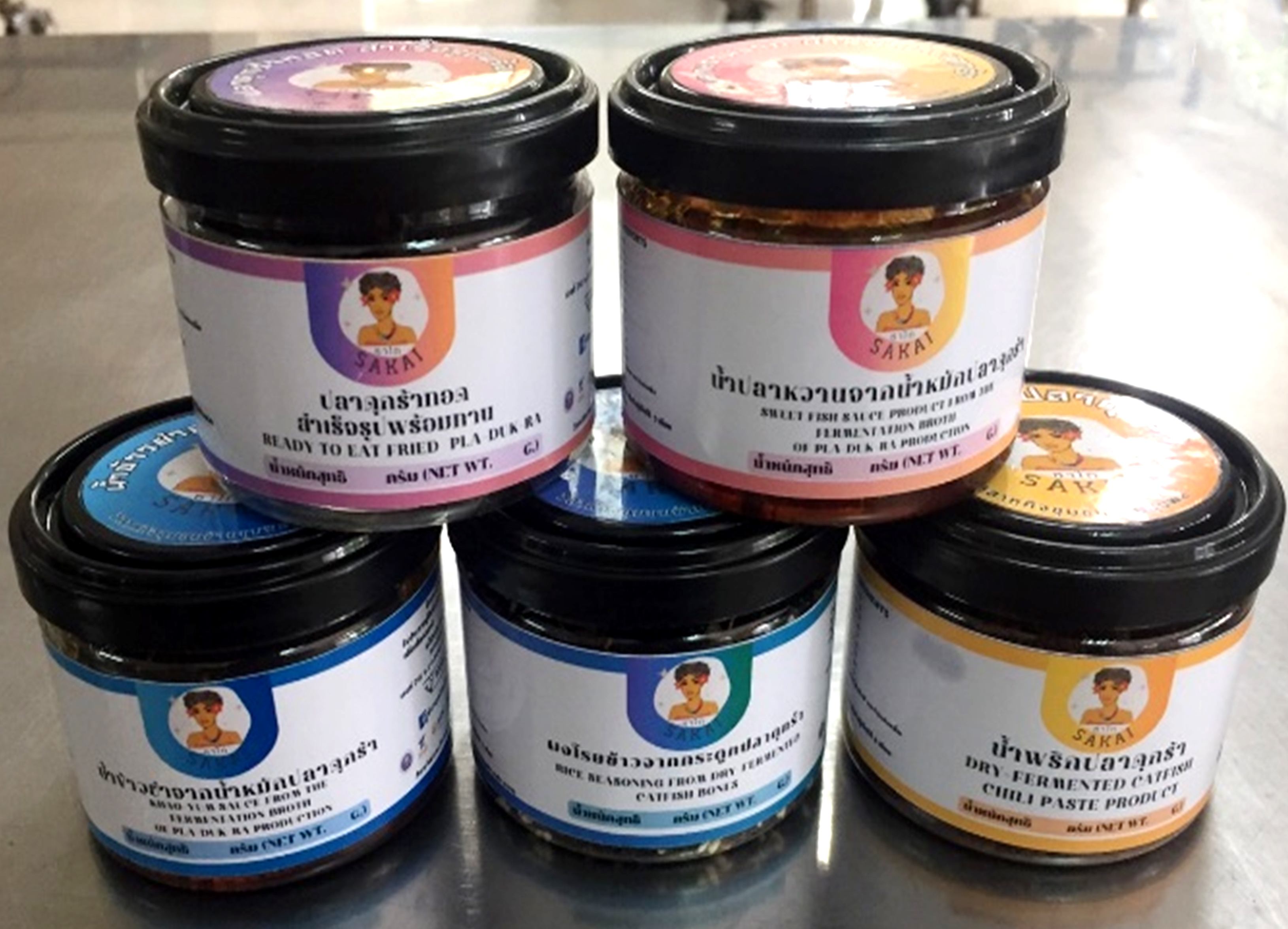
กลุ่มวิสาหกิจชุมชนบ้านชุมพล อำเภอศรีนครินทร์ จังหวัดพัทลุง มีกระบวนการผลิตปลาดุกร้าที่ไม่เป็นไปตามหลักเกณฑ์และวิธีการที่ดีในการผลิต (GMP) และสํานักงานคณะกรรมการอาหารและยา (อย.) ผลิตภัณฑ์ไม่หลากหลาย บรรจุภัณฑ์ไม่สวยงาม ไม่มีการจัดการวัสดุเศษเหลือ ช่องทางการตลาดไม่กว้างขวาง และไม่เป็นที่รู้จักในวงกว้าง โครงการนี้จึงพัฒนากระบวนการผลิตปลาดุกร้าตามหลัก GMP การขอรับรองมาตรฐาน อย. และการผลิตผลิตภัณฑ์อาหารพร้อมบริโภคจากปลาดุกร้าและวัสดุเศษเหลือ โดยประยุกต์ใช้การวิจัยเชิงปฏิบัติการแบบมีส่วนร่วม การวิเคราะห์คุณภาพในห้องปฏิบัติการ แบบสอบประเมิน และการถ่ายทอดเทคโนโลยี ด้วยกระบวนการดังนี้ 1) การพัฒนากระบวนการแปรรูปปลาดุกร้าตามหลัก GMP ขั้นต้น 2) การวิเคราะห์คุณสมบัติทางเคมีและชีวภาพของผลิตภัณฑ์ปลาดุกร้า 3) การถ่ายทอดเทคโนโลยีสู่ชุมชน 4) กระบวนการขอรับรอง อย. และ 5) การพัฒนาบรรจุภัณฑ์และการออกแบบฉลาก ส่งผลให้กลุ่มวิสาหกิจชุมชนบ้านชุมพลมีสถานที่ผลิตปลาดุกร้าตามหลัก GMP มีใบอนุญาตผลิตอาหารจากสำนักงานสาธารณสุขจังหวัดพัทลุง ผลิตภัณฑ์อาหารพร้อมบริโภคจากปลาดุกร้าและวัสดุเศษเหลือจากกระบวนการผลิตปลาดุกร้า จำนวน 5 ผลิตภัณฑ์ ได้แก่ 1) น้ำพริกปลาดุกร้าสมุนไพร 2) ผงโรยข้าวจากกระดูกปลาดุกร้า 3) ปลาดุกร้าทอดสำเร็จรูปพร้อมทาน 4) น้ำข้าวยำจากน้ำหมักปลาดุกร้า และ 5) น้ำปลาหวานจากน้ำหมักปลาดุกร้า ผลิตภัณฑ์ได้รับรองมาตรฐาน อย. จากสำนักงานสาธารณสุขจังหวัดพัทลุง จำนวน 6 ผลิตภัณฑ์ ได้แก่ 1) ปลาดุกร้า 2) น้ำพริกปลาดุกร้าสมุนไพร 3) ผงโรยข้าวจากกระดูกปลาดุกร้า 4) น้ำข้าวยำจากน้ำหมักปลาดุกร้า 5) น้ำปลาหวานจากน้ำหมักปลาดุกร้า และ 6) ปลาดุกร้าทอดสำเร็จรูปพร้อมทาน และกลุ่มวิสาหกิจชุมชนบ้านชุมพลขยายกำลังการผลิตปลาดุกร้าเพิ่มขึ้น 3 เท่า จาก 200 เป็น 600 กิโลกรัมต่อเดือน พัฒนาผลิตภัณฑ์ใหม่เพื่อจำหน่ายคือ น้ำพริกปลาดุกร้าสมุนไพร และน้ำปลาหวานจากน้ำหมักปลาดุกร้า ส่งผลให้รายได้สุทธิรวมเพิ่มขึ้นจาก 24,000 บาทเป็น 99,000 บาทต่อเดือน เพิ่มขึ้น 4 เท่า (ร้อยละ 312.50) เป็นความสำเร็จในการพัฒนาธุรกิจชุมชนอย่างยั่งยืน
Article Details

อนุญาตภายใต้เงื่อนไข Creative Commons Attribution-NonCommercial-NoDerivatives 4.0 International License.
Area Based Development Research Journal values copyright protection and licensing to safeguard author rights and facilitate the appropriate dissemination of research. Our policies ensure openness, accessibility, and attribution. Authors retain copyright ownership, and articles are published under a Creative Commons Attribution License (CC BY), allowing sharing, adaptation, and proper attribution. Authors have the freedom to publish under the CC BY license, granting broad reuse and distribution permissions. The journal supports posting articles on third-party repositories, adhering to institutional and funding restrictions. Author guidelines detail copyright and licensing requirements, empowering authors with knowledge about their rights and responsibilities. These policies cultivate an environment of collaboration, openness, and responsible sharing, benefiting authors and the research community while honoring intellectual property rights.
เอกสารอ้างอิง
Arvanitoyannis, I. S., & Kassaveti, A. (2008). Fish industry waste: Treatments, environmental impacts, current and potential uses. International Journal of Food Science & Technology, 43(4), 726-745.
Bacteriological Analytical Manual. (2001). Microbiological detection methods. Retrieved July 11, 2021, from: https://www.fda.gov/food/laboratory-methods-food/about-bacteriological-analyticalmanual-bam.
Bigueja, M. C. (2020). Adoption of good manufacturing practices of small and medium smoked fish enterprise (SMSFE) in Bicol region, Philippines. International Journal of Social Science and Humanities Research, 8(2), 336-343.
Community Product Standards. (2005). Community product standards No. 1029/2005. Office of Industrial Product Standards. (in Thai).
Competency - based Education. (2024). The 20-year national strategy. Retrieved September 20, 2024, from: https://cbethailand.com. pdf. (in Thai).
Department of Fisheries. (2024). Estimated production and value of aquatic animals from fisheries in Thailand, 2022 – 2025. Retrieved September 20, 2024, from: https://www4.fisheries.go.th. (in Thai).
Food and Drug Administration. (2021). Inspection manual of food production facility according to good manufacturing practice in production that is enforced by law (GMP 420). Retrieved May 5, 2021, from: https://logistics.fda.moph.go.th/related-laws/related-laws-food-5. pdf. (in Thai).
Geraldo, V., Ampofo-Asiama, J., Adinortey, C. A., Okyere, I., Tulashie, S. K., Nuer, A. T. K., ..., & Kizzie-Hayford, N. (2024). Implementation of good manufacturing practices (GMP) to improve the quality of smoked fish (Scomber colias). Heliyon, 10, e27401.
Ghaly, A. E., Ramakrishnan, V. V., Brooks, M. S., Budge, S. M., & Dave, D. (2013). Fish processing wastes as a potential source of proteins, amino acids and oils: A critical review. Journal of Microbial & Biochemical Technology, 5(4), 107-129.
Kim, S. K., & Mendis, E. (2006). Bioactive compounds from marine processing byproducts–A review. Food Research International, 39(4), 383-393.
Naylor, R. L., Hardy, R. W., Bureau, D. P., Chiu, A., Elliott, M., Farrell, A. P., & Nichols, P. D. (2009). Feeding aquaculture in an era of finite resources. Proceedings of the National Academy of Sciences, 106(36), 15103-15110.
Prommaroeng, S. (2018). The elevation approach of OTOP’s foods which produced in Mae Ban Rim Rong Community Enterprise of Makeujae sub-district, Muang district, Lamphun province. Journal of Social Science Srinakharinwirot University, 21(1), 248-258. (in Thai).
Provincial Strategy and Development Information Division. (2024). Phatthalung province 5-year development plan (2023–2027). Retrieved September 20, 2024, from: https://www. phatthalung.go.th/2022 /files/com_news_develop/2022-04_677cac-2c26c2239.pdf. (in Thai).
Pumipan, T., & Inmaung, U. (2016). Hygiene of Thai traditional fermented fish production in one district, Khon Kaen province. KKU Research Journal (Graduate Studies), 16(2), 75-85. (in Thai).
Rujijanakul, W., Noksakda, C., & Pucummmee, P. (2023). Development of safety and GMP certification in pickled fish product shops with community participation in Khon Kaen province. Journal of Khon Kaen Provincial Health Office, 5(1), 152-166.
Rustad, T. (2003). Utilization of marine by-products. Electronic Journal of Environmental, Agricultural and Food Chemistry, 2(4), 458-463.
Silva, A., & Chamul, R. (2000). Composition of marine and freshwater finfish and shellfish species and their products. (pp. 31-46). In R. E. Martin & G. J. Flick (Eds.), Marine and Freshwater Products Handbook. Technomic Publishing Company.
Sumpanprateep, S. (2015). A study on model production sites for anchovy processing according to primary GMP standards in Phuket. Region 11 Medical Journal, 29(4), 607-613. (in Thai).
Thanonkaew, A., Rittijak, J., & Suriyapol, S. (2009). Study on chemical compositions and some properties of traditional dry fermented catfish (pla-duk-ra) in Phatthalung province. Thaksin Journal, 12(1), 1-12. (in Thai).
