
การพัฒนาสิ่งทอแฟชั่นจากผ้าลูกไม้เหลือทิ้งด้วยการผสมผสานเทคนิคโครเชต์ ภายใต้แนวคิดอัพไซเคิลสำหรับกลุ่มเจเนอเรชั่นซี
Article Sidebar
Main Article Content
บทคัดย่อ
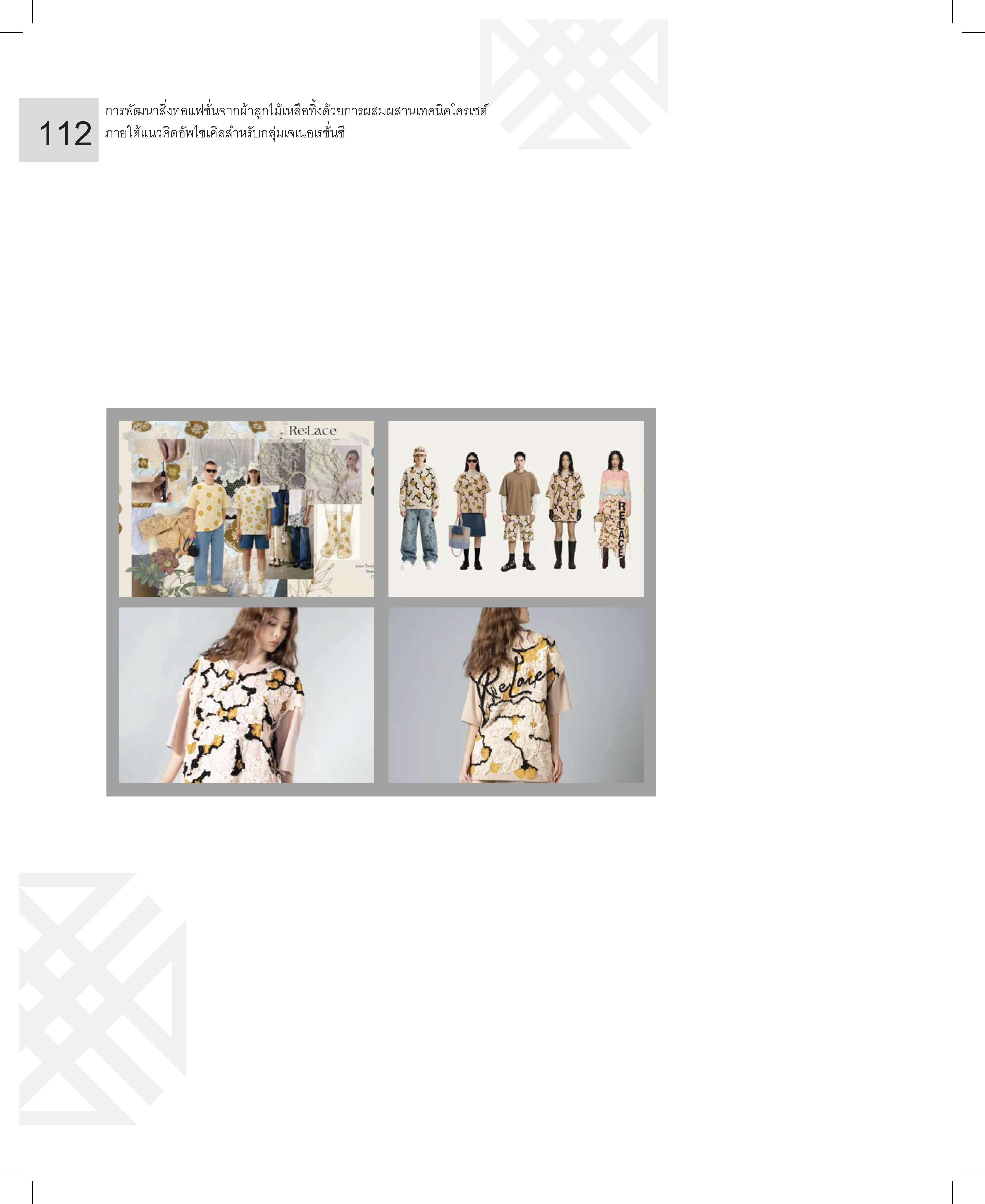
การพัฒนาสิ่งทอแฟชั่นจากผ้าลูกไม้เหลือทิ้งด้วยการผสมผสานเทคนิคโครเชต์ ภายใต้แนวคิดอัพไซเคิลสำหรับกลุ่มเจเนอเรชั่นซี เป็นการศึกษาวิจัยเชิงผสมผสาน (Mixed Methodology Research) โดยมีวัตถุประสงค์เพื่อทดลองและพัฒนาเทคนิคการสร้างพื้นผิวสิ่งทอรูปแบบใหม่จากเศษผ้าลูกไม้เหลือทิ้ง ด้วยการประยุกต์ใช้เทคนิคโครเชต์ ภายใต้แนวคิดอัพไซเคิล เพื่อนำไปสู่การออกแบบผลิตภัณฑ์แฟชั่นสำหรับกลุ่มเจเนอเรชั่นซี การวิจัยประกอบด้วยการเก็บข้อมูลเชิงปริมาณร่วมกับกระบวนการทดลองเชิงสร้างสรรค์ ผลการศึกษาแสดงให้เห็นว่าเทคนิคโครเชต์สามารถนำเศษผ้าลูกไม้ที่มีพื้นผิวและลวดลายแตกต่างกันมาผสมผสานเป็นสิ่งทอใหม่ที่มีเอกลักษณ์เฉพาะตัว นอกจากนี้ ยังสอดคล้องกับแนวคิดด้านความยั่งยืนโดยการใช้วัสดุเหลือใช้ให้เกิดประโยชน์สูงสุด ผลิตภัณฑ์ที่ได้สามารถสะท้อนอัตลักษณ์ของกลุ่มเป้าหมายที่ให้ความสำคัญต่อการแสดงออกทางตัวตนและจิตสำนึกด้านสิ่งแวดล้อม งานวิจัยนี้จึงสามารถเป็นแนวทางในการออกแบบผลิตภัณฑ์แฟชั่นเชิงสร้างสรรค์ที่ต่อยอดจากวัสดุเหลือใช้ให้มีมูลค่าและความเหมาะสมกับกลุ่มผู้บริโภครุ่นใหม่
Article Details

อนุญาตภายใต้เงื่อนไข Creative Commons Attribution-NonCommercial-NoDerivatives 4.0 International License.
ต้นฉบับที่ได้รับการตีพิมพ์ในวารสารศิลปกรรมบูรพา (Burapha Arts Journal) คณะศิลปกรรมศาสตร์ มหาวิทยาลัยบูรพา ถือเป็นกรรมสิทธิ์ของมหาวิทยาลัยบูรพา ห้ามนำข้อความทั้งหมดหรือบางส่วนไปพิมพ์ซ้ำเว้นเสียแต่ว่าจะได้รับอนุญาตจากมหาวิทยาลัยฯ เป็นลายลักษณ์อักษร
เอกสารอ้างอิง
สำนักงานเศรษฐกิจอุตสาหกรรม. (2565). รายงานอุตสาหกรรมสิ่งทอไทย ปี 2565. กระทรวงอุตสาหกรรม. DeLong, M., & Fiore, A. M. (2019). The power of fashion: Towards design thinking in fashion. Bloomsbury Publishing.
Ellen MacArthur Foundation. (2017). A new textiles economy: Redesigning fashion’s future. Retrieved March 22, 2025, from https://ellenmacarthurfoundation.org Francis, T., & Hoefel, F. (2018). True Gen: Generation Z and its implications for companies, McKinsey & Company. Retrieved April 10, 2025, from https://www.mckinsey.com/industries/consumer-packaged-goods/our-insights/true-gen-generation-z-and-its-implications-for-companies
Grimaud, C. (2021). Surface and texture in textile-based fashion design, Journal of Textile Design Research and Practice, 9(2), 157–172.
Joy, A., Sherry Jr, J. F., Venkatesh, A., Wang, J., & Chan, R. (2012). Fast Fashion, Sustainability, and the Ethical Appeal of Luxury Brands, 16(3), 273–295. Retrieved March 30, 2025, from https://doi.org/10.2752/175174112X13340749707123
McDonough, W., & Braungart, M. (2002). Cradle to cradle: Remaking the way we make things. North Point Press.
McKinsey & Company. (2020). The State of Fashion 2020: Navigating Uncertainty. Retrieved April 5, 2025, from https://www.mckinsey.com
Niinimäki, K., Peters, G., Dahlbo, H., Perry, P., Rissanen, T., & Gwilt, A. (2020). The environmental price of fast fashion. Nature Reviews Earth & Environment, 1(4), 189–200. Retrieved March 25, 2025, from https://doi.org/10.1038/s43017-020-0039-9
Rissanen, T., & McQuillan, H. (2016). Zero waste fashion design. Bloomsbury Publishing. RMIT University. (2024). Gen Z supports sustainability — and fuels ultra-fast fashion. How does that work?.Retrieved April 5, 2025, from https://www.rmit.edu.au/news/acumen/gen-z-supports-sustainability-and-fuels-ultra-fast-fashion
Simeon, P., & Buonincontri, P. (2022). Fashion consumption in the digital age: The influence of Gen Z on omnichannel strategies, Journal of Retailing and Consumer Services, 64, 102772. Retrieved April 11, 2025, from https://doi.org/10.1016/j.jretconser.2021.102772
Textile World. (2024). Garson and Shaw: Half of Gen Z believes pressure to buy fast fashion damages mental health. Retrieved April 5, 2025, from https://www.textileworld.com/textile-world/knitting-apparel/2024/09/garson-and-shaw-half-of-gen-z-believes-pressure-to-buy-fast-fashion-damages-mental-health
Thailand Textile Institute. (2022). Textile waste management and circular economy pilot project in lace fabric factories. Bangkok: Ministry of Industry.
