Inheritance of Khon: Humanity's Intangible Cultural Heritage for Lifelong Learning
Article Sidebar
Main Article Content
Abstract
Cultural heritage is unique in maintaining Thai society and nationality continuously. It is such a significant issue that the entire Thais inherited from ancestors for a long time should preserve a sustainable legacy as long as possible. However, the world situation is changing rapidly which the globe closely connects as a borderless state. Globalization flowing the world culture that blends with local culture has resulted in a lifestyle change. The loss of traditional cultural values and undesirable behaviors resulting in Thai society preserving cultural heritage values requires the use of the inheritance process to promote public participation, especially among children and youth, in raising awareness of their values. Creating the awareness of cherishing cultural heritage and national identity can represent one's roots.
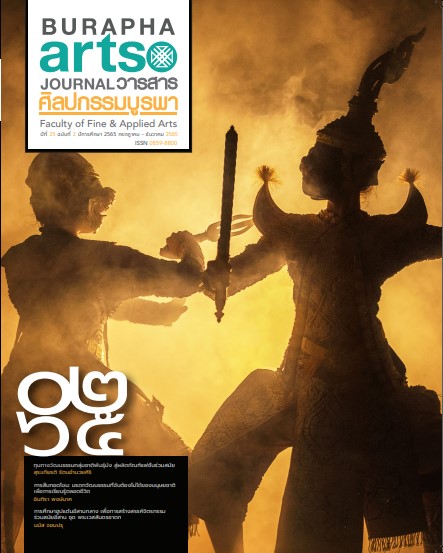
Khon is a unique cultural heritage of Thailand that combines many fields of sciences and arts. The value of Khon reflects the Thai way of life. UNESCO has declared it a registered cultural heritage of humanity. Thailand must work to raise awareness, and respect, intangible cultural heritage values at the local, national, and international levels by the 2003 Convention on the Preservation of Intangible Cultural Heritage. Along with creative participation in the promotion and treatment might support and promote the study and research of knowledge and wisdom about Khon in various fields for Lifelong Learning.
Article Details

This work is licensed under a Creative Commons Attribution-NonCommercial-NoDerivatives 4.0 International License.
The original manuscript published in the Burapha Arts Journal, Faculty of Fine and Applied Arts, Burapha University, is the property of Burapha University. No part of this text may be reproduced in whole or in part without written permission from the university.
References
กรมกิจการเด็กและเยาวชน (17 พฤศจิกายน 2564). พระราชบัญญัติส่งเสริมการพัฒนาเด็กและเยาวชนแห่งชาติ พ.ศ. 2550 และที่แก้ไขเพิ่มเติม (ฉบับที่ 2) พ.ศ. 2560 สืบค้นจาก https://dcy.go.th/webnew/main/services/images/3_1.pdf
กรมส่งเสริมวัฒนธรรม. กระทรวงวัฒนธรรม. (2562). โขน: มรดกวัฒนธรรมที่จับต้องไม่ได้ของมนุษยชาติรายการแรกของประเทศไทย. กรุงเทพมหานคร: ชุมนุมสหกรณ์การเกษตรแห่งประเทศไทย จำกัด.
กรมส่งเสริมอุตสาหกรรม. (6 พฤศจิกายน 2564) สืบค้นจากhttps://www.ryt9.com/s/ryt9/75149
กระทรวงวัฒนธรรม. (26 ตุลาคม 2564) สืบค้นจาก https://www.mculture.go.th/th/article_view.php?nid=21454)
กองทุนเพื่อความเสมอภาคทางการศึกษา. (5 พฤศจิกายน 2564) สืบค้นจาก https://isee.eef.or.th/overview.html)
การศึกษาตลอดชีวิต คณะครุศาสตร์ จุฬาลงกรณ์มหาวิทยาลัย
ณัฐฐ์วัฒน์ สุทธิโยธิน (2556). การสืบทอดทางวัฒนธรรม. (5 พฤศจิกายน 2564) สืบค้นจาก http://nattawats.blogspot.com/ 2013/04/cultural-inheritance.html
ทิศนา แขมมณี. (2562). ศาสตร์การสอน องค์ความรู้เพื่อการจัดกระบวนการเรียนรู้ที่มีประสิทธิภาพ (พิมพ์ครั้งที่ 23). กรุงเทพฯ: สำนักพิมพ์จุฬาลงกรณ์มหาวิทยาลัย.
ประกาศสำนักนายกรัฐมนตรี. เรื่อง การประกาศแผนการปฏิรูปประเทศ (ฉบับปรับปรุง). (2564, 25 กุมภาพันธ์). ราชกิจจานุเษกษา. เล่ม 138
ปิยะ ศักดิ์เจริญ .(2558). ทฤษฎีการเรียนรู้ผู้ใหญ่และแนวคิดการชี้นำตนเอง: กระบวนการเรียนรู้เพื่อการส่งเสริมการเรียนรู้ตลอดชีวิต, วารสารพยาบาลทหารบก, 16(1), 9-13.
ผุสดี กลิ่นเกสร. (2562). การเรียนรู้ตลอดชีวิตกับการพัฒนาทักษะชีวิต. การประชุมวิชาการระดับชาติและนานาชาติมหาวิทยาลัยศรีปทุม ครั้งที่ 14 ประจําปี 2562 วันที่ 19 ธันวาคม 2562. หน้า 1440.
พระราชบัญญัติการศึกษาแห่งชาติ พ.ศ. 2542 (2542, 19 สิงหาคม) ราชกิจจานุเษกษา. เล่ม 116
มัทนียา พงศ์สุวรรณ. (2553) การนำเสนอแนวทางการสืบทอดพระปรีชาญาณแบบองค์รวมของสมเด็จพระเจ้าบรมวงศ์เธอ เจ้าฟ้ากรมพระยานริศรานุวัดติวงศ์ . วิทยานิพนธ์ครุศาสตรดุษฎีบัณฑิต ภาควิชานโยบาย การจัดการ และความผู้นำทางการศึกษา คณะครุศาสตร์ จุฬาลงกรณ์มหาวิทยาลัย.
ศักรินทร์ ชนประชา. (2562) วารสาร อัล-นูร บัณฑิตวิทยาลัย มหาวิทยาลัยฟาฏอนี ประจำฉบับที่ 26 ปีที่ 14 (ประจำฉบับที่ 1 เดือนมกราคม-มิถุนายน 2019). หน้า 159.
ศิริพร จินะณรงค์. (2558) การพัฒนาต้นแบบการจัดกิจกรรมการเรียนรู้นอกระบบสำหรับครูในมูลนิธิที่ดูแลเด็กด้อยโอกาส. วิทยานิพนธ์ครุศาสตรดุษฎีบัณฑิต ภาควิชา
สำนักงานคณะกรรมการการศึกษาแห่งชาติ. (2545). รายงานการประชุมทางวิชาการเรื่องทิศทางวัฒนธรรมกับการศึกษาในกระแสแห่งการเปลี่ยนแปลง : สกศ ห้างหุ้นส่วนจำกัด วี.ที.ซี. คอมมิวนิเคชั่น
สำนักงานคณะกรรมการพัฒนาการเศรษฐกิจและสังคมแห่งชาติ. (2554). สรุปสาระสำคัญแผนพัฒนาเศรษฐกิจและสังคมแห่งชาติฉบับที่สิบเอ็ด พ.ศ. 2555 – 2559. กรุงเทพฯ.
สำนักงานคณะกรรมการพัฒนาการเศรษฐกิจและสังคมแห่งชาติ. (2559). แผนพัฒนาเศรษฐกิจและแผนพัฒนาเศรษฐกิจและสังคมแห่งชาติฉบับที่สิบสอง พ.ศ. 2560 – 2564. กรุงเทพฯ.
สุธีรา อะทะวงษา. (2560). การสืบทอดวัฒนธรรมการฟ้อนสาวไหม และแนวทางการพัฒนาให้เป็นผลิตภัณฑ์บริการการตลาดเพื่อสังคม. วารสารสมาคมนักวิจัย ปีที่ 22 ฉบับที่ 1 มกราคม - เมษายน 2560. หน้า 137.
อาชัญญา รัตนอุบล. (2557). การศึกษาและการเรียนรู้ตลอดชีวิต Lifelong Education and Lifelong Leanning. กรุงเทพฯ: สานักพิมพ์จุฬาลงกรณ์มหาวิทยาลัย.
เอื้องฟ้า ถาวรรักษ์ (2555). การอนุรักษ์ สืบทอดศิลปะการแสดงพื้นบ้านชาวกะเหรียง "รำตง" อำเภอศรีสวัสดิ์ จังหวัดกาญจนบุรี. กาญจนบุรี: สำนักงานวัฒนธรรมจังหวัดกาญจนบุรี.
Jian Yi (2017). Research on Inheritance of Intangible Cultural Heritage. Advances in Social Science, Education and Humanities Research, volume 123
K.Dimitropoulos et al. (2018). A Multimodal Approach for the Safeguarding and Transmission of Intangible Cultural Heritage: The Case of i-Treasures. The original publication can be found in http://ieeexplore.ieee.org/document/8255779/
UNESCO. (2003). Convention for the safeguarding of the intangible cultural heritage. From http://ich.culture.go.th/images/stories/ich-pdf/2.1Convention-Safeguarding-Intangible-cultural-Heritage.pdf
Wen-Jie Yan and Shang-Chia Chiou (2021). The Safeguarding of Intangible Cultural Heritage from the Perspective of Civic Participation: The Informal Education of Chinese Embroidery Handicrafts. Sustainability 2021, 13,4958 https://www.mdpi.com/journal/sustainability
