
Innovative design lamp identity pattern art Nang Yai
Article Sidebar
Main Article Content
Abstract
The objectives of this creative innovation are as followed: 1) To study the identity pattern of Nang Yai Art. 2) To study the Innovative lamp design with the identity pattern of Nang Yai Art. 3) To create prototypes and assess the customer satisfaction with the Innovative lamp design with the identity pattern of Nang Yai Art. Populations and samples in the research include 50 individuals comprising lamp shop owners and customers who purchase lamps at the Jatujak Weekend Market. The research tool employed for the study is satisfaction questionnaire regarding the prototype of the Innovative lamp design with the identity pattern of Nang Yai Art.
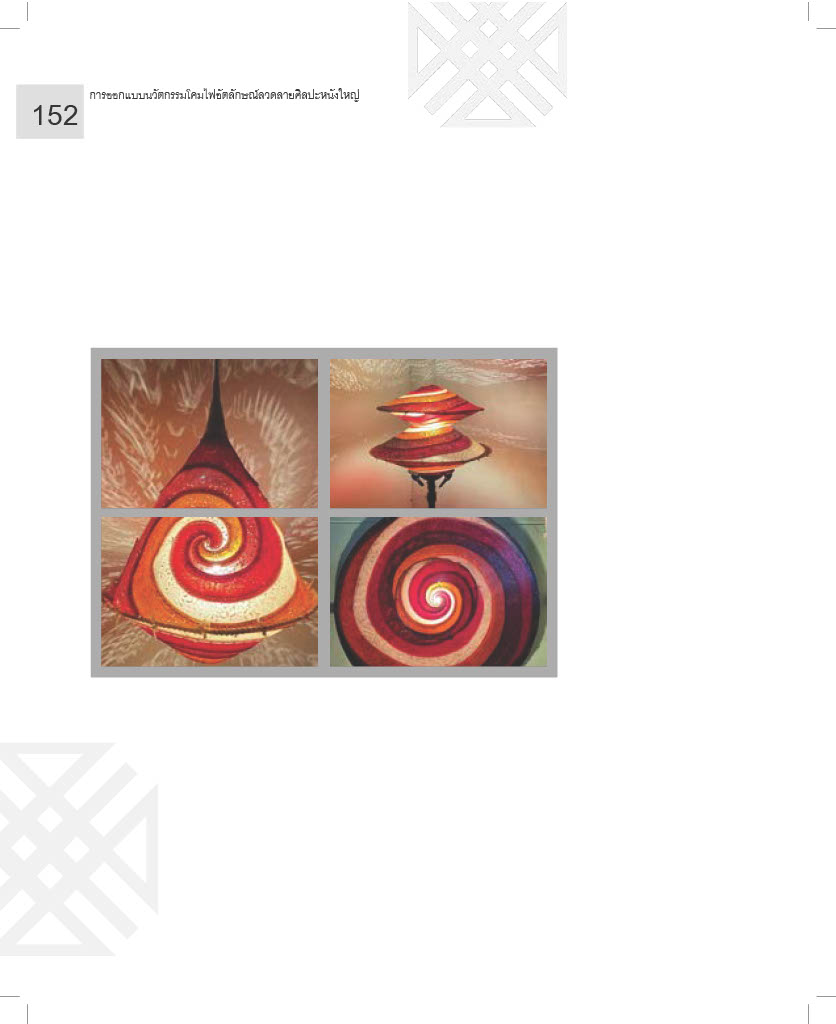
The study found that in Part 1, the identity pattern of Nang Yai Art consists of elements such as leather patterns, colors, and shapes. The carving patterns are basic Thai art typically derived from traditional Thai paintings. The majority of the Nang Yai patterns are created using a tool called “tut too”which is a hollow steel cylinder of various sizes arranged and hammered onto the leather surface to create patterns on the leather sheet. In Part 2, the concept for Innovative lamp design aims to provide functional usability while adhering to the identity pattern of Nang Yai Art, product design concepts, and innovative product development. The products, consisting of hanging lamps, floor lamps, and wall-mounted lamps, are designed to showcase the identity pattern of Nang Yai Art. The design emphasizes the beauty of the patterns and surface textures. The lamp shapes are inspired by cone shape in geometry, utilizing colors such as red, brown, orange, and natural tones in the creation of the prototype lamps In Part 3, Of all 3 prototype lamps, overall customer satisfaction for the hanging lamps is high ( =4.03 ), overall customer satisfaction for the floor lamps is high (
=4.04 ), and overall consumer satisfaction for the wall-mounted lamps is also high (
=4.08 ). The product designs exhibit both beauty and functionality, featuring contemporary forms which cater to customers who value novelty and appreciate Thai art.
Article Details

This work is licensed under a Creative Commons Attribution-NonCommercial-NoDerivatives 4.0 International License.
The original manuscript published in the Burapha Arts Journal, Faculty of Fine and Applied Arts, Burapha University, is the property of Burapha University. No part of this text may be reproduced in whole or in part without written permission from the university.
References
ชิน อยู่ดี. (2530). มูลกำเนิดของคนไทย. ศิลปวัฒนธรรมไทย. ปีที่ 11 (ฉบับพิเศษ)
ทองเจือ เขียดทอง. (2542). การออกแบบสัญลักษณ์ Logo trade mark symbol.กรุงเทพฯ : สิปปรภา.
ปานฉัตท์ อินทร์คง. (2560). การประยุกต์ใช้ผ้าทอจันเสนร่วมกับงานจักสานเพื่อพัฒนาผลิตภัณฑ์ชุมชนเชิงพาณิชย์ จังหวัดนครสวรรค์. กรมส่งเสริมวัฒนธรรมกระทรวงวัฒนธรรม.
ปิยะชาติ อิศรภักดี. (2559). Branding 4.0. กรุงเทพมหานคร : อมรินทร์พริ้นติ้ง แอนด์ พับลิชชิ่ง จำกัด.
มนตรี ตราโมท. (2502). การละเล่นของไทย. กรุงเทพมหานคร : กรมศิลปากร.
รักษ์ วรกิจโภคาธร. (2547). การจัดการนวัตกรรมสำหรับผู้บริหาร. กรุงเทพฯ : สำนักงานนวัตกรรมแห่งชาติ กระทรวงวิทยาศาสตร์และเทคโนโลยี.
เรวัต สุขสิกาญจน์. (2557). วารสารวิชาการ Veridian E-Journal ปีที่ 7 ฉบับที่ 3 เดือนกันยายน ธันวาคม 2557
วิสิฐ จันมา. (2558). ประวัติศาสตร์และพื้นฐานการออกแบบภาพเคลื่อนไหว. กรุงเทพฯ: วี.พริ้นท์.
วัดพระเชตุพนวิมลมังคลาราม ราชวรมหาวิหาร. (2553).คู่มือนําเที่ยววัดโพธิ์.พิมพ์ครั้งที่ 8.กรุงเทพฯ: อมรินทร์พริ้นติ้งแอนพับลิชชิ่ง จํากัด(มหาชน).
อุดมศักดิ์ สาริบุตร. (2550). ออกแบบเฟอร์นิเจอร์. กรุงเทพฯ: โอเดียนสโตร์. บัณฑิตวิทยาลัย มหาวิทยาลัยศิลปากร. สาส์นสมเด็จ เล่ม 25. พระนคร: องค์การคของค้าคุรุสภา.
