The Creation of Dance Performance From the Historical Evidences of Sriphalo
Article Sidebar
Main Article Content
Abstract
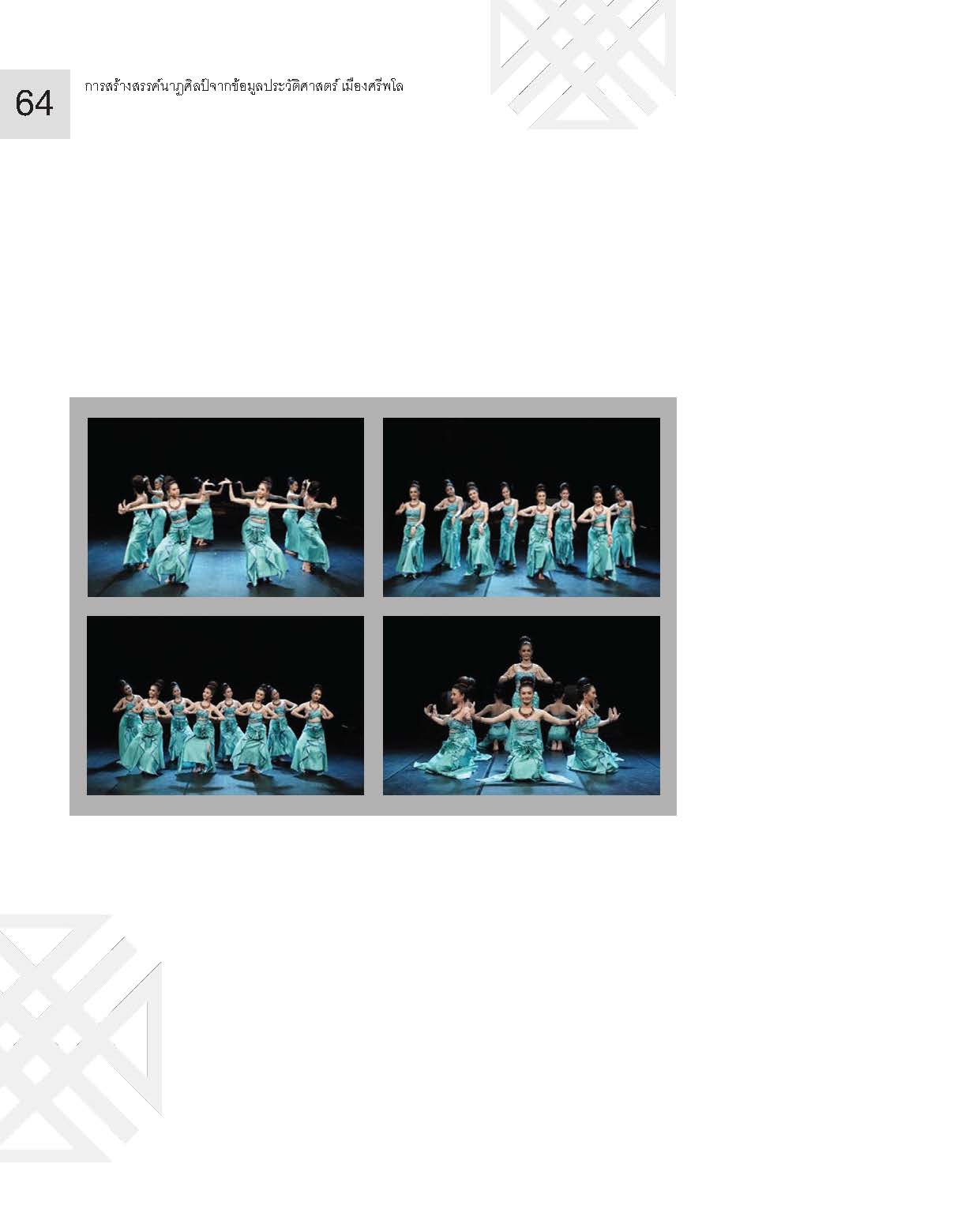
This article is part of research entitled “The Creation of Dance Performance from the Historical Evidence of Sriphalo”, aimed to create Thai dances from historical sources from the East of Thailand. The Qualitative research methods were conducted by in-depth interviews, field trips, and creative research methodology was formulated to examine new choreography of Thai Archaeology Dance (Rabam Borankadee). The study was revealed that Sriphalo was a small ancient seaport community. The culture-historical archaeology had been influenced by the Dhavaravadi era, Khom era, Sukhothai era until the late Ayutthaya era in order. The dancing character was inspired by female ritual dolls (Sia-Ka-Ban) which were found in Sukhothai era. The performance structure has 4 parts: the establishment of Sriphalo, the spreading of Buddhism, the belief in Hindu Gods, and the Glory of Trading city. The Choreography was employed by geography, historic site, antiques, buddha image, a graven image, and the authentic ethnical dance, therefore the 3 new dance positions were discovered in the dance piece consists of Jeeb Lavo, Jeeb U-Thong, and Pra Ganesha Shu Guang. The Costume design was inspired by Sukhothai art forms including the hair bun, chest strap fabric, green sarong (coloring by Sukhothai era porcelain), and bronze accessories (from Ayuthdhaya era). The music was composed by using traditional resources from The Rabam Borankadee and finding a strong potentiality of historical evidence that relates to dance.
Article Details

This work is licensed under a Creative Commons Attribution-NonCommercial-NoDerivatives 4.0 International License.
The original manuscript published in the Burapha Arts Journal, Faculty of Fine and Applied Arts, Burapha University, is the property of Burapha University. No part of this text may be reproduced in whole or in part without written permission from the university.
References
ตุ๊กตาเสียกบาลแม่อุ้มลูก. สืบค้นเมื่อ 2 กุมภาพันธ์ 2563 เข้าถึงได้จาก https://www.google.com.
พระเนื้อชินปางลีลา. สืบค้นเมื่อ 23 มกราคม พ.ศ.2563 เข้าถึงได้จาก http://www.certificatepra.com.
พระพุทธรูปแบบอู่ทอง. สืบค้นเมื่อ 21 มกราคม พ.ศ.2563 เข้าถึงได้จาก https://www.m-culture.go.th.
พระพุทธรูปปางมารวิชัยแบบอู่ทอง. สืบค้นเมื่อ 23 มกราคม พ.ศ.2563 เข้าถึงได้จาก http://nkr.mcu.ac.th/buddhasil.
พระพุทธรูปสมัยทวารวดี. สืบค้นเมื่อ 21 มกราคม พ.ศ.2563 เข้าถึงได้จาก https://www.m-culture.go.th.
พิพิธภัณฑ์ชุมชนวัดศรีพโลทัย. สืบค้นเมื่อ 9 มกราคม พ.ศ.2563 เข้าถึงได้จาก http://oldweb.nongmaidaeng.go.th/picplace1.html.
ภารดี มหาขันธ์. (2552). พัฒนาการทางประวัติศาสตร์ชลบุรี : หจก.องศาสบายดี.
มหาวิทยาลัยราชภัฏนครปฐม ศูนย์การเรียนรู้ทวารวดี. (2552). สรรสาระอารยธรรมทวารวดี. กรุงเทพ ฯ : เพชรเกษม พริ้นติ้ง กรุ๊ป จำกัด.
วัฒนธรรม พัฒนาการทางประวัติศาสตร์ เอกลักษณ์และภูมิปัญญาจังหวัดชลบุรี.(2542). พิมพ์ครั้งที่ 1 : โรงพิมพ์คุรุสภาลาดพร้าว
ศรีศักร วัลลิโภดม. (2545). อารยธรรมฝั่งทะเลตะวันออก. กรุงเทพ ฯ : สำนักพิมพ์มติชน
สัณห์ไชญ์ เอื้อศิลป์. (2559). การเล่าเรื่องประวัติศาสตร์และโบราณคดีภาคตะวันออกผ่านการสร้างบทและกำกับละครเพลงเรื่อง เจ้าหญิงโคกพนมดี (รายงานการวิจัย). มหาวิทยาลัยบูรพา.
สุชาติ เถาทอง. (2544). ศิลปวัฒนธรรมและภูมิปัญญาพื้นถิ่นภาคตะวันออก. กรุงเทพ ฯ : สำนักพิมพ์โอเดียน.
สุชาติ เถาทอง. (2561). ภูมิบูรพา พลังแผ่นดินวิถีทัศน์. คณะศิลปกรรมศาสตร์ มหาวิทยาลัยบูรพา.
