Zhou Guojin's innovativeness in modern ceramic art
Article Sidebar
Main Article Content
Abstract
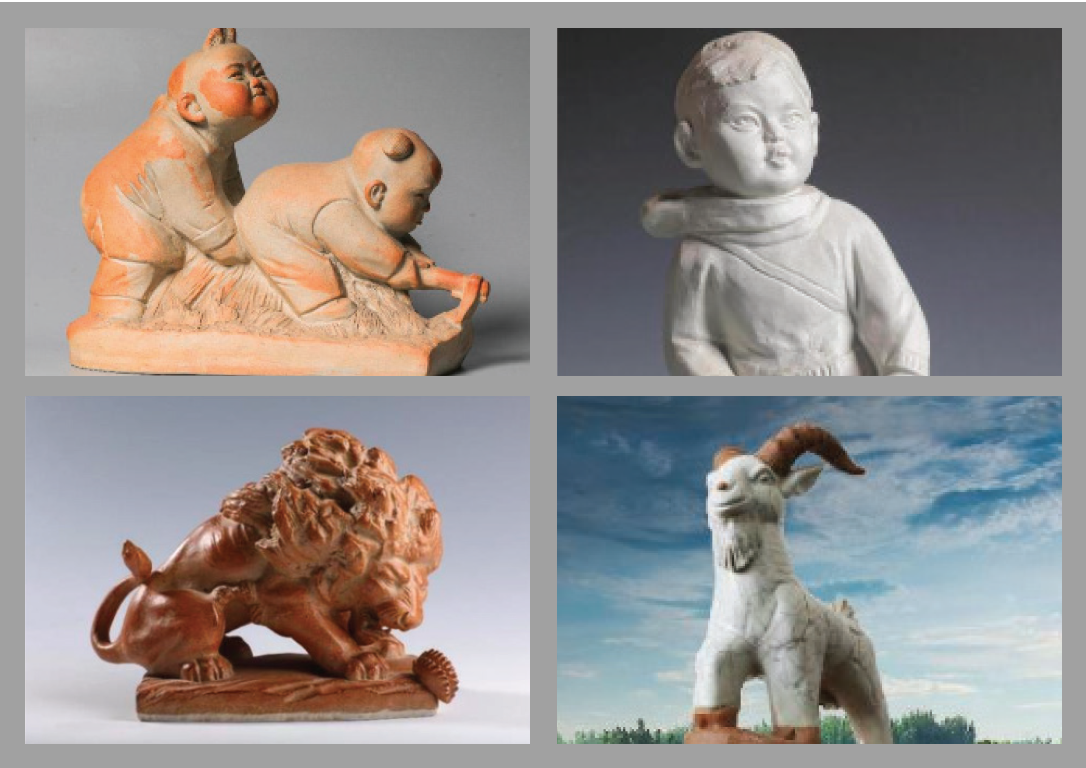
Contemporary ceramic art by Zhou Guojin has been of significant interest since the 1950s. Zhou Guojin has played a pivotal role in fostering the transmission of cultural heritage and spiritual values inherent in Chinese ceramics, which have a history spanning over a millennium. Moreover, he has been instrumental in promoting and advancing contemporary ceramic art in China, with a deliberate intention to "inherit without imitation, create anew without forsaking roots." During the period from 1954 to 1959, characterized as "the era of fog," a period of heightened awareness and exploration, Zhou Guojin sought to cultivate artistic ideologies conducive to creative innovation. This creative endeavor during the era of fog involved employing simplistic elements, embracing natural realism, and harmonizing "perspectives, forms, spirits, and emotions." Subsequently, from 1960 to 1981, marked " the era of prosperity," wherein Zhou Guojin embarked on a quest for aesthetic perfection in forms. This period witnessed embellishments through the application of colorful glazes, rendering artworks charming, captivating, and intriguing. Transitioning to " the era of antiquity " from 1981 to 1988, Zhou Guojin delved into the essence of true beauty, expressing reverence towards nature and emphasizing the intrinsic unity between humanity and the natural world, characteristic of Eastern culture. The period spanning from 1988 to 2007 marked " the era of new expression," characterized by transformative shifts and consciousness-raising endeavors. Here, Zhou Guojin advocated for “an art form that embraced evolving outcomes, encouraging perspectives that viewed traditional ceramic craftsmanship as the epitome of purity, marked by emotional imprints akin to the artist's fingerprints, thereby enabling artists to create with unrestricted imagination and vigor”. From 2007 to the present is the era of embracing the vast environment. Zhou Guojin's artistic endeavors have transcended boundaries, as evidenced by his creation of large-scale ceramics, reflective of the expansive nature of contemporary times. This period epitomizes an optimistic outlook and the prosperity emblematic of the current generation's ethos and aspirations.
Article Details

This work is licensed under a Creative Commons Attribution-NonCommercial-NoDerivatives 4.0 International License.
The original manuscript published in the Burapha Arts Journal, Faculty of Fine and Applied Arts, Burapha University, is the property of Burapha University. No part of this text may be reproduced in whole or in part without written permission from the university.
References
Chen Long.(2014). “การวิจัยรูปแบบทางสุนทรียภาพของศิลปะประติมากรรมเครื่องเคลือบของโจวกั๋ว”เจิน.เจียงซี: สถาบันเครื่องเคลือบจิ่งเต๋อเจิ้น.
Hou Yangyang.(2013) “การวิจัยเกี่ยวกับต้นกำเนิดทางวิชาการศิลปะของโจวกั๋วเจิน”.หรงป่าวจาย (10) : 187-199.
Hou Yangxiang.(2014). “ศิลปะของโจวกั๋วเจิน.ประติมากรรม” (06) : 54-57.
Liu Longcai,& Zhou Guozhen.(2011). “จิตวิญญาณสูงสุดของศิลปะเครื่องเคลือบร่วมสมัย” .เศรษฐกิจอุตสาหกรรมการผลิตประเทศจีน (04),106-108.
Jiang Liping.(2015). “โจวกั๋วเจินที่ฉันรู้จัก” ศาสตร์และศิลปะเครื่องเคลือบ(03),27-43.
Jin Wenwei.(2003). “การรู้จักใหม่อีกครั้งของศิลปะประติมากรรมเครื่องเคลือบของโจวกั๋วเจิน. : การประดับตกแต่ง. (07),69-70.
Sun Chen.(2008). “การมองเห็นความแยบยลจากความอ่อนน้อม” ศิลปแบบศิลปะประติมากรรมรูปทรงสัตว์ของโจวกั๋วเจิน.เจียงซี: สถาบันเครื่องเคลือบจิ่งเต๋อเจิ้น.
Yi Jingming.(2015). “ศิลปินเครื่องเคลือบที่มีชื่อเสียงของจีนร่วมสมัย” ชีวิตของเครื่องเคลือบ.ไถเซิง (04): 26-31.
Zhou Guozhen.(2011) “สมาคมแห่งความฝัน,คอลเล็กชั่นผลงานเครื่องเคลือบสมัยใหม่ของโจวกั๋วเจิน”ปักกิ่ง: สำนักพิมพ์ศิลปะและวัฒนธรรมปักกิ่ง.
Zhou Guozhen.(1980) “พูดคุยถึงประติมากรรมเครื่องเคลือบ”. วารสารสถาบันเครื่องเคลือบ (01 ):43-49
Zhang Hongxia, Lin Langming,& Zhou Guozhen. (2019). ผู้บุกเบิกและประติมากรรมขนาดใหญ่ของเครื่องเคลือบดินเผาจีนสมัยใหม่.ประติมากรรม (06) : 64-71.
