
พระพุทธรัศมี วัดโพธิสมภรณ์ อำเภอเมือง จังหวัดอุดรธานี : วิเคราะห์รูปแบบและกำหนดอายุ
Article Sidebar
Main Article Content
บทคัดย่อ
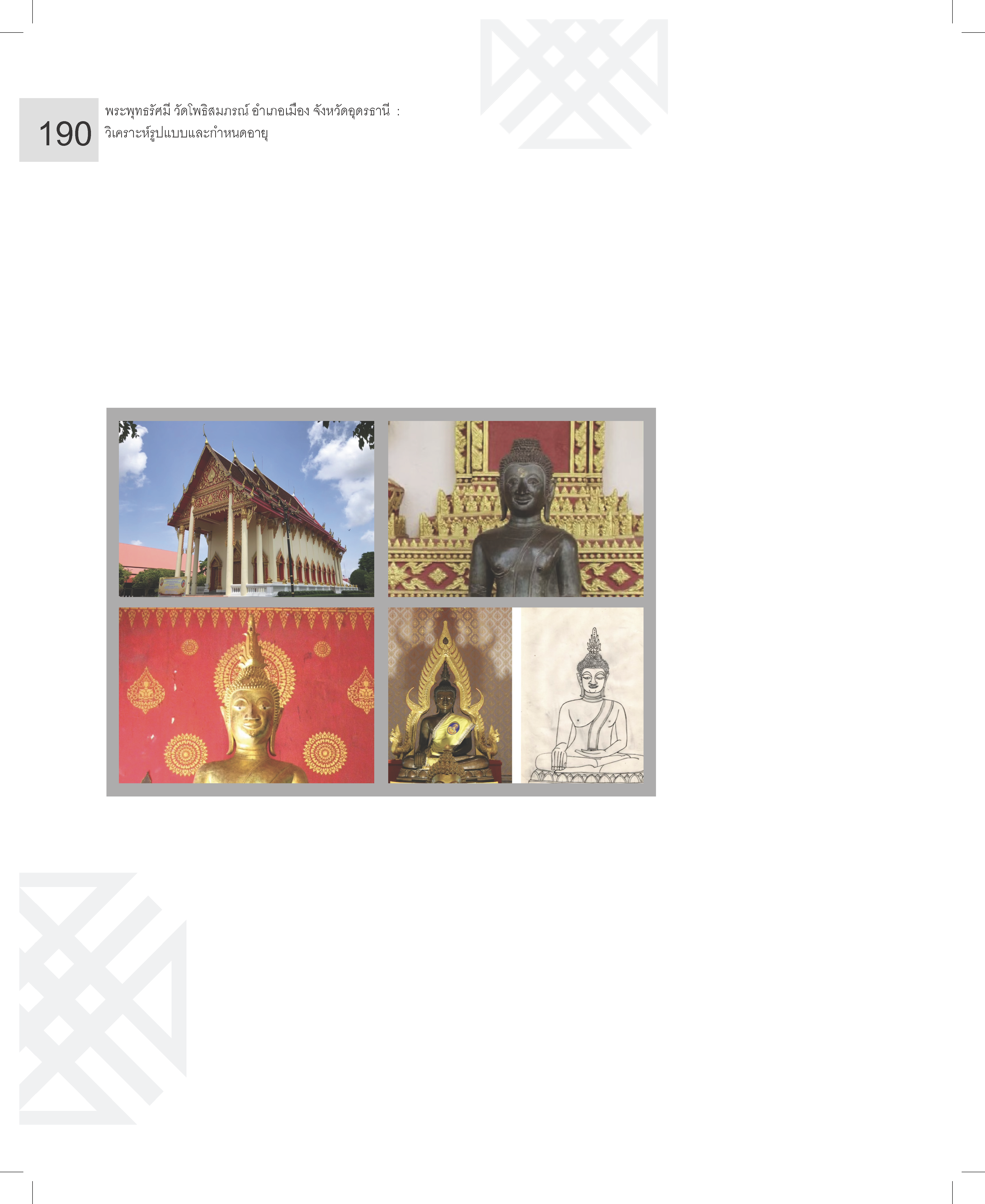
“พระพุทธรัศมี” พระพุทธรูปสำริดปางมารวิชัยประดิษฐานในอุโบสถวัดโพธิสมภรณ์ อำเภอเมือง จังหวัดอุดรธานี ตามประวัติกล่าวว่าพระธิดาแห่งกษัตริย์ล้านช้างสร้างถวายเป็นพุทธบูชาแก่วัดในเมืองหนองคาย ในปีพ.ศ. 2460 วัดโพธิสมภรณ์ได้อัญเชิญพระพุทธรัศมีจากเมืองหนองคายมาประดิษฐานเป็นพระประธานในอุโบสถ ต่อมาเจ้าคุณธรรมเจดีย์ถวายนามพระพุทธรูปว่า พุทธรัศมี พระพุทธรัศมีปรากฏจารึกที่ฐานระบุปี จ.ศ.1065 ซึ่งตรงกับปี พ.ศ. 2246 และแสดงพุทธลักษณะแบบศิลปะล้านช้าง บทความนี้มีวัตถุประสงค์เพื่อวิเคราะห์รูปแบบศิลปกรรมและกำหนดอายุด้วยวิธีวิจัยประวัติศาสตร์ศิลปะ เพื่อหาคำตอบว่าพระพุทธรัศมีวัดโพธิสมภรณ์แสดงพุทธลักษณะศิลปะล้านช้าง สกุลช่างเวียงจันทน์แท้จริงหรือไม่
พุทธลักษณะสำคัญของพุทธรูปศิลปะล้านช้างที่มีอายุในช่วงพุทธศตวรรษที่ 22 - 23 คือ พระพักตร์ป้อม พระหนุเสี้ยมเล็กน้อย พระรัศมีเป็นเปลวขนาดใหญ่ประดับอัญมณี พระเกศาเม็ดเล็ก พระเนตรเปิดหรี่ลงต่ำ พระขนงโก่งเป็นสันยกขึ้นมาเป็นเส้นคู่ ปลายพระนาสิกตัดตรง พระโอษฐ์บาง ริมพระโอษฐ์บนเป็นร่องเล็กน้อย พระวรกายค่อนข้างอวบอ้วน พระอุระแบน ครองจีวรห่มเฉียงเห็นเม็ดพระถันทั้ง 2 ข้าง นิ้วพระหัตถ์ใหญ่ ปลายนิ้วพระหัตถ์ทั้ง 4 ยาวเสมอกัน พระสังฆาฎิยาวจรดพระนาภี ซึ่งพระพุทธรูปกลุ่มนี้มีประวัติการสร้างเกี่ยวโยงกับกษัตริย์หรือราชวงศ์ล้านช้างในช่วงพุทธศตวรรษที่ 23 ที่ปรากฏจำนวนมากในเวียงจันทน์ สปป.ลาว ตัวอย่างพระพุทธรูปสำคัญ เช่น พระเจ้าองค์ตื้อ วัดองค์ตื้อมะหาวิหาน วัดอินแปง เวียงจันทน์ สปป.ลาว การสร้างพระพุทธรูปสำริดระยะหลังนิยมประดับอัญมณีบนพระรัศมีของพระพุทธรูป ตัวอย่างเช่น พระรัศมีพระพุทธรูปหลวงพ่อพระใสที่วัดโพธิ์ชัย อำเภอเมือง จังหวัดหนองคาย
ผลการศึกษาพบว่า พระพุทธรัศมี วัดโพธิสมภรณ์ แสดงพุทธลักษณะสำคัญของศิลปะล้านช้าง คือ พระรัศมีเป็นเปลวขนาดใหญ่ประดับอัญมณี เพชรพลอยแก้วสีต่างๆ พระขนงโก่งเป็นสันยกขึ้นมาเป็นเส้นคู่ ปลายพระนาสิกตัดตรง พระโอษฐ์บาง ริมพระโอษฐ์บนเป็นร่องเล็กน้อย ปลายนิ้วพระหัตถ์ทั้ง 4 ยาวเสมอกัน พระวรกายบางพระอุระแบน พระสังฆาฏิเป็นแผ่นแบนยาวถึงพระนาภี ซึ่งกำหนดอายุไว้ที่ต้นพุทธศตวรรษที่ 23 สอดรับการจารึกปรากฏที่ฐานพระพุทธรัศมีปี พ.ศ. 2246 ดังนั้น พระพุทธรัศมีในอุโบสถวัดโพธิสมภรณ์ อำเภอเมือง จังหวัดอุดรธานี จึงเป็นพระพุทธรูปศิลปะล้านช้าง สกุลช่างเวียงจันทน์ และเป็นพระพุทธรูปสำคัญและมีคุณค่าทางศิลปกรรมของชาวจังหวัดอุดรธานีจวบจนปัจจุบันพระพุทธรูปโบราณสืบไป
Article Details

อนุญาตภายใต้เงื่อนไข Creative Commons Attribution-NonCommercial-NoDerivatives 4.0 International License.
ต้นฉบับที่ได้รับการตีพิมพ์ในวารสารศิลปกรรมบูรพา (Burapha Arts Journal) คณะศิลปกรรมศาสตร์ มหาวิทยาลัยบูรพา ถือเป็นกรรมสิทธิ์ของมหาวิทยาลัยบูรพา ห้ามนำข้อความทั้งหมดหรือบางส่วนไปพิมพ์ซ้ำเว้นเสียแต่ว่าจะได้รับอนุญาตจากมหาวิทยาลัยฯ เป็นลายลักษณ์อักษร
เอกสารอ้างอิง
กรมการศาสนา. (2535). ประวัติวัดทั่วราชอาณาจักร เล่ม 10. กรมการศาสนา.
จังหวัดอุดรธานี. (2565). สมุดภาพจังหวัดอุดรธานี. บริษัทพิมพ์ จำกัด.
ธวัช ปุณโณทก. (2530). ศิลาจารึกอีสานสมัยไทย-ลาว : ศึกษาทางด้านอักขรวิทยาและประวัติศาสตร์อีสาน (พิมพ์ครั้งที่ 3). คุณพินอักษรกิจ.
บุญช่วย ศรีสวัสดิ์. (2547). ราชอาณาจักรลาว. โรงพิมพ์ธรรมสาร.
ศักดิ์ชัย สายสิงห์. (2555). เจดีย์ พระพุทธรูป ฮูบแต้ม สิมศิลปะลาวและอีสาน. อมรินทร์พริ้นติ้งแอนด์พับลิงชิ่ง.
สงวน รอดบุญ. (2545). พุทธศิลปะลาว. บริษัทโรงพิมพ์เดือนตุลา จำกัด.
สุรศักดิ์ ศรีสำอาง. (2545). ลำดับกษัตริย์ลาว. บริษัทโจเซฟ ปริ้นติ้ง จำกัด.
เสรี อุ่นยวง. (2543). อุดรธานี. บริษัท เอส พี เอฟพริ้นติ้ง กรุ๊ป จำกัด.
ศูนย์ข้อมูลกลางทางวัฒนธรรม กระทรวงวัฒนธรรม. (2554). พระพุทธรัศมี. http://m-culture.in.th/album/68747/พระพุทธรัศมี
