การใช้ประโยชน์จากเศษวัสดุเหลือใช้ทางการเกษตรสู่การสร้างสรรค์ผลิตภัณฑ์ ของที่ระลึกเชิงการท่องเที่ยว ตามแนวคิดเศรษฐกิจหมุนเวียน
Article Sidebar
Main Article Content
บทคัดย่อ
การวิจัยนี้มีวัตถุประสงค์เพื่อ (1) ศึกษาทุนทางธรรมชาติของพืชเศรษฐกิจในชุมชนบ้านถ้ำเสือ จังหวัดเพชรบุรี ที่สามารถนำมาใช้ประโยชน์หลังการเก็บเกี่ยวเพื่อพัฒนาเป็นผลิตภัณฑ์ของที่ระลึกตามแนวคิดเศรษฐกิจหมุนเวียน และ (2) พัฒนาต้นแบบผลิตภัณฑ์ของที่ระลึกจากเศษวัสดุเหลือใช้ทางการเกษตรให้มีมูลค่าเพิ่มและส่งเสริมการท่องเที่ยวเชิงนิเวศ การวิจัยใช้ระเบียบวิธีแบบผสมผสาน (Mixed Methods) โดยดำเนินการเก็บข้อมูลจากแบบสอบถามและการวิจัยเชิงปฏิบัติการแบบมีส่วนร่วม (Participatory Action Research: PAR) กลุ่มตัวอย่างได้แก่ คนในชุมชนบ้านถ้ำเสือ นักออกแบบ และนักท่องเที่ยว รวม 340 คน เครื่องมือที่ใช้ประกอบด้วยแบบสอบถาม แบบประเมินความพึงพอใจ และการวิเคราะห์วัฏจักรชีวิตผลิตภัณฑ์ (Life Cycle Assessment: LCA)
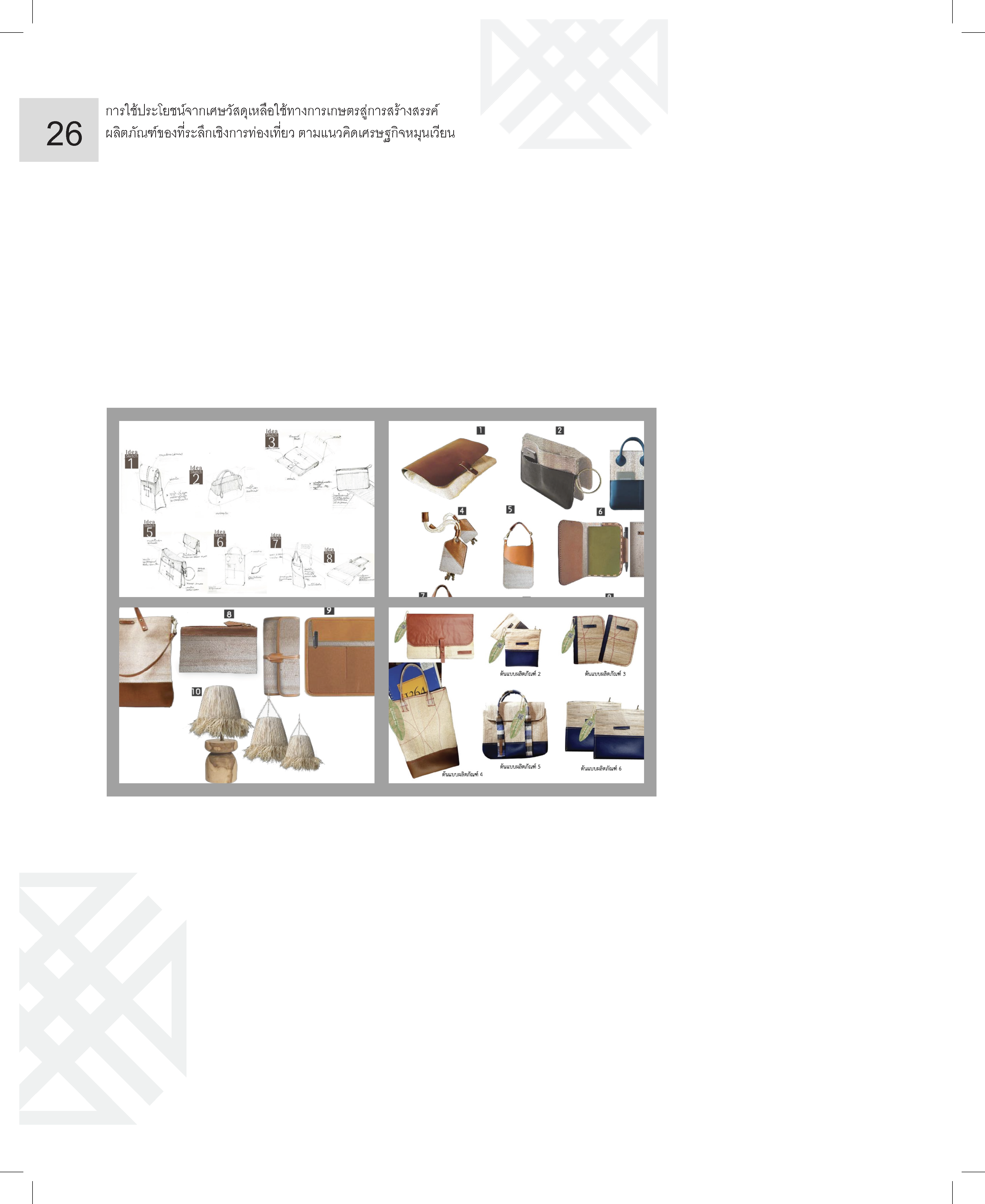
ผลการวิจัยพบว่า พืชเศรษฐกิจที่มีศักยภาพสูงสุดคือ “กล้วยน้ำว้า” เนื่องจากมีปริมาณมาก เหลือทิ้งสูง และสามารถนำ “กาบกล้วย” มาใช้ในการพัฒนาเป็นวัสดุแปรรูปได้ง่ายโดยไม่ต้องใช้สารเคมี พบว่าผลิตภัณฑ์ต้นแบบที่พัฒนาขึ้น เช่น กระเป๋าสะพาย ซองใส่อุปกรณ์อิเล็กทรอนิกส์ และของตกแต่งบ้าน ได้รับความพึงพอใจในระดับมาก (ค่าเฉลี่ย 4.40, SD = 0.03) การออกแบบผสมผสานภูมิปัญญาท้องถิ่นกับเทคนิคสมัยใหม่ สอดคล้องกับแนวคิดการออกแบบเชิงนิเวศ (Eco-Design) และการใช้ทรัพยากรอย่างคุ้มค่า ผลการศึกษาชี้ให้เห็นถึงแนวทางการต่อยอด เช่น การผสมเส้นใยจากพืชเศรษฐกิจอื่น (ตาลโตนดหรือมะพร้าว) เพื่อพัฒนาวัสดุผสม และการเคลือบพื้นผิวด้วยฟิล์มบุกผสมกลีเซอรีน เพื่อเพิ่มความทนทานของผลิตภัณฑ์
โดยสรุป การวิจัยครั้งนี้สะท้อนศักยภาพของชุมชนบ้านถ้ำเสือในการสร้างสรรค์ผลิตภัณฑ์เชิงนิเวศจากวัสดุเหลือใช้ทางการเกษตร ซึ่งสามารถต่อยอดเป็นต้นแบบเชิงพาณิชย์ สนับสนุนเศรษฐกิจสร้างสรรค์ และส่งเสริมการท่องเที่ยวเชิงนิเวศตามแนวทางเศรษฐกิจหมุนเวียนอย่างยั่งยืน
Article Details

อนุญาตภายใต้เงื่อนไข Creative Commons Attribution-NonCommercial-NoDerivatives 4.0 International License.
ต้นฉบับที่ได้รับการตีพิมพ์ในวารสารศิลปกรรมบูรพา (Burapha Arts Journal) คณะศิลปกรรมศาสตร์ มหาวิทยาลัยบูรพา ถือเป็นกรรมสิทธิ์ของมหาวิทยาลัยบูรพา ห้ามนำข้อความทั้งหมดหรือบางส่วนไปพิมพ์ซ้ำเว้นเสียแต่ว่าจะได้รับอนุญาตจากมหาวิทยาลัยฯ เป็นลายลักษณ์อักษร
เอกสารอ้างอิง
กระทรวงวัฒนธรรม. (2558). ฝากไทย ถอดรหัสเสน่ห์ของที่ระลึก เพื่อการท่องเที่ยว. หอศิลปวัฒนธรรมแห่งกรุงเทพมหานคร. https://anyflip.com/ipphi/kzul
กระทรวงสาธารณสุข. (2563). ข้อมูลพื้นฐานจังหวัดเพชรบุรี.http://pbio.moph.go.th/oldweb/
public/data_31012565.pdf
กานต์สินี วงศ์เรือน, วรสิทธิ์ ตันตินิพันธ์กุล และบวรศักดิ์ เพชรานนท์. (2565). แนวทางการพัฒนาคุณค่างานหัตถกรรม สู่มูลค่างานหัตถศิลป์ด้วยเศรษฐกิจ สร้างสรรค์และนวัตกรรมบนฐานชุมชน. วารสารวิชาการรับใช้สังคม มหาวิทยาลัย เทคโนโลยีราชมงคลล้านนา, 7(1). https://so07.tci-thaijo.org/index.php/JsesRMUTL/article/view/1216
การท่องเที่ยวแห่งประเทศไทย. (2566). แผนพัฒนาการท่องเที่ยวแห่งชาติฉบับที่ 3 (พ.ศ. 2566 – 2570) ฉบับประชาชนhttps://province.mots.go.th/ewtadmin/ewt/ranong/download
/article/article_20230418122435.pdf
กรีน ไทยแลนด์. (2564). เศรษฐกิจหมุนเวียน (Circular Economy) ดีต่อสิ่งแวดล้อมจริง ๆ หรือไม่? (วันที่ 7 กรกฎาคม 2566). https://www.greenpeace.org/thailand/story/17209/plastic-slowing-the-circular-economy/
คุณากร วานิชย์วิรุฬห์ (แปล) John Howkins. (2553). นิเวศของความสร้างสรรค์.
บริษัท อัมรินทร์พริ้นติ้งแอนพับลิชชิ่ง.
ชาย โพธิสิตา. (2552). ศาสตร์และศิลป์แห่งการวิจัยเชิงคุณภาพ. อัมรินทร์พริ้นติ้งฯ.
ชาลีดา บรมพิชัยชาติกุล. (2559). การใช้ประโยชน์จากบุก. In. Retrieved from
http://www.arda.or.th/datas/file/frman06.pdf
สำนักงานเกษตรและสหกรณ์จังหวัดเพชรบุรี. (2562). ข้อมูลพื้นฐานของจังหวัดเพชรบุรี (ธันวาคม 2562). Retrieved 30 ธันวาคม 2563, from https://www.opsmoac.go.th/phetchaburi-dwl-files-421891791794
สุรภา วงศ์สุวรรณ. (2566). การใช้ประโยชน์จากเศษวัสดุเหลือใช้ทางการเกษตรสู่การสร้างสรรค์เป็นผลิตภัณฑ์ของที่ระลึกเชิงการท่องเที่ยวตามแนวคิดเศรษฐกิจหมุนเวียน [JPG](Adobe Illustrator 2023, Issue.
สุรภา วงศ์สุวรรณ. (2564). บ้านถ้ำเสือเมืองพริบพรีโมเดล สู่นวัตวิถีชุมชนเพื่องานออกแบบ
หัตถอุตสาหกรรม แบบชุมชนมีส่วนร่วม (Publication Number 59810061_4151707850) มหาวิทยาลัยบรูพา]. มหาวิทยาลัยบรูพา.
สุวิมล ติรกานันท์. (2557). ระเบียบวิธีการวิจัยทางสังคมศาสตร์ : แนวทางสู่การปฏิบัติ (12 ed.).
โรงพิมพ์จุฬาลงกรณ์มหาวิทยาลัย.
องค์การบริหารการพัฒนาพื้นที่พิเศษเพื่อการท่องเที่ยวอย่างยั่งยืน (องค์การมหาชน). (2565).
ชุมชนบ้านถ้ำเสือ (บ้านถ้ำเสือโฮมสเตย์). Retrieved 20 มิถุนายน 2566 from https://smartdastaapp.dasta.or.th/place/1602?lang=th
อาชัญ นักสอน. (2560). ศิลปะการออกแบบหัตถอุตสาหกรรม. ทริปเพิ้ล กรุ๊ป.
Aveanty Miagina, Hernansi Biso, and Esther Kembauw. (2021). Sustainable development through the One Village One Product (OVOP) approach for local commodities. IOP Conference Series: Earth and Environmental Science,
Liliana Becerra. (2016). The Fundamental Principles of Colour, Material, and Finish Design (CMF). Frame Publishers.
Taro Yamane. (1969). Statistics An Introductory Analysis (2nd ed.). Harper & Row NY.
Yamane, T. (1969). Statistics An Introductory Analysis (2nd ed.). Harper & Row NY.
