
การออกแบบเฟอร์นิเจอร์ สำหรับผู้พิการทางกายที่มีความสามารถในการดูแลตัวเองระดับ 3 (ช่วยเหลือตัวเองได้แต่ต้องให้ญาติช่วยเป็นอย่างมาก)
Article Sidebar
Main Article Content
บทคัดย่อ
การวิจัยนี้ มีวัตถุประสงค์เพื่อ 1) ศึกษารูปแบบของเฟอร์นิเจอร์ต่าง ๆ สำหรับผู้พิการทางกายที่มีความสามารถในการดูแลตัวเองระดับ 3 (ช่วยเหลือตัวเองได้แต่ต้องให้ญาติช่วยเป็นอย่างมาก) 2) วิเคราะห์รูปแบบของเฟอร์นิเจอร์ต่าง ๆ สำหรับผู้พิการทางกายที่มีความสามารถในการดูแลตัวเองระดับ 3 (ช่วยเหลือตัวเองได้แต่ต้องให้ญาติช่วยเป็นอย่างมาก) 3) ออกแบบร่างต้นแบบของเฟอร์นิเจอร์ สำหรับผู้พิการทางกายที่มีความสามารถในการดูแลตัวเองระดับ 3 (ช่วยเหลือตัวเองได้แต่ต้องให้ญาติช่วยเป็นอย่างมาก) 4) สร้างต้นแบบเฟอร์นิเจอร์ต่าง ๆ สำหรับผู้พิการทางกายที่มีความสามารถในการดูแลตัวเองระดับ 3 (ช่วยเหลือตัวเองได้แต่ต้องให้ญาติช่วยเป็นอย่างมาก) ตามต้นแบบภาพร่างที่พัฒนาขึ้นด้วยเทคโนโลยี Augmented Reality (AR) และ Animation ผู้ให้ข้อมูลในการวิจัย ประกอบด้วย ผู้พิการทางกายที่มีความสามารถในการดูแลตัวเองระดับ 3 (ช่วยเหลือตัวเองได้แต่ต้องให้ญาติช่วยเป็นอย่างมาก) หรือผู้ดูแลผู้พิการ หรือนักกิจกรรมบำบัด หรือนักกายภาพบำบัด จำนวน 12 คน ได้มาจากการเลือกตามวัตถุประสงค์ และกลุ่มตัวอย่างที่ใช้ประเมินผลต้นแบบเฟอร์นิเจอร์ จำนวน 385 คน ได้มาจากการสุ่มอย่างง่าย
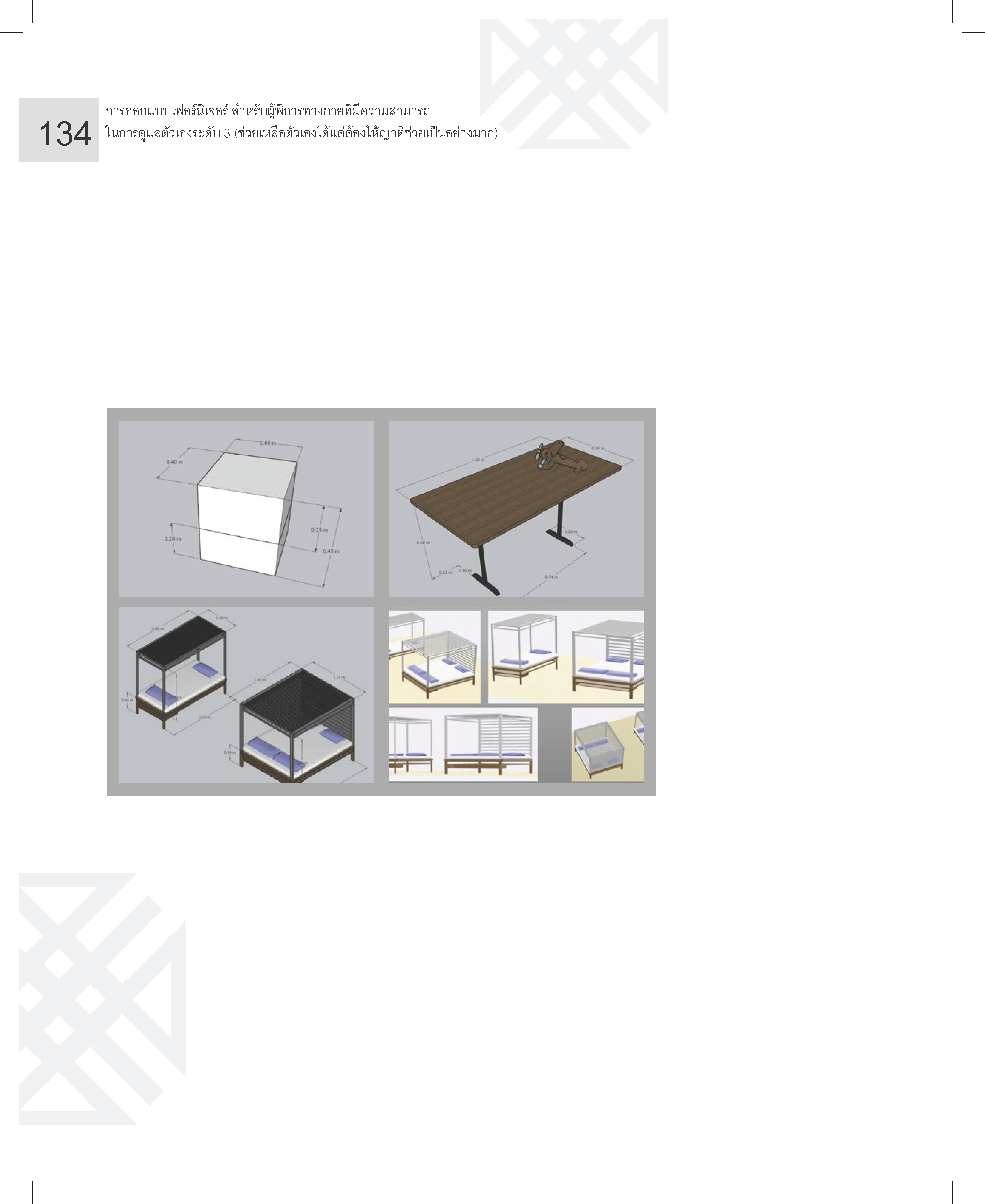
ผลการวิจัย พบว่า 1) การออกแบบเฟอร์นิเจอร์สำหรับผู้พิการประกอบด้วย เตียงนอน โต๊ะเอนกประสงค์ และโถขับถ่าย จะต้องมีขนาดและหน้าที่ใช้งานที่เหมาะสมหลากหลาย 2) ผลการประเมินต้นแบบเฟอร์นิเจอร์สำหรับผู้พิการทางกายที่มีความสามารถในการดูแลตัวเองระดับ 3 (ช่วยเหลือตัวเองได้แต่ต้องให้ญาติช่วยเป็นอย่างมาก) ตามต้นแบบภาพร่างที่พัฒนาขึ้นด้วยเทคโนโลยี Augmented Reality (AR) และ Animation จากกลุ่มตัวอย่าง มีผลการประเมินภาพรวมอยู่ในระดับมากที่สุด (ค่าเฉลี่ยเท่ากับ 4.741) และผลการประเมินทั้ง 8 ด้าน ได้แก่ (1) การออกแบบสัดส่วนการใช้งานในพื้นที่ (2) ความเหมาะสมกับการใช้งาน (3) คุณค่าทางความงดงาม (4) ความสามารถนำไปเป็นต้นแบบประยุกต์สร้างในพื้นที่อื่น (5) เป็นผลงานที่คนปกติสามารถใช้พื้นที่ร่วมด้วยได้ (6) เป็นประโยชน์แก่ผู้พิการ (7) มีรูปแบบไม่ซ้ำกับผลงานผู้อื่น และ (8) ความชื่นชอบผลงานการออกแบบเฟอร์นิเจอร์ สำหรับผู้พิการทางกายที่มีความสามารถในการดูแลตัวเองระดับ 3 (ช่วยเหลือตัวเองได้แต่ต้องให้ญาติช่วยเป็นอย่างมาก) อยู่ในระดับมากที่สุด โดยมีค่าเฉลี่ยอยู่ระหว่าง 4.660 – 4.816
Article Details

อนุญาตภายใต้เงื่อนไข Creative Commons Attribution-NonCommercial-NoDerivatives 4.0 International License.
ต้นฉบับที่ได้รับการตีพิมพ์ในวารสารศิลปกรรมบูรพา (Burapha Arts Journal) คณะศิลปกรรมศาสตร์ มหาวิทยาลัยบูรพา ถือเป็นกรรมสิทธิ์ของมหาวิทยาลัยบูรพา ห้ามนำข้อความทั้งหมดหรือบางส่วนไปพิมพ์ซ้ำเว้นเสียแต่ว่าจะได้รับอนุญาตจากมหาวิทยาลัยฯ เป็นลายลักษณ์อักษร
เอกสารอ้างอิง
กระทรวงการพัฒนาสังคมและความมั่นคงของมนุษย์. 2550. พระราชบัญญัติส่งเสริมและพัฒนา คุณภาพชีวิตคนพิการ พ.ศ. 2550. กระทรวงการพัฒนาสังคมและความมั่นคงของมนุษย์
นอรินี ตะหวา และปวิตร ชัยวิสิทธิ์. (2559). การจัดการสภาพแวดล้อมและที่พักอาศัยสำหรับผู้สูงอายุในเขต อำเภอเมือง จังหวัดนครศรีธรรมราช. สมาคมสถาบันอุดมศึกษาเอกชนแห่งประเทศ ในพระบรมราชูปถัมภ์ สมเด็จพระเทพรัตนราชสุดาฯ สยามบรมราชกุมารี, 5(1), 31 – 39.
ประไพพิมพ์ สุธีวสินนนท์ และประสพชัย พสุนนท์. (2559). กลยุทธ์การเลือกตัวอย่างสำหรับการวิจัยเชิงคุณภาพ. วารสารปาริชาติ มหาวิทยาลัยทักษิณ, 29(2), 31 – 48.
พรวิทู โค้วคชาภรณ์. (2564). การประเมินคุณภาพบริการสารสนเทศ: ความแตกต่างระหว่างความคาดหวังกับความเป็นจริงของการได้รับบริการสารสนเทศ. มหาวิทยาลัยศรีนครินทร
ศศิพัฒน์ ยอดเพชร. (2542). สู่วัยสูงอายุด้วยคุณภาพ. กรุงเทพฯ: จุฬาลงกรณ์มหาวิทยาลัย.
สำนักนโยบายและยุทธศาสตร์ สำนักงานปลัดกระทรวงสาธารณสุข. (2559). กรอบนโยบายและยุทธศาสตร์
ด้านสุขภาพของไทยในการสาธารณสุขไทย 2554-2558. กรุงเทพมหานคร: สำนักนโยบายและยุทธศาสตร์สำนักงานปลัดกระทรวงสาธารณสุข
สำนักอนามัยสิ่งแวดล้อม กรมอนามัย กระทรวงสาธารณสุข. (2558). การจัดสภาพแวดล้อมที่เหมาะสมกับ
ผู้สูงอายุ. กรุงเทพฯ: สำนักงานกิจการโรงพิมพ์องค์การสงเคราะห์ทหารผ่านศึก.
อภิชัย ไพรสินธุ์ อัษฎา วรรณกายนต์และลลิลทิพย์ รุงเรือง. (2563). การออกแบบที่พักอาศัยสำหรับผู้สูงอายุและคนพิการด้านการเคลื่อนไหวตามแนวคิดการออกแบบเพื่อทุกคน. วารสารมหาจุฬานาครทรรศน์, 7(11), 298-313.
Aronhime, S., Calcagno, C., Jajamovich, G. H., Dyvorne, H. A., Robin, P., Dieterich, D., Fiel, M. I., Martel-Laferriere, V., Chatterji, M., Rusinek, H., & Taouli, B. (2014). DCE-MRI of the Liver: Effect of Linear and Nonlinear Conversions on Hepatic Perfusion Quantification and Reproducibility. Journal of magnetic resonance imaging. 40. 90 - 98.
Cochran, W. G. (1977). Sampling techniques (3rd ed.). John Wiley & Sons.
Davis, L. L. (1992). Instrument review: Getting the most from a panel of experts. Applied Nursing Research, 5(4), 194–197. https://doi.org/10.1016/S0897-1897(05)80008-4
Edmonds, W. A., & Kennedy, T. D. (2017). An applied guide to research designs: Quantitative, qualitative, and mixed methods (2nd ed.). SAGE Publications.
