
การสร้างสรรค์ศิลปกรรมเซรามิก“ปูรณฆฏะ”
Article Sidebar
Main Article Content
บทคัดย่อ
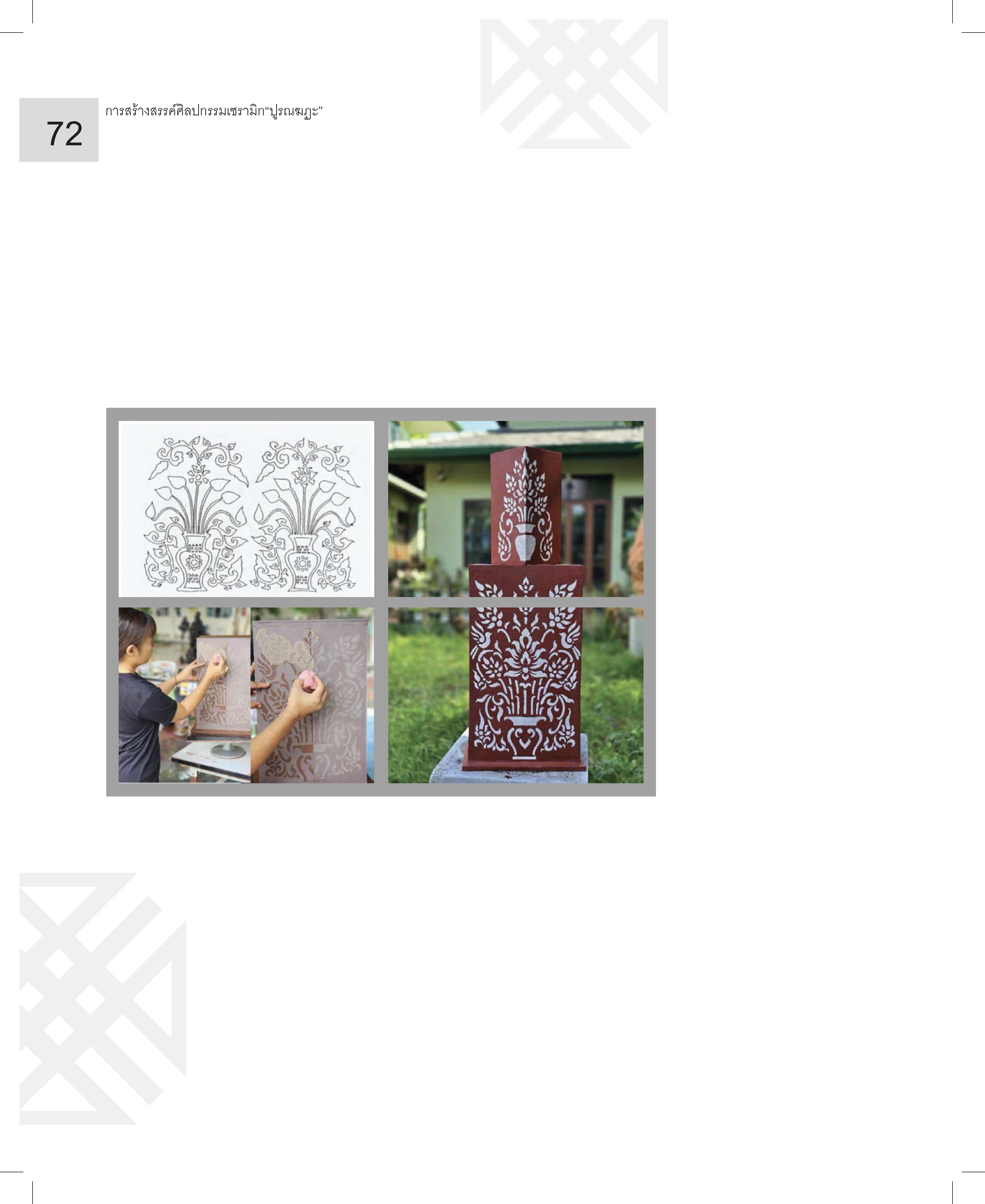
การสร้างสรรค์ศิลปกรรมเซรามิก “ปูรณฆฏะ” มีวัตถุประสงค์ของการวิจัยคือเพื่อศึกษาลวดลายปูรณฆฏะ ที่ใช้เป็นแนวคิดการสร้างสรรค์ และเพื่อสร้างสรรค์ศิลปกรรมเซรามิกจากแนวคิดลายปูรณฆฏะ ใช้วิธีการวิจัยเชิงพัฒนา (Developmental research) มีผลการศึกษาดังนี้ ลวดลายปูรณฆฏะที่ใช้ตกแต่งด้วยวิธีการลงรักปิดทองพื้นสีแดงและสีดำ มีองค์ประกอบของลวดลายคือ กอดอกไม้ หม้อน้ำ เถาไม้เลื้อย และนกบิน หมายถึงความอุดมสมบูรณ์ กระบวนการสร้างสรรค์ ได้ทำการออกแบบเป็นรูปทรงสี่เหลี่ยมผืนผ้าสองชิ้น คือขนาดใหญ่เป็นฐานอยู่ด้านล่าง และขนาดเล็กวางซ้อนด้านบน มีแนวคิดการออกแบบรูปทรงจากโครงสร้างสถาปัตยกรรมวัดโบราณในภาคเหนือ ลวดลายได้แนวคิดจากลายปูรณฆฏะ ที่ตกแต่งในวิหารน้ำแต้ม วัดพระธาตุลำปางหลวง จังหวัดลำปาง กระบวนการสร้างสรรค์ ได้ใช้เนื้อดินพื้นบ้าน (Earthenware clay) บ้านป่าตาล อำเภอหางดง จังหวัดเชียงใหม่ ขึ้นรูปด้วยวิธีแผ่น (Slab) ทาผิวภายนอกด้วยน้ำดินสีน้ำตาลที่ผสมด้วยเฟอร์ริกออกไซด์ ร้อยละ 5 และตกแต่งด้วยวิธีการกดประทับด้วยน้ำดินสีขาว ผ่านต้นแบบพลาสติกที่ฉลุลวดลายปูรณฆฏะ (Stencil) ที่คลี่คลายลวดลาย เพื่อให้สามารถทำได้โดยกระบวนการทางเซรามิก และเผาที่อุณหภูมิ 1200 องศาเซลเซียส รูปทรงสี่เหลี่ยมและตกแต่งด้วยลายปูรณฆฏะ มีความกลมกลืนเหมาะสมกันและสวยงาม
Article Details

อนุญาตภายใต้เงื่อนไข Creative Commons Attribution-NonCommercial-NoDerivatives 4.0 International License.
ต้นฉบับที่ได้รับการตีพิมพ์ในวารสารศิลปกรรมบูรพา (Burapha Arts Journal) คณะศิลปกรรมศาสตร์ มหาวิทยาลัยบูรพา ถือเป็นกรรมสิทธิ์ของมหาวิทยาลัยบูรพา ห้ามนำข้อความทั้งหมดหรือบางส่วนไปพิมพ์ซ้ำเว้นเสียแต่ว่าจะได้รับอนุญาตจากมหาวิทยาลัยฯ เป็นลายลักษณ์อักษร
เอกสารอ้างอิง
คัดคณัฐ ชื่นวงศ์อรุณ และณภัทรดนัย. อัตราส่วนทองคำ (Golden Ratio) สัดส่วนความงามแห่งจักรวาล August 29 2022. สืบค้นเมื่อ 9 เมษายน 2568, จาก https://ngthai.com
ไพจิตร อิ่งศิริวัฒน์. (2541). เนื้อดินเซรามิก. กรุงเทพฯ: โอเดียนสโตร์.
ลิปิกร มาแก้ว. (2558). ลายคำ น้ำแต้ม. เชียงใหม่: โฮงเฮียนสืบสานภูมิปัญญาล้านนา เชียงใหม่.
สุขุมาล เล็กสวัสดิ์. (2548). เครื่องปั้นดินเผา : พื้นฐานการออกแบบและปฏิบัติงาน. กรุงเทพฯ: จุฬาลงกรณ์มหาวิทยาลัย.
สุขุมาล สาระเกษตริน. (2564). เครื่องปั้นดินเผา การออกแบบและปฏิบัติงาน. กรุงเทพฯ: 50Press Printing
สนั่น รัตนะ. (มปป.). ลายคำล้านนา. วารสารวิทยาลัยช่างศิลป์ออนไลน์. สืบค้นเมื่อ 10 เมษายน 2568, จาก https://www.cfa.bpi.ac.th
สุรพล ดำริห์กุล. (2564). ลายคำล้านนา. พิมพ์ครั้งที่ 2. นนทบุรี: เมืองโบราณ.
