
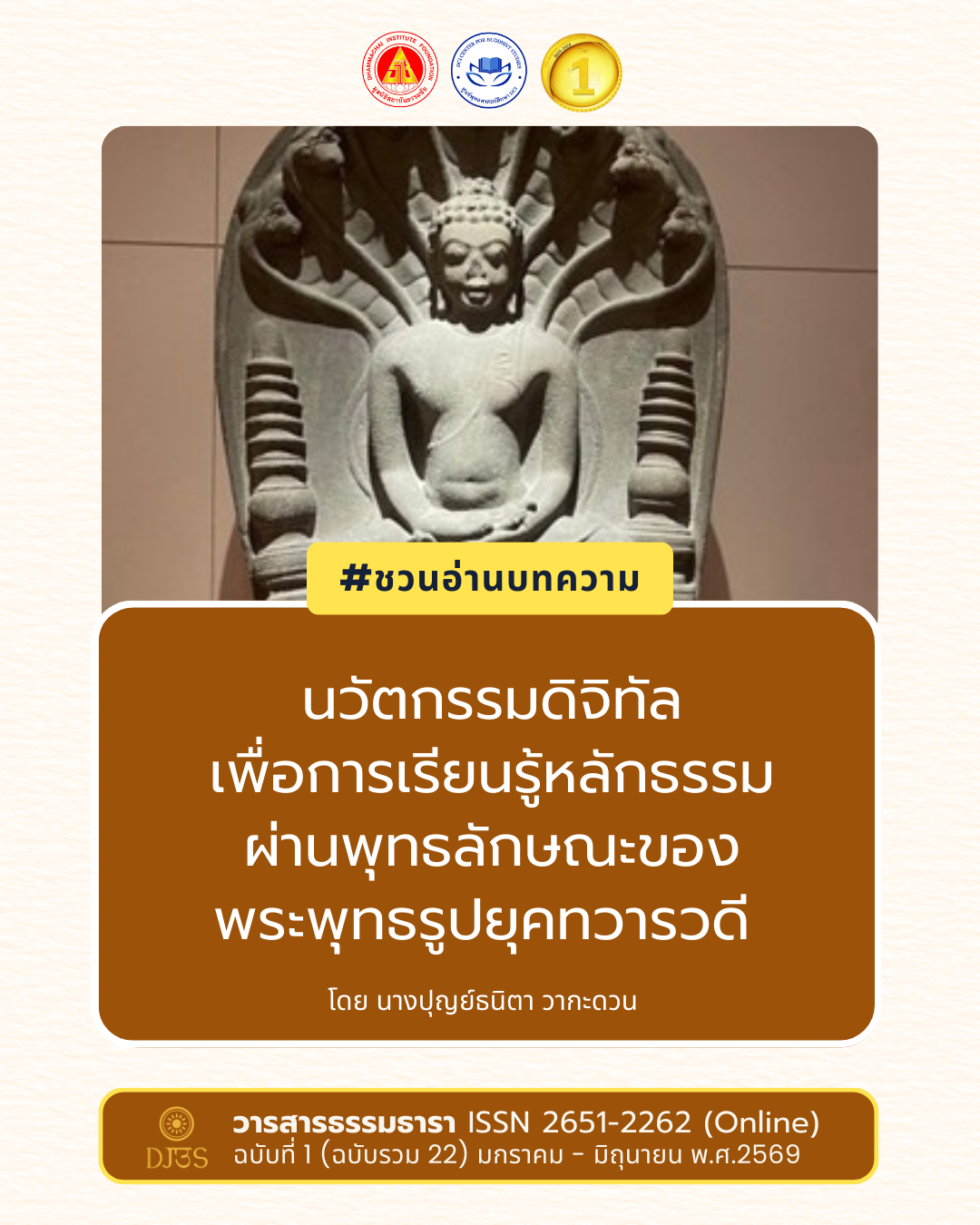
นวัตกรรมดิจิทัลเพื่อการเรียนรู้หลักธรรมผ่านพุทธลักษณะของพระพุทธรูปยุคทวารวดี
Article Sidebar
Main Article Content
บทคัดย่อ
บทความนี้มีวัตถุประสงค์ 2 ประการ คือ 1) เพื่อศึกษาคุณค่าของหลักธรรมผ่านพุทธลักษณะของพระพุทธรูปยุคทวารวดี 2) เพื่อสร้างและเผยแพร่นวัตกรรมดิจิทัลเพื่อการเรียนรู้หลักธรรมผ่านพุทธลักษณะของพระพุทธรูปยุคทวารวดี เป็นการวิจัยเชิงคุณภาพโดยการสัมภาษณ์เชิงลึก ผู้ให้ข้อมูลสำคัญ 13 รูป/คน เพื่อทำวิดีโอสารคดีชื่อ “ประตูเมืองท่า ทวารวดี” จำนวน 1 ตอน ความยาว 15 นาที ได้นำมาทดลองใช้กับประชาชน 30 รูป/คน เป็นการนำเสนอเนื้อหาหลักธรรมผ่านพุทธลักษณะของพระพุทธรูปยุคทวารวดีแต่ละอิริยาบทในแต่ละปางที่ได้รับความนิยม เพื่อนำสู่การเผยแพร่นวัตกรรมดิจิทัล
ผลการวิจัยพบว่า
1. หลักธรรมผ่านพุทธลักษณะของพระพุทธรูปยุคทวารวดี ได้แก่ 1) พระพุทธรูปปางมารวิชัย สัมมัปธาน 2) พระพุทธรูปปางสมาธิ อริยสัจ 4 และปฏิจจสมุปบาท 3) พระพุทธรูปสมาธิปางนาคปรก พรหมวิหาร 4 และสัมมัปธาน 4) พระพุทธรูปปางปฐมเทศนา โอวาทปาฏิโมกข์ โพธิปักขิยธรรม 37 ปฏิจจสมุปบาท และอริยสัจ 4 5) พระพุทธรูปปางมหาปาฏิหาริย์ ปรมัตถธรรม 6) พระพุทธรูปปางเสด็จจากสวรรค์ชั้นดาวดึงส์ สังคหวัตถุ 4 7) พระพุทธรูปประทับยืนเหนือพนัสบดี โอวาทปาฏิโมกข์ 8) พระพุทธรูปปางประทานพร พหุสูต โดยจำแนกได้เป็น 4 คุณค่า (1) ด้านคติธรรม (2) ด้านจิตใจ (3) ด้านศิลปะและวัฒนธรรม และ (4) ด้านสังคมและการดำเนินชีวิต
2. ผลการประเมินนวัตกรรมดิจิทัลโดยภาพรวม กลุ่มผู้รับชมมีความพึงพอใจมากที่สุด ค่าเฉลี่ย 4.68 อยู่ในระดับพึงพอใจมากที่สุด พิจารณาเป็นรายข้อพบว่า นวัตกรรมดิจิทัลเพื่อการเรียนรู้หลักธรรมผ่านพุทธลักษณะของพระพุทธรูปยุคทวารวดี มีความเหมาะสม ด้านการเผยแผ่พระพุทธศาสนา ค่าเฉลี่ย 4.82 อยู่ในระดับมากที่สุด รองลงมาเสียงบรรยายนวัตกรรมสารคดี ชื่อ “ประตูเมืองท่า ทวารวดี” มีความเหมาะสมมากที่สุด เหมาะสมต่อการเผยแพร่สู่สาธารณชน สามารถนำไปเป็นสื่อการเรียนการสอน ที่สะท้อนถึงเหตุการณ์สำคัญในพุทธประวัติที่ปรากฏหลักธรรมต่าง ๆ มากมาย มีค่าเฉลี่ย 4.79 อยู่ในระดับพึงพอใจมากที่สุด ส่วนข้อที่ค่าเฉลี่ยน้อยที่สุดคือ ภาพประกอบสารคดี มีค่าเฉลี่ย 4.44 แต่ยังคงอยู่ในระดับพึงพอใจมากที่สุดเช่นกัน
ผลการวิจัยได้องค์ความรู้ใหม่ สร้างเป็นโมเดล “HAP CD” MODEL โดยข้อดีของนวัตกรรมดิจิทัลรูปแบบสารคดีนี้ คือ เป็นนวัตกรรมที่สร้างความรู้ เป็นการผสานเทคโนโลยีกับพระพุทธศาสนา ช่วยให้ผู้เรียนเข้าถึงหลักธรรม เน้นคุณค่า 4 ด้าน ได้แก่ ด้านคติธรรม ที่ถ่ายทอดหลักธรรมคำสอนอย่างเข้าใจง่าย ด้านจิตใจ ช่วยส่งเสริมความสงบและศรัทธา ด้านศิลปะและวัฒนธรรมเป็นการอนุรักษ์มรดกทางศิลปกรรมมิให้สูญหาย ด้านสังคมและการดำเนินชีวิต สามารถเชื่อมโยงธรรมกับชีวิตของผู้คนได้อย่างเหมาะสมและร่วมสมัย
Article Details

อนุญาตภายใต้เงื่อนไข Creative Commons Attribution-NonCommercial-ShareAlike 4.0 International License.
ลิขสิทธิ์ มูลนิธิสถาบันธรรมชัย ศูนย์พุทธศาสตร์ศึกษา DCI

เอกสารอ้างอิง
ภาษาไทย
---1. พระไตรปิฎก
มหาจุฬาลงกรณราชวิทยาลัย. พระไตรปิฎกภาษาไทย ฉบับมหาจุฬาลงกรณราชวิทยาลัย. กรุงเทพมหานคร: โรงพิมพ์มหาจุฬาลงกรณราชวิทยาลัย, 2539.
---2. หนังสือ
ศักดิ์ชัย สายสิงห์. พระพุทธรูปสำคัญและพุทธศิลป์ในดินแดนไทย. พิมพ์ครั้งที่ 2. กรุงเทพมหานคร: โรงพิมพ์ฟิสิกส์เซ็นเตอร์, 2555.
ศักดิ์ชัย สายสิงห์. ศิลปะทวารวดี : วัฒนธรรมทางศาสนายุคแรกเริ่มในดินแดนไทย. พิมพ์ครั้งที่ 2. นนทบุรี: เมืองโบราณ, 2562.
ศักดิ์ชัย สายสิงห์. สารานุกรมไทยสำหรับเยาวชน โดยพระราชประสงค์ในพระบาทสมเด็จพระเจ้าอยู่หัว เล่ม 29. พิมพ์ครั้งที่ 1. กรุงเทพมหานคร: มูลนิธิโครงการสารานุกรมไทยสำหรับเยาวชน โดยพระราชประสงค์ในพระบาทสมเด็จพระเจ้าอยู่หัว, 2547.
สมเด็จพระเจ้าบรมวงศ์เธอ กรมพระยาดำรงราชานุภาพ. ตำนานพระพุทธเจดีย์. กรุงเทพมหานคร: กรมศิลปากร, 2567.
---3. บทความ
กรกนก เหรียญทอง, อภินันท์ จันตะนี และสมเดช นามเกตุ. “หลักพรหมวิหาร 4 กับคุณธรรมของผู้บริหารท้องถิ่นในสังคมไทย.” วารสารมณีเชษฐาราม วัดจอมมณี, ปีที่ 7, ฉบับที่ 4, (กรกฎาคม - สิงหาคม 2567): 997-1014.
กัญญาณัฐ สิมสวัสดิ์. “การบริหารการศึกษาด้วยหลักสังคหวัตถุ 4.” วารสารวิชาการจินตาสิทธิ์, ปีที่ 1, ฉบับที่ 2, (เมษายน - มิถุนายน 2566): 83-91.
ทรงวิทย์ แก้วศรี, นวลวรรณ พูนวสุพลฉัตร และกฤษณา เลิศสุขประเสริฐ. “ความสัมพันธ์ระหว่าปฎิจจสมุป บาทกับอริยสัจ 4.” วารสาร มจร บาฬีศึกษาพุทธโฆสปริทรรศน์, ปีที่ 5, ฉบับที่ 2, (กรกฎาคม - ธันวาคม 2562): 35-45.
พระประยูร อาจิณฺณธมฺโม (รุ่งเรือง), วิโรจน์ คุ้มครอง และชัยชาญ ศรีหานู. “กระบวนการเจริญอริยมรรคมีองค์ 8 ในโพธิปักขิยธรรมเพื่อการบรรลุธรรม.” วารสาร มจร บาฬีศึกษาพุทธโฆสปริทรรศน์, ปีที่ 11, ฉบับที่ 1, (มกราคม - มีนาคม 2568): 1-16.
พระมหาสมเจต สมจารี (หลวงกัน). “พระพุทธรูป : สัญลักษณ์แห่งศรัทธาที่มีต่อพระพุทธเจ้า.” วารสารศึกษาศาสตร์ มมร, ปีที่ 4, ฉบับที่ 1, (มกราคม - มิถุนายน 2559): 94-111.
พระสุจินตนินท หนูชูสีห์สกุล. “วิเคราะห์สัมมัปธาน 4 เพื่อการบรรลุธรรม.” วารสารนวัตกรรมการจัดการศึกษาและการวิจัย, ปีที่ 7, ฉบับที่ 1, (มกราคม - กุมภาพันธ์ 2568): 149-158.
พีระวัฒน์ ฉัตรไทยแสง. “การเข้าถึงความจริงในพุทธปรัชญา.” วารสาร มจร บาฬีศึกษาพุทธโฆสปริทรรศน์, ปีที่ 10, ฉบับที่ 1, (มกราคม - เมษายน 2567): 249-263.
---4. งานประชุมทางวิชาการ
กรรณิการ์ วิมลเกษม. “ชื่อ ‘ทวารวดี’ ในจารึกวัดจันทึก.” ในการประชุมสัมมนาเรื่องความก้าวหน้าใน การศึกษาโบราณคดีและเมืองโบราณในวัฒนธรรมทวารวดี. 24-25 กรกฎาคม 2546. สุพรรณบุรี: สำนักงานศิลปากรที่ 2, 2546.
