Meaning and Trends of Themed Hotel for Family Tourism: A Case Study of Centara Hotels & Resorts
Article Sidebar
Main Article Content
Abstract
The objectives of this research were 1) to study the meaning of themed hotel 2) to study trends of themed hotel for family tourism. This research applied qualitative research through phenomenological method with semi-structured in-depth interview. It also applied purposive sampling from 10 key informants. In addition, the researcher used content analysis to analyze data.
The results of the research revealed that the meaning of “Themed Hotel” was a hotel that features a unique and specific motif architecture design standing out from other types of hotels. It shall communicate by using storytelling, culture, imagination, identity so that guests can perceive and feel that they are being in the theme. It represented all unique elements including the hotel construction, decoration, materials, services and staff to create atmosphere as its theme in order to offer a memorable moment and the essence of experience to its guests. It also aimed to obtain returning guests as a family vacation destination. Furthermore, the trends of themed hotel for family tourism was dramatically growing up according to the trends of family tourism. Its future trends shall consider 5 key factors as follows; 1) Distinctive theme 2) Creating experience and vacation destination 3) Educational activities 4) Smart technology 5) Power of child and multi-generation.
Downloads
Article Details
บทความ ข้อความ ภาพประกอบ ตารางประกอบ ที่ตีพิมพ์ในวารสารเป็นความคิดเห็นและความรับผิดชอบของผู้เขียนแต่เพียงผู้เดียว ไม่เกี่ยวข้องกับมหาวิทยาลัยสุโขทัยธรรมาธิราชแต่อย่างใด
บทความที่เสนอพิจารณาในวารสาร e-JODIL ต้องเป็นบทความที่ไม่เคยส่งไปลงพิมพ์ เผยแพร่ หรืออยู่ระหว่างการพิจารณาของวารสารอื่น
กองบรรณาธิการขอสงวนสิทธิ์ในการพิจารณาและตัดสินการตีพิมพ์บทความในวารสาร
References
กระทรวงการท่องเที่ยวและกีฬา. (2560). ยุทธศาสตร์ กระทรวงการท่องเที่ยวและกีฬา ฉบับที่ ๔ (พ.ศ. ๒๕๖๐ – ๒๕๖๔). สืบค้นเมื่อ 2 เมษายน 2563, จาก https://www.mots.go.th/download/article/article_20171201174031. pdf.
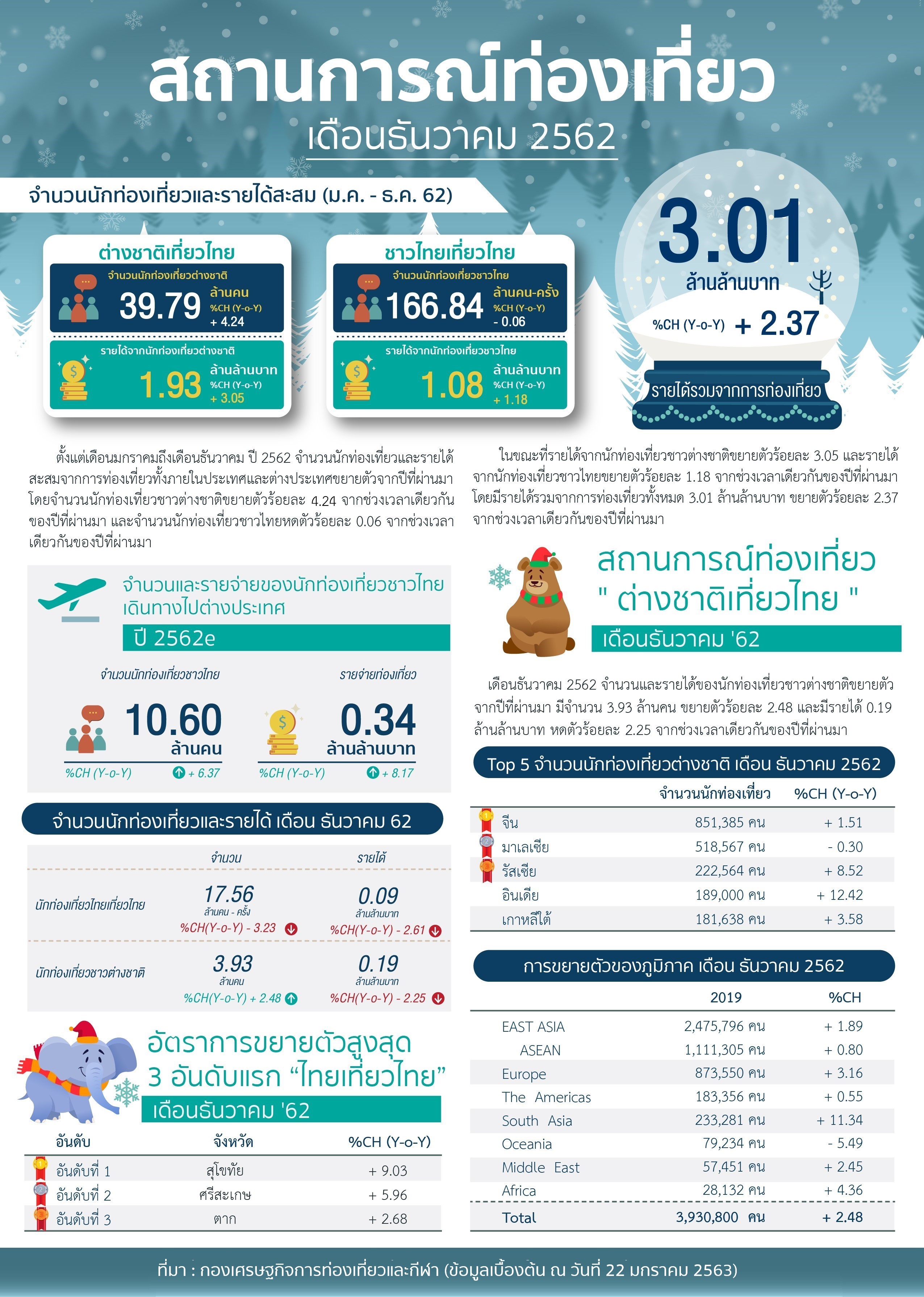
กระทรวงการท่องเที่ยวและกีฬา. (2563). สถานการณ์ด้านการท่องเที่ยวเดือนมกราคม-ธันวาคม 2562. สืบค้นเมื่อ 2 เมษายน 2563, จาก https://www.mots.go.th/download/article/article_20200123132650.jpg.
กองวิจัยการตลาด ททท. (2558). การศึกษาแนวโน้มและทิศทางการท่องเที่ยวไทยในปี 2563 Thai Tourism Scenario 2020. สืบค้นเมื่อ 2 เมษายน 2563, จาก http://www.etatjournal.com/web/menu-read-tat/menu-2015/menu-22015/654-22015-scenario2020.
กองเศรษฐกิจการท่องเที่ยวและกีฬา. (2563). สถิติด้านการท่องเที่ยว ปี 2562 (Tourism Statistics 2019). สืบค้นเมื่อ 2 เมษายน 2563, จาก http://econ-mots.com/.
ขจรศักดิ์ บัวระพันธ์. (2560). การวิจัยเชิงคุณภาพไม่ยากอย่างที่คิด. นครปฐม: สถาบันนวัตกรรมการเรียนรู้ มหาวิทยาลัยมหิดล.
Agoda. (2018). ชาวเอเชียนิยมท่องเที่ยวกับครอบครัวเป็นอันดับหนึ่ง; อโกด้าเผยผลสำรวจเทรนด์การท่องเที่ยวเป็นครอบครัว ประจำปี 2018. สืบค้นเมื่อ 1 มีนาคม 2563, จาก https://www.agoda.com/th-th/press/ชาวเอเชียนิยมท่องเที่ย?cid=-999.
Baramizi, L. (2020). HOTEL TRENDS 2020: แนวโน้มการออกแบบประสบการณ์โรงแรมประจำปี 2020. สืบค้นเมื่อ 2 เมษายน 2563, จาก https://www.wazzadu.com/article/4152.
Birchler, K. M. (2012). A Vacation within a Vacation: An Examination of How Child Participation in Day Programs during Family Vacations Influences Parental Satisfaction with the Vacation (Master of Science in Education Theses). Southern Illinois University Carbondale. USA.
Carr, N. (2011). Children’s and Families’ Holiday Experiences. New York: Routledge.
Crompton, J. L. (1981). Dimensions of the Social Group Role in Pleasure Vacations. Annals of Tourism Research, 8(4), 550-568.
Firat, F.A. (2011). Living a theme. Consumption Markets & Culture, 12(2), 193-202.
Fountain, J., Schänzel, H., Stewart, E. & Körner, N. (2015). Family Experiences of Visitor Attractions in New Zealand: Differing Opportunities for ‘Family Time’ and ‘Own Time’. Annals of Leisure Research, 18(3), 342-358.
Gottdiener, M. (2001). The Theming of America: American Dreams, Media Fantasies, and Themed Environments. Boulder: Westview Press.
Grbich, C. (2013). Content Analysis of Texts: Qualitative Data Analysis. London: Sage Publications Ltd.
Gua, P. (2013). Some Issues on Evaluation of the Theme Hotel with the Travelers' Experience Factors. In T. Honghua (Ed.), ICCC '13: Proceedings of the Second International Conference on Innovative Computing and Cloud Computing (pp. 254–257). Wuhan: ACM Wuhan Chapter.
Holjevac, I. A. (2003). A vision of tourism and the hotel industry in the 21st century. International Journal of Hospitality Management, 22(2), 129- 134.
Katchwattana, P. (2019). ผลวิจัยการันตี ‘เทรนด์ท่องเที่ยวกลุ่มรายได้ดี’ มาแรง แนะเทคนิค SME คว้าโอกาสให้ทัน. สืบค้นเมื่อ 2 เมษายน 2563, จาก https://www.salika.co/2019/08/17/premium-wellness-travel-trend-2562/.
Kendall, A. (2012). Family Vacations in the 21st Century: An Exploratory Study of Nonresident Fathers (Master of Science Thesis). University of Florida. USA.
Khoo-Lattimore, C., Prayag, G., & Cheah, B. L. (2015). Kids on Board: Exploring the Choice Process and Vacation Needs of Asian Parents with Young Children in Resort Hotels. Journal of Hospitality Marketing & Management, 24(5), 511-531.
Lehto, X.Y., Choi, S., Lin, Y. & MacDermid, S. M. (2009). Vacation and Family Functioning. Annals of Tourism Research, 36(3), 459-479.
Li, M., Wang, D., Xu, W., & Mao, Z. (2017). Motivation for Family Vacations with Young Children: Anecdotes from the Internet. Journal of Travel & Tourism Marketing, 34(8), 1047-1057.
Lew, A. A., Hall, C. M. & Williams, A. M. (2004). A Companion to Tourism. Oxford: Blackwell Publishing Ltd.
Lewis, J. (2006). Children, Changing Families and Welfare States. Cheltenham: Edward Elgar.
Ma, J. (2015). The Countermeasure Study of Theme Hotel in the View of Silk Road Economic Belt - Case study of Development of Theme Hotel in the Region of Xinjiang. In H. Zhou (Ed.), Proceedings of the 2015 International Conference on Education, Management and Computing Technology (pp.858-862). Tianjin: Atlantis Press.
Obrador, P. (2012). The place of the family in tourism research: domesticity and thick sociality by the pool. Annals of Tourism Research, 39(1), 401-420.
Prinz, F. (2009). More Theme Hotels. Salenstein: Braun Publishing.
Rugh, S. (2008). Are We There Yet? The Golden Age of American Family Vacations. Lawrence: University Press of Kansas.
Schänzel H. A. & Yeoman I. (2014). The Future of Family Tourism. Tourism Recreation Research, 39(3), 343–360.
Schänzel H. A. & Yeoman I. (2015). Trends in family tourism. Journal of Tourism Futures, 1(2), 141-147.
Shaw, S., Havitz, M. & Delemere, F. (2008). I Decided to Invest in My Kids’ Memories: Family Vacations, Memories, and the Social Construction of the Family. Tourism, Culture & Communication, 8(1), 13–26.
Srnec, T., Lončarić D. & Perišić Prodan, M. (2016). Family Vacation Decision Making Process: Evidence from Croatia. In Proceedings of 23rd Biennial International Congress Tourism & Hospitality Industry 2016 (pp.432-445). Croatia. University of Rijeka.
Sylt, C. (2016). I Cover the Theme Park Industry and the Business of Formula One How Theme Parks Help to Break New Ground in The Hotel Industry. Retrieved March 28, 2020, from https://www.forbes.com/sites/csylt/2016/09/19/how-theme-parks-help-to-break-new-ground-in-the-hotel-industry/#2a8dda666310
Wisegeek. (2020). What Is a Themed Hotel?. Retrieved March 27, 2020, from https://www.wisegeek.com/what-is-a-themed-hotel.htm.
Wood, N. T. & Muñoz, C. L. (2007). No Rules, Just Right’ or is it? The Role of Themed Restaurants as Cultural Ambassadors. Tourism and Hospitality Research, 7(3–4), 242–255.
World Economic Forum. (2019). The Travel & Tourism Competitiveness Report 2019. Retrieved April 2, 2020, from http://www3.weforum.org/docs/WEF_TTCR_2019.pdf.
Xiao, Q., Zhang, H. Q. & Huang, H. (2013). The Effects of Hotel Theme Strategy: An Examination on the Perceptions of Hotel Guests on Theme Elements. Journal of China Tourism Research, 9(1), 133 – 150.
Zerhusen II, R. F. (2007). Entertainment Architecture: Contextually Integrated Water Park Resort in Norwood, Ohio (Master of Architecture Theses). B. S. Architecture, University of Cincinnati. USA.