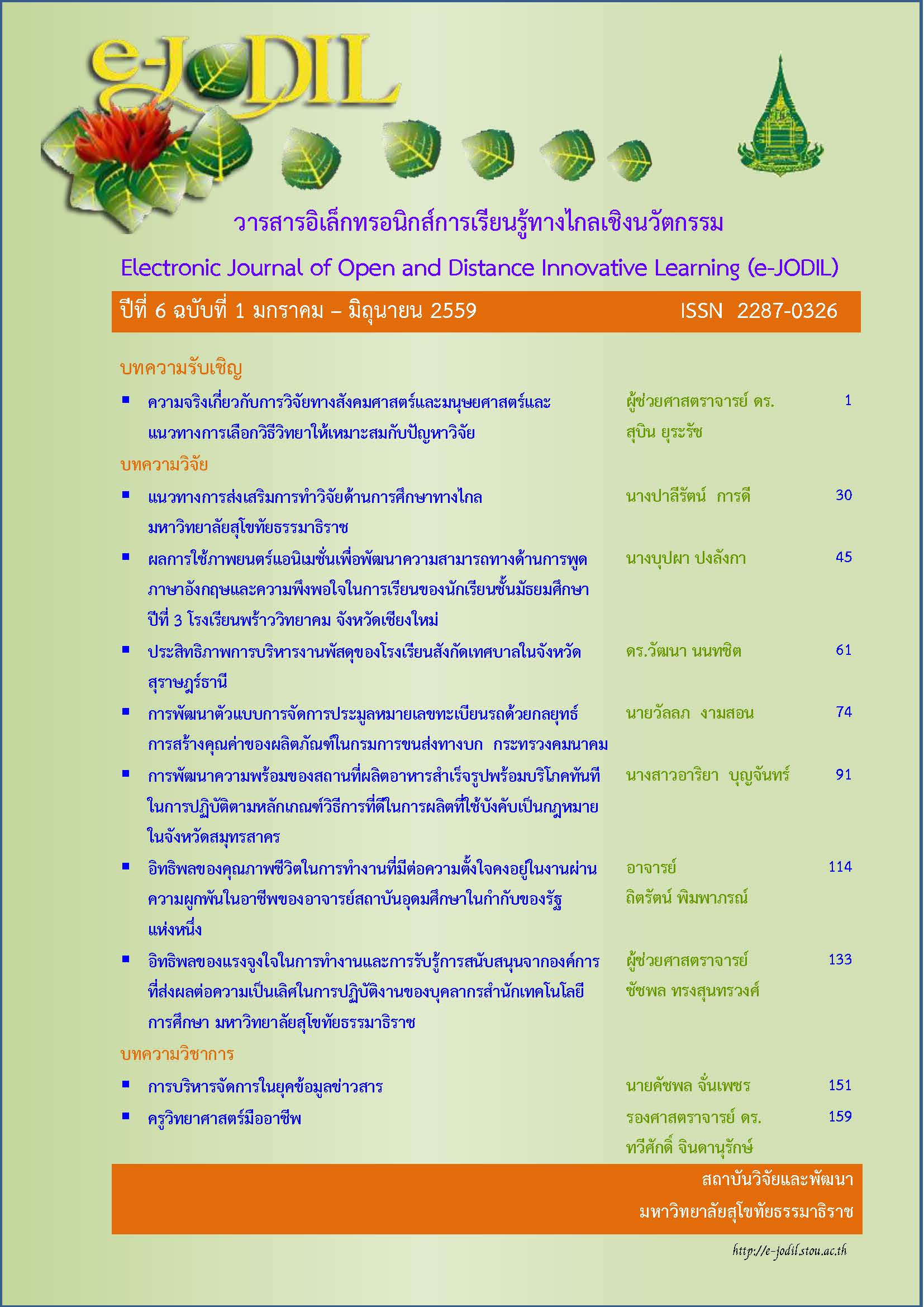
Professional Science Teachers
Article Sidebar
Main Article Content
Abstract
Professional science teachers refers to teachers who have good content knowledge to be taught in science: chemistry, biology, physics, and general science; and are able to create learning environments based on STEM education that cooperates science, mathematics, technology and engineering design process. Through this learning concept, learners participate in activities that develop their knowledge, understanding and skills in science, and they apply their knowledge in creating a piece of work or a method by using engineering design process. According to the American Association for the Advancement of Science (AAAs), science teachers also need to understand the nature of science which includes 3 components: 1) scientific worldview 2) scientific inquiry, and 3) scientific enterprise. Moreover, professional science teachers should have pedagogical knowledge that will enable them to teach, and transfer knowledge to students. They should employ technological pedagogical content knowledge- TPCK, combining 3 areas of knowledge 1) content knowledge, 2) pedagogical knowledge, and 3) technology knowledge, for effective practice of learning and teaching in a technology enhanced learning environment. Thus, this will improve students’ learning, help learners build 21st century skills, ethics, good interpersonal skills, teamwork behaviors, and promote continual self-development.
Downloads
Article Details
บทความ ข้อความ ภาพประกอบ ตารางประกอบ ที่ตีพิมพ์ในวารสารเป็นความคิดเห็นและความรับผิดชอบของผู้เขียนแต่เพียงผู้เดียว ไม่เกี่ยวข้องกับมหาวิทยาลัยสุโขทัยธรรมาธิราชแต่อย่างใด
บทความที่เสนอพิจารณาในวารสาร e-JODIL ต้องเป็นบทความที่ไม่เคยส่งไปลงพิมพ์ เผยแพร่ หรืออยู่ระหว่างการพิจารณาของวารสารอื่น
กองบรรณาธิการขอสงวนสิทธิ์ในการพิจารณาและตัดสินการตีพิมพ์บทความในวารสาร
References
ดวงเดือน พินสุวรรณ์. (2557). “การพัฒนาครูวิทยาศาสตร์” ใน ประมวลสาระชุดวิชาสัมมนาหลักสูตรและการเรียนการสอนวิทยาศาสตร์ หน่วยที่ 10 สาขาวิชาศึกษาศาสตร์. นนทบุรี: โรงพิมพ์มหาวิทยาลัยสุโขทัยธรรมาธิราช.
ธนรัชฏ์ ศิริสวัสดิ์. (2549). “มนุษยสัมพันธ์และการทำงานเป็นทีม” ใน ประมวลสาระชุดวิชาประสบการณ์วิชาชีพมหาบัณฑิตหลักสูตรและการสอน. หน่วยที่ 6 สาขาวิชาศึกษาศาสตร์. นนทบุรี: โรงพิมพ์มหาวิทยาลัยสุโขทัยธรรมาธิราช.
ทัศนีย์ ชาติไทย. (2535). “มนุษยสัมพันธ์และสภาพแวดล้อมในโรงเรียนกับการวัดและประเมินผลการศึกษา” หน่วยที่ 11 ใน เอกสารการสอนชุดวิชาจิตวิทยาและสังคมวิทยาพื้นฐานเพื่อการวัดและประเมินผลการศึกษา. สาขาวิชาศึกษาศาสตร์. นนทบุรี: โรงพิมพ์มหาวิทยาลัยสุโขทัยธรรมาธิราช.
วรพจน์ วงศ์กิจรุ่งเรือง และ อธิป จิตตฤกษ์ (แปล). (2554). ทักษะแห่งอนาคตใหม่: การศึกษาเพื่อศตวรรษที่ 21. กรุงเทพฯ: สำนักพิมพ์ Open Worlds.
ราชบัณฑิตยสถาน. (2558). พจนานุกรมศัพท์ศึกษาศาสตร์ร่วมสมัย ฉบับราชบัณฑิต. กรุงเทพฯ: สำนักงานราชบัณฑิตตยสภา.
สถาบันส่งเสริมการสอนวิทยาศาสตร์และเทคโนโลยี (สสวท.). (2545). มาตรฐานครูวิทยาศาสตร์และเทคโนโลยี. กรุงเทพฯ: โรงพิมพ์คุรุสภาลาดพร้าว.
อมรวิชช์ นาครทรรพ. (2545). “หลักการและแนวคิดเกี่ยวกับบริบททางการศึกษา” ใน ประมวลสาระชุดวิชาบริบททางการศึกษา. หน่วยที่ 1 สาขาวิชาศึกษาศาสตร์. นนทบุรี: โรงพิมพ์มหาวิทยาลัยสุโขทัยธรรมาธิราช.
American Association for the Advancement of Science. (1990). Science for All Americans. NY: Oxford University Press. http://www.project2061.org/tools/sfaaol/sfaatoc.htm.
Trilling, B., & Fadel, C. (2009). 21st century skills: Learning for life in our times. SF: John Wiley & Sons.
