
“ตอบปัญหาร้อยแปด” ของ “เสถียร โพธินันทะ”: เนื้อหาของคำถามและกลวิธีการตอบคำถาม
Article Sidebar
Main Article Content
บทคัดย่อ
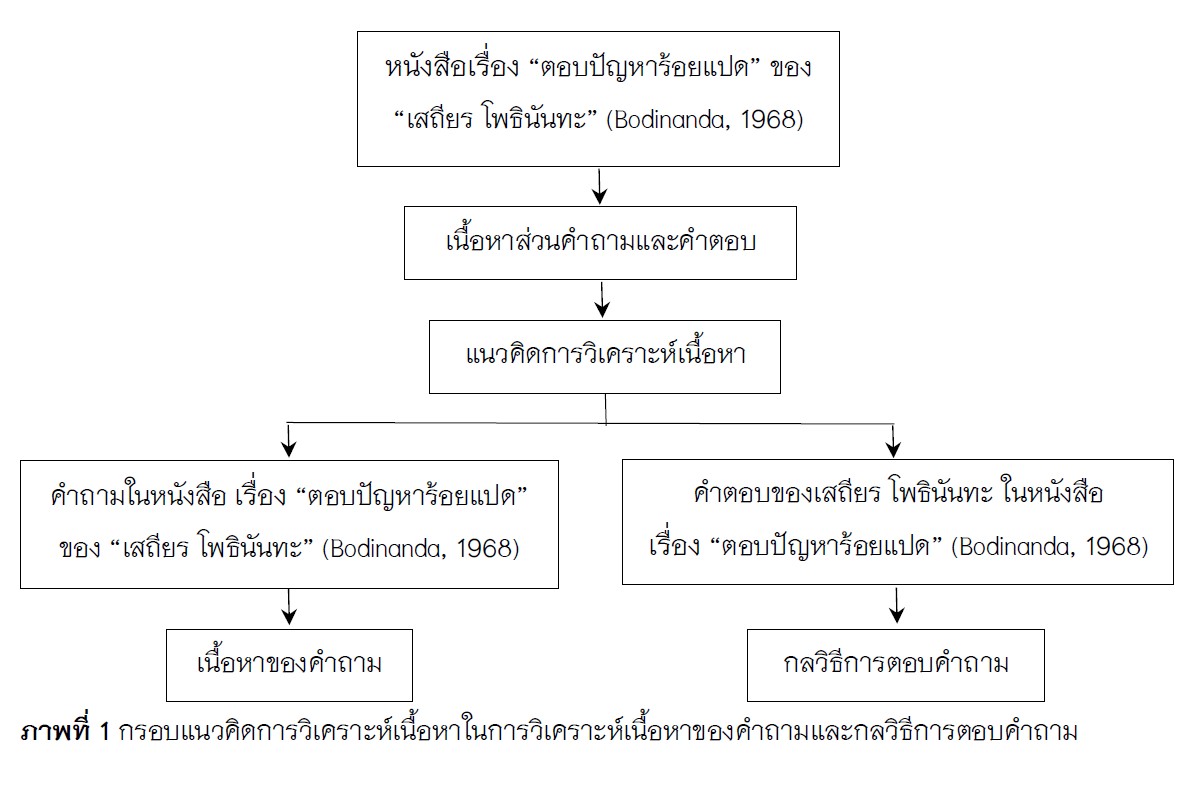
บทความนี้มีวัตถุประสงค์เพื่อวิเคราะห์เนื้อหาของคำถามและกลวิธีการตอบคำถามของเสถียร โพธินันทะ ในหนังสือ “ตอบปัญหาร้อยแปด” เก็บข้อมูลจากหนังสือ เรื่อง “ตอบปัญหาร้อยแปด” (2511) ฉบับพิมพ์ครั้งที่ 2 ปรากฏคำถามทั้งสิ้น 98 คำถาม โดยใช้แนวคิดการวิเคราะห์เนื้อหา และนำเสนอผลการศึกษาในรูปแบบพรรณนาวิเคราะห์ ผลการศึกษาพบว่า ด้านเนื้อหาของคำถาม สามารถจำแนกเนื้อหาของคำถามได้ 6 กลุ่ม ได้แก่ 1) เนื้อหาที่เกี่ยวข้องกับหลักธรรมในพระพุทธศาสนา ปรากฏร้อยละ 30.61 2) เนื้อหาที่เกี่ยวข้องกับประวัติศาสตร์ ปรากฏร้อยละ 27.55 3) เนื้อหาที่เกี่ยวข้องกับพระพุทธประวัติ ปรากฏร้อยละ 14.29 4) เนื้อหาที่เกี่ยวข้องกับการดำเนินชีวิต ปรากฏร้อยละ 12.25 5) เนื้อหาที่เกี่ยวข้องกับศาสนาอื่นหรือความเชื่ออื่น ปรากฏร้อยละ 8.16 และ 6) เนื้อหาเบ็ดเตล็ด ปรากฏร้อยละ 7.14 ส่วนด้านกลวิธีการตอบคำถาม สามารถจำแนกได้ 8 กลวิธี ได้แก่ 1) การอธิบายความ ปรากฏร้อยละ 38.19 ซึ่งปรากฏทั้งในลักษณะของการบรรยายความและการแสดงเป็นข้อรายการ 2) การอ้าง ปรากฏร้อยละ 18.90 3) การให้คำนิยาม ปรากฏร้อยละ 10.23 4) การเล่าเหตุการณ์ ปรากฏร้อยละ 8.66 5) การแสดงทัศนะ ปรากฏร้อยละ 8.27 6) การยกตัวอย่าง ปรากฏร้อยละ 6.30 7) การใช้วิธีปุจฉาและวิสัชนา ปรากฏร้อยละ 5.91 และ 8) การใช้ความเปรียบ ปรากฏร้อยละ 3.54 ทั้งนี้ เสถียร โพธินันทะ มักใช้กลวิธีการอธิบายความ โดยเฉพาะอย่างยิ่งพบการอธิบายความโดยการบรรยายความมากที่สุด เพื่อชี้แจงหรือขยายความให้ผู้อ่านสามารถทราบหรือเข้าใจได้ ส่วนกลวิธีอื่น ๆ มักปรากฏเป็นกลวิธีเสริม ซึ่งช่วยให้การตอบคำถามของเสถียร โพธินันทะ ชัดเจน ตรงประเด็น น่าเชื่อถือ หรือน่าสนใจมากยิ่งขึ้น นอกจากนี้ เมื่อพิจารณาลักษณะการตอบคำถามของเสถียร โพธินันทะ แล้ว พบว่า การตอบคำถามบางคำถาม เสถียร โพธินันทะ อาจใช้กลวิธีการตอบคำถามหลายกลวิธีร่วมกัน
Downloads
Article Details

อนุญาตภายใต้เงื่อนไข Creative Commons Attribution-NonCommercial-NoDerivatives 4.0 International License.
บทความที่ได้รับการตีพิมพ์เป็นลิขสิทธิ์ของบัณฑิตวิทยาลัย มหาวิทยาลัยราชภัฎเชียงใหม่
ข้อความที่ปรากฏในบทความแต่ละเรื่องในวารสารวิชาการเล่มนี้เป็นความคิดเห็นส่วนตัวของผู้เขียนแต่ละท่านไม่เกี่ยวข้องกับมหาวิทยาลัยราชภัฎเชียงใหม่ และคณาจารย์ท่านอื่นๆ ในมหาวิทยาลัยฯ แต่อย่างใด ความรับผิดชอบองค์ประกอบทั้งหมดของบทความแต่ละเรื่องเป็นของผู้เขียนแต่ละท่าน หากมีความผิดพลาดใด ๆ ผู้เขียนแต่ละท่านจะรับผิดชอบบทความของตนเองแต่ผู้เดียว
เอกสารอ้างอิง
Bodinanda, S. (1968). Answering a myriad of questions. (2nd ed.). Pranakorn: Prachachon. [In Thai]
Chaithaworn, S. (2015). Indirect linguistic strategies adopted by Thai actors and actresses in answering press questions: A case study of T.V. Pool Live. Thai Language and Literature (Special Issue), 32(1), 127-159. [In Thai]
Charmonman, U. (1986). Content analysis. Journal of Research Methodology (Special Issue), 1(2), 5-15. [In Thai]
Joungtrakul, J. and Wongprasit, N. (2019). Content analysis for data analysis in qualitative research. PAAT Journal, 2(2), 1-14. [In Thai]
Kuprasert, T. (2022) Avoidance strategies to answer the question for image presentation concerning their ending the relationship used by performers. Journal of Humanities, 23(1), 186-208. [In Thai]
Mahatharathong, W. (2003). A study of the translation of the Mahayana Buddhist Sutra by Sathien Bodinanda: A case study of the Vajraprajñāpāramitā Sutra. Mahachula Academic Journal, 10(2), 67-84. [In Thai]
Mekthawornwatthana, T. (2009). Answering strategies in the interview of the Ex-prime Minister Samak Sundaravej. Kasetsart University Journal of Studies in the Field of Humanities, 16(2), 72-85. [In Thai]
Nontachai, I. (2020). Content analysis articles on Suranaree Journal of Social Science from 2007 A.D. to 2018 A.D. (Research Report). Nakhon Si Thammarat: Suranaree University of Technology. [In Thai]
Ongwuttiwat, S. (2010). Linguistic strategies of Thai celebrities when answering questions posed by the media in interview situations. Vannavidas, 10, 54-93. [In Thai]
Phingchim, P. (2021). Answering tactics in situations when Thai people detect that the government is “dropping its guard”: Image restoration in the discourse of announcements made by the center for Covid-10 situation administration. Thai Language and Literature, 38(2), 114-150. [In Thai]
Phonkhunsap, S. (2018). Face-saving strategies in answering questions of Thai celebrities from 3 Zaap's television program. Wiwitwannasan, 20(3), 13-32. [In Thai]
Sornkaew, S. (2019). Thai celebrities’ face-saving strategies in answering questions in Khon Dang Nang Clear and Ying Sak Ying Zab Programs. Mangrai Saan Journal of Humanities and social Sciences, 7(2), 71-88. [In Thai]
The Office of the Royal Society. (2017). Dictionary of linguistic terms (General linguistics). Bangkok: Abiz Intergroup Company Limited. [In Thai]
The Royal Institute. (2013). Royal institute dictionary. Bangkok: Sirivatana Inter print Public Company Limited. [In Thai]
