
ภาษาและวัฒนธรรมจากการละเล่นพื้นบ้านไทย “ว่าว” สำหรับผู้เรียนชาวจีนที่เรียนภาษาไทยในฐานะภาษาต่างประเทศ
Article Sidebar
Main Article Content
บทคัดย่อ
การวิจัยครั้งนี้มีวัตถุประสงค์เพื่อวิเคราะห์คุณค่าทางภาษาและวัฒนธรรมจากการละเล่นพื้นบ้านไทย "ว่าว" สำหรับผู้เรียนชาวจีนที่เรียนภาษาไทยในฐานะภาษาต่างประเทศ โดยใช้วิธีการวิเคราะห์เนื้อหาและยึดแนวคิดการเข้าใจวัฒนธรรมใน 3 มิติของ Moran (2001) เป็นกรอบแนวคิดในการวิจัย กลุ่มข้อมูลที่ใช้ในการศึกษา คือ เอกสาร จำนวน 7 เล่ม ได้แก่ (1) การอ่านภาษาไทยระดับมหาวิทยาลัย (เล่มต้น) 大学泰语阅读教程 (上)(2) Thailand only เรื่องแบบนี้ มีแต่ไทย ๆ (3) กีฬาภูมิปัญญาไทย : มรดกภูมิปัญญาทางวัฒนธรรมของชาติ (4) สารานุกรมไทยสำหรับเยาวชนฯ ฉบับเสริมการเรียนรู้ เล่ม 37 (5) สารานุกรมวัฒนธรรมไทย ภาคกลาง เล่ม 13 (6) ภาษิต คำพังเพย สำนวนไทย ฉบับราชบัณฑิตยสถาน และ (7) พจนานุกรมฉบับราชบัณฑิตยสถาน พ.ศ. 2554 นอกจากนี้ ผู้วิจัยได้ลงภาคสนามเพื่อสัมผัสการเล่นว่าวในบริบทจริง
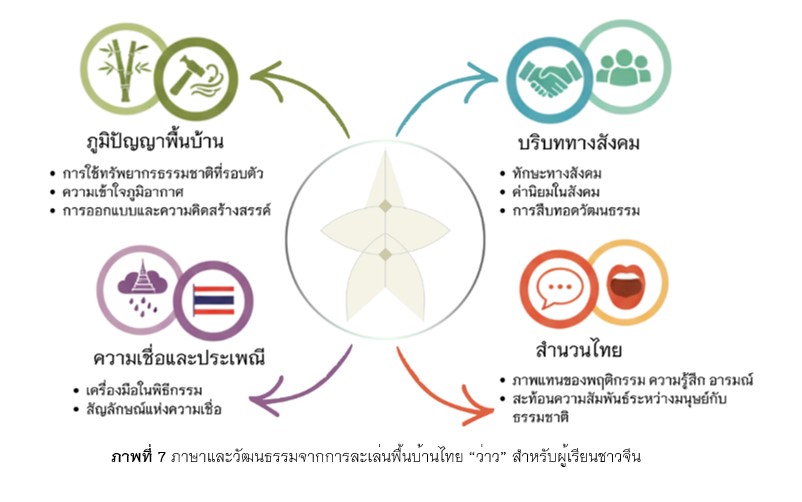
ผลการวิจัยพบว่า ว่าวสะท้อนคุณค่าทางภาษาและวัฒนธรรม 4 ด้าน ได้แก่ (1) ด้านภูมิปัญญาพื้นบ้าน (2) ด้านบริบทสังคม (3) ด้านความเชื่อและประเพณี และ (4) ด้านสำนวนไทย อย่างไรก็ตาม ผลการวิจัยยังพบข้อจำกัดในการเรียนรู้การละเล่นว่าวของผู้เรียนชาวจีน ได้แก่ เนื้อหาการเรียนรู้ขาดบริบทเชิงลึกด้านวัฒนธรรม องค์ประกอบของบทเรียนยังไม่ครบถ้วน รูปแบบการจัดการเรียนการสอนยังคงเป็นแบบเดิมซึ่งไม่จูงใจผู้เรียน และขาดการเชื่อมโยงกับบริบทการใช้งานจริง ดังนั้น ผู้วิจัยจึงเสนอแนวทางการประยุกต์ใช้การละเล่นว่าวในการเรียนการสอนภาษาไทยสำหรับผู้เรียนชาวจีน ใน 2 ด้าน ได้แก่ (1) ด้านรูปแบบการเรียนรู้ เช่น การจัดการเรียนรู้เชิงรุก และการบูรณาการทักษะทางสังคม และ (2) ด้านรูปแบบสื่อการเรียนรู้ ซึ่งสามารถพัฒนาเป็นสื่อการเรียนรู้ที่บูรณาการความรู้ด้านภาษาและวัฒนธรรมแบบองค์รวมอย่างสร้างสรรค์ และทันสมัย
Downloads
Article Details

อนุญาตภายใต้เงื่อนไข Creative Commons Attribution-NonCommercial-NoDerivatives 4.0 International License.
บทความที่ได้รับการตีพิมพ์เป็นลิขสิทธิ์ของบัณฑิตวิทยาลัย มหาวิทยาลัยราชภัฎเชียงใหม่
ข้อความที่ปรากฏในบทความแต่ละเรื่องในวารสารวิชาการเล่มนี้เป็นความคิดเห็นส่วนตัวของผู้เขียนแต่ละท่านไม่เกี่ยวข้องกับมหาวิทยาลัยราชภัฎเชียงใหม่ และคณาจารย์ท่านอื่นๆ ในมหาวิทยาลัยฯ แต่อย่างใด ความรับผิดชอบองค์ประกอบทั้งหมดของบทความแต่ละเรื่องเป็นของผู้เขียนแต่ละท่าน หากมีความผิดพลาดใด ๆ ผู้เขียนแต่ละท่านจะรับผิดชอบบทความของตนเองแต่ผู้เดียว
เอกสารอ้างอิง
Athikiet, K. (2017). Learning activities in Thai teaching: CTH 3109 (TL 316) (2nd ed.). Ramkhamhaeng University. [In Thai]
Department of Cultural Promotion. (2016). Thai wisdom sports: National intangible cultural heritage. Printing Affairs Office, War Veterans Organization of Thailand Under the Royal Patronage. [In Thai]
Department of Cultural Promotion. (2017). Knowledge and practices concerning nature and the universe: National intangible cultural heritage. Veterans Organization Printing Office. [In Thai]
Intakaew, S., Aditphatnan, N., & Maneekul, J. (2017). The use of group competition games to promote English grammar knowledge, English speaking ability, and social skills of Grade 7 students. Ganesha Journal, 10(1), 101–112. https://so01.tci-thaijo.org/index.php/pikanasan/article/view/97683 [In Thai]
Komaratat, C. (2011). Central Thai traditional sports: Study and analysis of origin, rules, and values (2nd ed.). Sataporn Books. [In Thai]
Krippendorff, K. (2019). Content analysis: An introduction to its methodology (4th ed.). Sage Publications.
Laohapensang, J. (2014). A study of methodology for integrate cultural capital with design education curriculum at higher education level. Journal of Industrial Education, 13(3), 91–98. https://ph01.tci-thaijo.org/index.php/JIE/article/view/126758 [In Thai]
Moran, P. R. (2001). Teaching culture: Perspectives in practice. Heinle & Heinle.
Miller, R. (2007). The holistic curriculum (2nd ed.). Toronto, Canada: University of Toronto Press.
Malayaporn, S. (2022). Electronic supplementary reader: “Thai dishes registered as national intangible cultural heritage” for Vietnamese students [Master’s thesis, Srinakharinwirot University]. http://ir-ithesis.swu.ac.th/dspace/handle/123456789/2188 [In Thai]
Phattarachai, S. (1999). “Kites: Play.” In Thai cultural encyclopedia: Central region (Vol. 13, pp. 6082–6087). Thailand Cultural Encyclopedia Foundation, Siam Commercial Bank. [In Thai]
Phothiyen, K. (2021). Active learning: Learning to satisfy education in the 21st century. Journal of Education, Silpakorn University, 19(1), 216–230. https://so02.tci-thaijo.org/index.php/suedujournal/article/view/245317 [In Thai]
Sukchit, P. (2005). Kites. In The Thai Junior Encyclopedia by Royal Command: Learning enhancement edition (Vol. 37, pp. 115–151). The Thai Junior Encyclopedia Project. [In Thai]
Sombat, K., & Mahavarakorn, S. (2022). Mae Chaem woven textile: Intangible cultural heritage and knowledge management toward Thai as a foreign language in active learning concept. Community and Social Development Journal, 23(1), 37–53. https://doi.org/10.14456/rcmrj.2022.251807 [In Thai]
Su, W. (2023). Supplementary reader on Thai chili pastes registered as national intangible cultural heritage for Chinese students [Master’s thesis, Srinakharinwirot University]. http://ir-ithesis.swu.ac.th/dspace/handle/123456789/2719 [In Thai]
The Royal Institute. (2013). Royal Institute dictionary B.E. 2554 (2nd ed.). The Royal Institute. [In Thai]
The Royal Institute. (2015). Thai proverbs, sayings, and idioms: Royal Institute edition (16th ed.). The Royal Institute. [In Thai]
Wetin, C. & Phakin, L. (2015). Thailand only: These things exist only in Thailand. Amarin. [In Thai]
Yang, C. (2024). Exploring pathways of “cultural exchange and mutual learning” in university Thai-language teaching. Journal of Jiamusi Vocational Institute, 40(6), 61–63. http://dehzz.com/qk-2-829-5-26845 [In Chinese]
You, H. (2009). University Thai reading course (Part I). Chongqing University. [In Chinese]
