Effects of STAD Cooperative Learning Technique on Learning Achievement in Group Theory
DOI:
https://doi.org/10.14456/psruhss.2026.10Keywords:
Cooperative learning, STAD technique, GroupAbstract
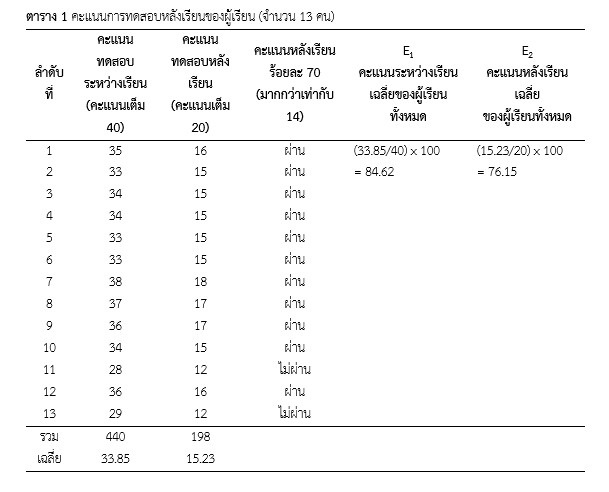
The purposes of this research were to: 1) construct and develop a mathematics learning model on groups using the STAD cooperative learning technique, 2) compare students' academic achievement before and after learning, 3) compare post-learning achievement against the 70% criterion, and 4) examine student satisfaction toward the STAD technique. The sample consisted of 13 second-year mathematics students from the Faculty of Science and Technology, Pibulsongkram Rajabhat University, enrolled in the second semester of the 2025 academic year. Research instruments included a mathematics lesson plan on groups, pre- and post-learning achievement tests, and a satisfaction questionnaire. Data were analyzed using mean (), standard deviation (S.D.), and dependent samples t-test. The results indicated that 1) The efficiency of the lesson plan (E1/E2) was 84.62/76.15, meeting the 70/70 threshold. 2) Post-test achievement scores were significantly higher than pre-test scores at the .05 level. 3) Post-test achievement significantly exceeded the 70% criterion at the .05 level. and 4) Overall student satisfaction toward the STAD technique was at a high level (
= 4.31, S.D. = 0.60).
References
เกียรติสุดา ศรีสุข. (2552). ระเบียบวิธีวิจัย (พิมพ์ครั้งที่ 3). เชียงใหม่: โรงพิมพ์ครองช่าง.
จิรากร สำเร็จ. (2551). ผลการจัดการเรียนรู้วิชาคณิตศาสตร์แบบแบ่งกลุ่มผลสัมฤทธิ์ (STAD) โดยเน้นเทคนิค KWDL ที่มีต่อความสามารถในการสื่อสารทางคณิตศาสตร์ของนักเรียนชั้นมัธยมศึกษาปีที่ 6 ที่มีระดับทางการเรียนแตกต่างกัน (วิทยานิพนธ์ปริญญามหาบัณฑิต). กรุงเทพฯ: มหาวิทยาลัยศรีนครินทรวิโรฒ.
จิราภรณ์ พรมสืบ. (2559). การศึกษาผลสัมฤทธิ์ทางการเรียนและความพึงพอใจของนักเรียนชั้นมัธยมศึกษาปีที่ 1 ด้วยการจัดกิจกรรมการเรียนรู้แบบร่วมมือโดยเทคนิคแบ่งกลุ่มคละผลสัมฤทธิ์ (STAD) รายวิชาวิทยาศาสตร์ หน่วยการเรียนรู้ เรื่อง สารละลายกรดและเบส (วิทยานิพนธ์ปริญญามหาบัณฑิต). ชลบุรี: มหาวิทยาลัยบูรพา.
จิราภรณ์ เพ็ชรรัตน์. (2562). การยกระดับผลสัมฤทธิ์ทางการเรียนในรายวิชาประวัติศาสตร์ ระดับชั้นมัธยมศึกษาปีที่ 3 ด้วยกระบวนการเรียนรู้แบบร่วมมือ. สงขลา: โรงเรียนตะเครียะวิทยาคม สำนักงานเขตพื้นที่การศึกษามัธยมศึกษาเขต 16.
ชัยยงค์ พรหมวงศ์. (2556). การทดสอบประสิทธิภาพสื่อหรือชุดการสอน. วารสารศิลปากรศึกษาศาสตร์วิจัย, 5(1), 7-20.
ชูศรี วงศ์รัตนะ. (2553). เทคนิคการใช้สถิติเพื่อการวิจัย (พิมพ์ครั้งที่ 10). กรุงเทพฯ: เทพเนรมิตการพิมพ์.
ฐิติมุนินทร์ ชูประดิษฐ์. (2567). การจัดการเรียนรู้แบบร่วมมือเทคนิค STAD เพื่อพัฒนาผลสัมฤทธิ์ทางการเรียนเรื่องระบบสัทอักษรพินอินของนักเรียนระดับชั้นมัธยมศึกษาปีที่ 1 ห้องเรียนไตรภาษา โรงเรียนสาธิตมหาวิทยาลัยรามคำแหง (ฝ่ายมัธยม). วารสารศึกษาศาสตร์ มหาวิทยาลัยทักษิณ, 25(2), 24-34. https://so02.tci-thaijo.org/index.php/eduthu/article/view/283619
ณรงค์ ชุมแวงวาปี. (2561). การพัฒนากิจกรรมการเรียนรู้แบบร่วมมือเทคนิค STAD ประกอบหนังสืออิเล็กทรอนิกส์สาระภูมิศาสตร์ ชั้นมัธยมศึกษาปีที่ 1 (วิทยานิพนธ์ปริญญามหาบัณฑิต). มหาสารคาม: มหาวิทยาลัยราชภัฏมหาสารคาม.
ธนพรรษ พฤกษะวัน. (2560). การศึกษาความสามารถและปัญหาในการพิสูจน์ทางคณิตศาสตร์ของนักศึกษา หลักสูตรศึกษาศาสตรบัณฑิต สาขาวิชาคณิตศาสตร์ มหาวิทยาลัยสวนดุสิต. Journal of Multidisciplinary in Social Sciences, 13(2), 167–184. https://so03.tci-thaijo.org/index.php/sduhs/article/view/186594
นฤเบศ ลาภยิ่งยง. (2561). การพัฒนารูปแบบการจัดการเรียนรู้การพิสูจน์ทางคณิตศาสตร์เพื่อพัฒนาความสามารถในการพิสูจน์ทางคณิตศาสตร์. วารสารราชพฤกษ์ มหาวิทยาลัยราชภัฏนครราชสีมา, 16(1), 37-45. https://so05.tci-thaijo.org/index.php/Ratchaphruekjournal/article/view/125244
บุญชม ศรีสะอาด (2549). การวิจัยเพื่อแก้ปัญหาและพัฒนาผู้เรียน. กรุงเทพฯ: สุวีริยาสาส์น.
บุญชม ศรีสะอาด. (2546). การวิจัยสำหรับครู. กรุงเทพฯ: สุวีริยาสาส์น.
บุญชม ศรีสะอาด. (2553). การวิจัยเบื้องต้น (พิมพ์ครั้งที่ 8). กรุงเทพฯ: สุวีริยาสาส์น.
พงศ์เทพ จิระโร. (2558). หลักการวิจัยทางการศึกษา (พิมพ์ครั้งที่ 5). ชลบุรี: มหาวิทยาลัยบูรพา.
พรพรรณ เสาร์คำเมืองดี. (2562). การศึกษาผลสัมฤทธิ์ทางการเรียนวิชาคณิตศาสตร์ของนักเรียนชั้นประถมศึกษา
ปีที่ 6 โดยการเรียนรู้แบบร่วมมือเทคนิค STAD (วิทยานิพนธ์ปริญญามหาบัณฑิต). กรุงเทพฯ: มหาวิทยาลัยศิลปากร.
ไพศาล วรคำ. (2558). การวิจัยทางการศึกษา (พิมพ์ครั้งที่ 7). มหาสารคาม: ตักสิลาการพิมพ์.
ไพศาล สุวรรณน้อย. (2555). การเรียนรู้โดยใช้ปัญหาเป็นฐาน (Problem-based Learning: PBL). สืบค้น 1 เมษายน 2569, จาก https://ph.kku.ac.th/thai/images/file/km/pbl-he-58-1.pdf
ล้วน สายยศ และอังคณา สายยศ. (2539). สถิติวิทยาทางการวิจัย. กรุงเทพฯ: สุวีริยาสาส์น.
สถาบันส่งเสริมการสอนวิทยาศาสตร์และเทคโนโลยี. (2554). คู่มือครูรายวิชาพื้นฐานคณิตศาสตร์ เล่ม 1 ชั้นมัธยมศึกษาปีที่ 1 กลุ่มสาระการเรียนรู้คณิตศาสตร์ ตามหลักสูตรแกนกลางการศึกษาขั้นพื้นฐาน พุทธศักราช 2551. กรุงเทพฯ: สถาบันส่งเสริมการสอนวิทยาศาสตร์และเทคโนโลยี.
เสรี คำอั่น และกิรณา จิรโชติเดโช. (2562). ผลการจัดกิจกรรมการเรียนรู้ด้วยตนเองร่วมกับการเรียนรู้แบบร่วมมือเทคนิค STAD ที่มีต่อผลสัมฤทธิ์ทางการเรียนคณิตศาสตร์. วารสารครุศาสตร์ จุฬาลงกรณ์มหาวิทยาลัย, 47(2), 328-344.
Ericsson, K., & Simon, H. (1993). Protocol analysis: Verbal reports as data. MIT Press.
Krummheuer, G. (1995). The Ethnography of Argumentation. In P. Cobb, & H. Bauersfeld (Eds.), The Emergence of Mathematical Meaning: Interaction in Classroom Cultures (pp. 229-269). Hillsdale, NJ: Lawrence Erlbaum Associates.
Saeed, R. M. (1996). An exploratory study of college students' understanding of mathematical proof and the relationship of this understanding to their attitude toward mathematics. Ohio University. https://www.proquest.com/openview/ee90fd333bc7595de60b62d8909c7a6f/1?pq-origsite=gscholar&cbl=18750&diss=y
Siengdee, P. (1984). A Study of Mathematical Philosophical and Mathematical Proof (Master’s thesis). Chiang Mai University (in Thai).
Slavin, R. E. (1995). Cooperative learning: Theory, research, and practice (2nd. ed.). Allyn & Bacon.
Topping, K. J. (2005). Trends in peer learning. Educational Psychology, 25(6), 631–645. https://doi.org/10.1080/01443410500345172
Vygotsky, L. S. (1978). Mind in Society: Development of Higher Psychological Processes (M. Cole, V. Jolm-Steiner, S. Scribner, & E. Souberman, Eds.). Harvard University Press. https://doi.org/10.2307/j.ctvjf9vz4
Wood, D., Bruner, J. S., & Ross, G. (1976). The role of tutoring in problem solving. Journal of Child Psychology and Psychiatry, 17(2), 89–100. https://doi.org/10.1111/j.1469-7610.1976.tb00381.x
Downloads
Published
How to Cite
Issue
Section
License
Copyright (c) 2026 Humanities and Social Sciences Journal of Pibulsongkram Rajabhat University

This work is licensed under a Creative Commons Attribution-NonCommercial-NoDerivatives 4.0 International License.
Any articles or comments appearing in the Journal of Humanities and Social Sciences, Rajabhat Phibulsongkram University, are the intellectual property of the authors, and do not necessarily reflect the views of the editorial board. Published articles are copyrighted by the Journal of Humanities and Social Sciences, Rajabhat Phibulsongkram University.