
การพัฒนาสถานประกอบการผลิตอาหารฮาลาลขนาดเล็กในสามจังหวัดชายแดนภาคใต้ เพื่อยกระดับความปลอดภัยอาหาร
Article Sidebar
Main Article Content
บทคัดย่อ
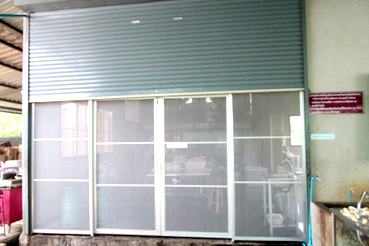
การพัฒนาสถานประกอบการผลิตอาหารให้เป็นไปตามหลักเกณฑ์วิธีการที่ดีในการผลิตอาหารเป็นพื้นฐานการจัดการความปลอดภัยอาหารที่ผู้ประกอบการต้องดำเนินการเพื่อสร้างความมั่นใจให้กับผู้บริโภคโครงการนี้มีวัตถุประสงค์เพื่อสร้างความรู้ความเข้าใจที่ถูกต้องตามหลักวิชาการและพัฒนาสถานประกอบการผลิตอาหารให้เป็นไปตามเกณฑ์มาตรฐานด้วยการมีส่วนร่วม สำหรับผู้ประกอบการ 10 ราย จากจังหวัดปัตตานี 4 ราย จังหวัดยะลา 4 ราย และจังหวัดนราธิวาส 2 ราย สำหรับอาหารฮาลาล 2 กลุ่มคืออาหารพร้อมรับประทาน ได้แก่ ขนมจีนเส้นสด หัวข้าวเกรียบ และอาหารสำเร็จรูป ได้แก่ ผลิตภัณฑ์ลูกหยี กล้วยหินฉาบ ข้าวเกรียบปลา ขิงผง น้ำพริก กล้วยน้ำว้าเส้นและมะพร้าวคั่ว การดำเนินงานมีดังนี้ 1) การคัดเลือกผู้ประกอบการ 2) การประเมินสถานประกอบการก่อนเข้าร่วมโครงการ 3 ) การศึกษาดูงาน 4) การพัฒนาสถานประกอบการผลิตอาหาร และ 5) การประเมินสถานประกอบการหลังเข้าร่วมโครงการ ผลจากการดำเนินงาน พบว่า คะแนนประเมินสถานประกอบการในทุกหมวดเป็นไปตามเกณฑ์และผลิตภัณฑ์ของกลุ่มได้รับการรับรองคุณภาพจากการคัดสรรสุดยอดหนึ่งตำบลหนึ่งผลิตภัณฑ์ของกรมพัฒนาชุมชนปี 2562 ระดับสี่ดาว 5 ราย และห้าดาว 2ราย เป็นการยืนยันว่าสถานประกอบการที่เข้าร่วมโครงการมีการจัดการความปลอดภัยในการผลิตอาหารที่เป็นไปตามมาตรฐานสามารถพัฒนาต่อยอดไปสู่การพัฒนาผลิตภัณฑ์ อายุการเก็บรักษาและการตลาดต่อไป
Article Details

อนุญาตภายใต้เงื่อนไข Creative Commons Attribution-NonCommercial-NoDerivatives 4.0 International License.
Area Based Development Research Journal values copyright protection and licensing to safeguard author rights and facilitate the appropriate dissemination of research. Our policies ensure openness, accessibility, and attribution. Authors retain copyright ownership, and articles are published under a Creative Commons Attribution License (CC BY), allowing sharing, adaptation, and proper attribution. Authors have the freedom to publish under the CC BY license, granting broad reuse and distribution permissions. The journal supports posting articles on third-party repositories, adhering to institutional and funding restrictions. Author guidelines detail copyright and licensing requirements, empowering authors with knowledge about their rights and responsibilities. These policies cultivate an environment of collaboration, openness, and responsible sharing, benefiting authors and the research community while honoring intellectual property rights.
เอกสารอ้างอิง
Ali, M. H., & Suleiman, N. (2016). Sustainable food production: Insight of Malaysian halal small and medium sized enterprise. International Journal Production Economics, 181, 303-314.
Amoa-Awua, W. K., Ngunjiri, P., Anlobe, J., Kpodo, K., Halm, M., Hayford, A. E., & Jakobsen, M. (2007). The effect of applying GMP and HACCP to traditional food processing at a semi-commercial kenkey production in Ghana. Journal of Food Control, 18, 1449-1457.
Arpanutud, P. (2015). Implementation of food safety management system in Thai small and medium food processing enterprises: Institutional and resource dependence perspective. Journal of Public and Private Management, 22(2), 175-203. (in Thai).
Boonchan, A., Ratiosom, S., & Parinyasiri, T. (2016). Developing ready-to-eat food manufacturers’ readiness to follow good manufacturing practice regulation in Samut Sakhon. Electronic Journal of Open and Distance Innovative Learning, 6(1), 91-113. (in Thai).
Charalambous, M., Fryer, P. J., Panayides, S., & Smith, M. (2015). Implementation of food safety management systems in small food businesses in Cyprus. Journal of Food Control, 57, 70-75.
Chokratanachai, W., & Klomjoho, S. (2017). Sustainable development of crispy rice production for commercial food production standards by community participation. Area Based Development Research Journal, 9(1), 8-22. (in Thai).
Community Development Department. (2019). Manuals and guidelines OTOP product champion: OPC. Retrieved June 5, 2020, from: http://singburi.cdd.go.th/wp-content/uploads/sites/65/2019/06. (in Thai).
Dzwolak, W. (2014). HACCP in small food businesses: The polish experience. Journal of Food Control, 36, 132-137.
Fielding, L., Ellis, L., Clayton, D., & Peters, A. (2011). An evaluation of process specific information resources, aimed at hazard analysis, in small and medium enterprises in food manufacturing. Journal of Food Control, 22, 1171-1177.
Halal Institute Prince of Songkla University. (2011). Practices for Halal food production. Retrieved October 22, 2020, from: http://www.halinst.psu.ac.th/th/knowledge-th/knowhalal-th/110-any-practice-of-halal-food-production.html. (in Thai).
Hasnana, N. Z. N., Aziza, N. A., Zulkiflib, N., & Taip, F. S. (2014). Food factory design: Reality and challenges faced by Malaysian SMEs. Journal Agriculture and Agricultural Science Procedia, 2, 328–336.
Pornchaloempong, P., & Rattanapanone, N. (2020). Good hygiene practices. Retrieved October 20, 2020, from: http://www.foodnet worksolution.com/wiki/word/3439/good-hygiene-practices-ghp. (in Thai).
Prommaroeng, S. (2018). The elevation approach of OTOP’s foods which produced in Mae Ban Rim Rong community enterprise of Makeujae sub-district, Muang district, Lamphun province. Journal Social Science Srinakharinwirot University, 21, 248-258. (in Thai).
Ruangkalapawongse, A., Ruangkalapawongse, S., & Sripong, V. (2012). Environmental factors affecting the competitiveness of the processed fruit and vegetable industry in the lower central region of Thailand. SDU Research Journal Humanities and Social Science, 8(1), 119-130. (in Thai).
Sirinon, J. (2019). Development potential entrepreneurial orientation for competitive advantage of producer groups OTOP Buriram province. Electronic Journal of Open And Distance Innovative Learning, 9(2), 31-37. (in Thai).
Srikaeo, K. (2013). Quality management in the food industry. Bangkok: Chulalongkorn University Press. (in Thai).
Yapp, C., & Fairman, R. (2006). Factors affecting food safety compliance within small and medium-sized enterprises: implications for regulatory and enforcement strategies. Journal of Food Control, 17, 42–51.
