
การพัฒนาศักยภาพชุมชนบนฐานทรัพยากรวัฒนธรรมไทย-มอญ ชุมชนบ้านงิ้ว จังหวัดปทุมธานี
Article Sidebar
Main Article Content
บทคัดย่อ
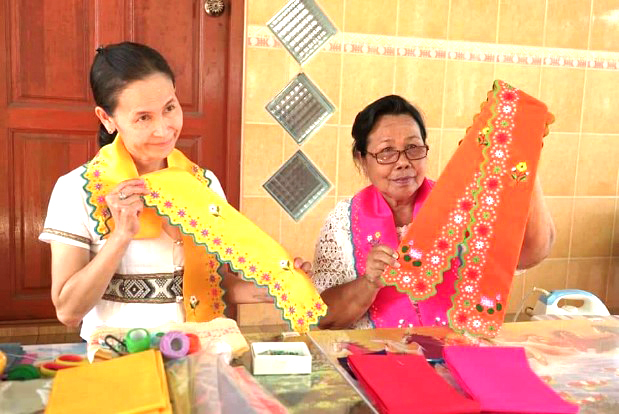
ชุมชนบ้านงิ้ว อำเภอสามโคก จังหวัดปทุมธานี เป็นชุมชนชาวไทยพุทธและชาวไทยเชื้อสายมอญ ที่อาศัยอยู่ร่วมกันเป็นเวลายาวนาน มีขนบธรรมเนียมประเพณีและความเชื่อวัฒนธรรมไทย –มอญ งานวิจัยนี้มีวัตถุประสงค์เพื่อ พัฒนาศักยภาพชุมชนบนฐานทรัพยากรชุมชน ด้วยกระบวนการวิจัยเชิงปฏิบัติการแบบมีส่วนร่วม เพื่อให้ชุมชนเป็นที่รู้จักและเป็นช่องทางการได้รับการสนับสนุนจากหน่วยงานภาครัฐ จึงจัดตั้งกลุ่มวิสาหกิจชุมชนท่องเที่ยววิถีชุมชนตำบลบ้านงิ้ว ที่มีการดำเนินงานดังนี้ 1) ส่งเสริมให้ครัวเรือนมีการรวมกลุ่ม ช่วยเหลือซึ่งกันและกัน 2) พัฒนาทักษะ ความรู้ความสามารถของคนในชุมชน และ 3) ส่งเสริมการท่องเที่ยววิถีชุมชน โดยมีกระบวนการดังนี้ 1) พัฒนานักสื่อความหมาย 2) จัดตั้งฐานเรียนรู้สไบมอญ 3) พัฒนาผลิตภัณฑ์ชุมชนสไบมอญให้ได้มาตรฐานผลิตภัณฑ์ชุมชน และ 4) ส่งเสริมการตลาดทั้งภายในและภายนอกชุมชน จากการดำเนินงานส่งผลให้คนในชุมชนมีอาชีพเสริมจากการขายผลิตภัณฑ์ทำให้มีรายได้เพิ่มขึ้น การทำงานร่วมกันของคนในชุมชน ก่อให้เกิดความรักความสามัคคีและการพัฒนาชุมชนอย่างยั่งยืน การเปิดพื้นที่เป็นแหล่งท่องเที่ยววัฒนธรรมไทย-มอญ ก่อให้เกิดรายได้และเป็นการอนุรักษ์ขนบธรรมเนียมประเพณีในชุมชน
Article Details

อนุญาตภายใต้เงื่อนไข Creative Commons Attribution-NonCommercial-NoDerivatives 4.0 International License.
Area Based Development Research Journal values copyright protection and licensing to safeguard author rights and facilitate the appropriate dissemination of research. Our policies ensure openness, accessibility, and attribution. Authors retain copyright ownership, and articles are published under a Creative Commons Attribution License (CC BY), allowing sharing, adaptation, and proper attribution. Authors have the freedom to publish under the CC BY license, granting broad reuse and distribution permissions. The journal supports posting articles on third-party repositories, adhering to institutional and funding restrictions. Author guidelines detail copyright and licensing requirements, empowering authors with knowledge about their rights and responsibilities. These policies cultivate an environment of collaboration, openness, and responsible sharing, benefiting authors and the research community while honoring intellectual property rights.
เอกสารอ้างอิง
Ampansirirat, A., & Wongchaiya, P. (2017). The participatory action research: key features and application in community. Journal of Humanities and Social Sciences, Mahasarakham University, 36(6), 192-202. (in Thai).
Apibunyopas, J., & Lakkanawanit, P. (2020). Business potential development of trading village for Khaw Khunkha Chawna Khunatham community enterprise, Yasothon province. Area Based Development Research Journal, 12(2), 110–118. (in Thai).
Ban Ngio Subdistrict Administrative Organization. (2020). Community information report. Retrieved December 5, 2020, from: http://www.banngew.go.th. (in Thai).
Ganjanapan, A. (2008). Multiculturalism in the context of social and cultural change. Chiang Mai: Chiang Mai University. (in Thai).
Kemmis, S., & McTaggart, R. (1988). The action research planner. (3rd ed.). Victoria: Deakin University.
Naiyapatana, O. (2005). Quantitative and qualitative research methodologies. Bangkok: Samlada. (in Thai).
Organizations – Open Government Data of Thailand. (2018). Interpreter development guide. Retrieved December 5, 2020, from:http://www.data.go.th. (in Thai).
Pangsoi, K. (2018). Community leaders’ cultural management in activity enhancement for social security and sustainability. Journal of MCU Social Science Review, 7(1), 32-42. (in Thai).
Phanmool, J., & Phopunprom, P. (2020). Multicultural activities to promote culture tourism in Ko Kret, Nonthaburi province. Area Based Development Research Journal, 12(4), 307–318. (in Thai).
Wanlan, D. (2009). The development of the concept of reconciliation culture of a multicultural society as per the views of border patrol police with experience in working in the three southern border provinces (Research report). Songkhla: Thaksin University. (in Thai).
