
การพัฒนาผู้ประกอบการเพื่อชุมชนในพื้นที่สงวนชีวมณฑลแม่สา – คอกม้า จังหวัดเชียงใหม่
Article Sidebar
Main Article Content
บทคัดย่อ
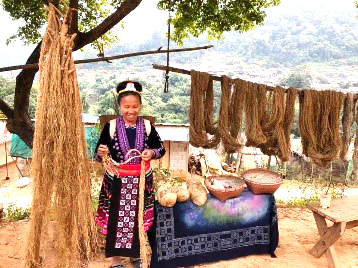
พื้นที่สงวนชีวมณฑลแม่สา - คอกม้า จังหวัดเชียงใหม่ ได้รับความสนใจจากผู้ประกอบการธุรกิจท่องเที่ยวและใช้ประโยชน์พื้นที่ในการดำเนินกิจกรรมการท่องเที่ยวเพิ่มขึ้น แต่การออกแบบกิจกรรมของผู้ประกอบการยังขาดความเชื่อมโยงกับคุณค่าของพื้นที่สงวนชีวมณฑลและวิถีชีวิตคนท้องถิ่น งานวิจัยนี้จึงสำรวจและออกแบบกิจกรรมศึกษาดูงานแบบมีส่วนร่วมของชุมชนและพัฒนาผู้ประกอบการเพื่อชุมชนในพื้นที่สงวนชีวมณฑลแม่สา – คอกม้า ด้วยการวิจัยเชิงปฏิบัติการแบบมีส่วนร่วม มีกระบวนการดังนี้ 1)
การพัฒนากิจกรรมศึกษาดูงาน 2) การพัฒนาผู้ประกอบการเพื่อชุมชน และ 3) การพัฒนาและการอนุรักษ์พื้นที่สงวนชีวมณฑลแม่สา – คอกม้า โดยการบูรณาการแนวคิดการพัฒนาอย่างยั่งยืน ผู้ประกอบการเพื่อชุมชน กระบวนการชื่นชมอย่างสร้างสรรค์และการพัฒนากิจกรรมศึกษาดูงาน ผลการดำเนินงานประกอบด้วย 1) ต้นแบบผู้ประกอบการเพื่อชุมชน 6 ต้นแบบ 2) กลยุทธ์การดำเนินกิจกรรมศึกษาดูงาน 10 กลยุทธ์ และ 3) กิจกรรมศึกษาดูงาน 19 กิจกรรมในช่วงระยะเวลา 3 เดือน ผลประโยชน์ทางเศรษฐกิจที่เกิดขึ้น คือ ผู้ประกอบการมีรายได้เพิ่มขึ้น 103,430 บาท การจ้างงานคนในชุมชนทำให้เกิดรายได้ 12,000 บาท และสร้างรายได้หมุนเวียนให้แก่ชุมชนจากการขายพืชท้องถิ่นตามฤดูกาล 8,090 บาท ผู้ประกอบการเพื่อชุมชนเกิดกระบวนการเรียนรู้และสามารถจัดกิจกรรมศึกษาดูงานได้รวมถึงถ่ายทอดความรู้และประสบการณ์สู่ผู้ประกอบการรายอื่น ๆ เพื่อพัฒนาพันธมิตรทางธุรกิจและเครือข่ายความร่วมมือกับหน่วยงานที่เกี่ยวข้องและขับเคลื่อนพื้นที่สงวนชีวมณฑลแม่สา-คอกม้าสู่การเป็นจุดหมายปลายทางของการศึกษาดูงานอย่างยั่งยืน
Article Details

อนุญาตภายใต้เงื่อนไข Creative Commons Attribution-NonCommercial-NoDerivatives 4.0 International License.
Area Based Development Research Journal values copyright protection and licensing to safeguard author rights and facilitate the appropriate dissemination of research. Our policies ensure openness, accessibility, and attribution. Authors retain copyright ownership, and articles are published under a Creative Commons Attribution License (CC BY), allowing sharing, adaptation, and proper attribution. Authors have the freedom to publish under the CC BY license, granting broad reuse and distribution permissions. The journal supports posting articles on third-party repositories, adhering to institutional and funding restrictions. Author guidelines detail copyright and licensing requirements, empowering authors with knowledge about their rights and responsibilities. These policies cultivate an environment of collaboration, openness, and responsible sharing, benefiting authors and the research community while honoring intellectual property rights.
เอกสารอ้างอิง
Barbier, E.B., & Burgess, J. C. (2019). Sustainable development goal indicators: Analyzing trade-offs and complementarities. World Development, 122(C), 295-305.
Bhuahakosa, K. (2011). Guidelines for learning community development. Bangkok: National Research Council of Thailand (NRCT). (in Thai).
Boonyawat, S. (1997). Mae Sa – Kog Ma Biosphere Reserve. (Conference proceeding). Bangkok: Office of Natural Resources and Environmental Policy and Planning. (in Thai).
Community Organizations Development Institute. (2020). Community business model canvas: CBMC. Bangkok: Community Organizations Development Institute (CODI). (in Thai).
de Guzman, M.R.T., Kim, S., Taylor, S., & Padasas, I. (2020). Rural communities as a context for entrepreneurship: Exploring perceptions of youth and business owners. Journal of Rural Studies, 80, 45-52.
Department of Agricultural Extension. (2020). Small and micro community enterprise. Retrieved December 12, 2020, from: http://smce.doae.go.th/ProductCategory/SmceCategory.php? page_size=10&PAGE=5&province_id=50®ion_id=&hur_id=07&key_word=&startPage=1&endPage=9. (in Thai).
Department of National Parks, Wildlife and Plant Conservation. (2020). Strategic framework for biosphere reserve management in Thailand B.E. 2564 - 2573. Bangkok: Department of National Parks, Wildlife and Plant Conservation. (in Thai).
Forest Resource Management Office 1. (2020). Ministry of Natural Resources and Environment began to demolish illegal resorts on Doi Mon Jam after the expiration of the deadline, submit a legal appeal. Retrieved March 21, 2020, from: https://www.forest.go.th/chiangmai1/th. (in Thai).
Ito, K., Kawamura, H., & Kato, M. (2017). Technical visits and industrial tourism: A case study of AVEX Inc. Journal of Global Tourism Research, 2(1), 45-52.
Jones, C., & Li, S. (2015). The economic importance of meetings and conferences: A satellite account approach. Annals of Tourism Research, 52, 117–133.
Khamkerd, T., Chaiyo, P., Sangiemsilp, P., Therawat, J., Reangkrit, U., & Chuayphen, P. (2020). Development of community agricultural tourism by multilateral in Wang - Yang community, Suphan Buri province. Area Based Development Research Journal, 12(6), 432-450. (in Thai).
Lyon, A., Hunter-Jones, P., & Warnaby, G. (2017). Are we any closer to sustainable development? Listening to active stakeholder discourses of tourism development in the Waterberg biosphere reserve, South Africa. Tourism Management, 61, 234-247.
Méndez-Picazo, M-T, Galindo-Martínb, M-A, & Casta ̃no-Martínez, M-S. (2021) Effects of sociocultural and economic factors on social entrepreneurship and sustainable development. Journal of Innovation & Knowledge, 6(2), 69–77.
Million, W. (2018). Ecosystem economics: #Educate4Sustainability leads to forest restoration. Retrieved January 6, 2020, from: https://bangkok.UNESCO.org/content/ecosystem- economics-educate4sustainability-leads-forestrestoration?fbclid=IwAR3Yg3o3auouVQrgj EcjRg6wHA3JRZ WwNO00Jiq5QNHg0sVQEuk-q6UAbzo.
Nuipakdee, W. (2017). Mae Sa – Kog Ma. Mae Sa – Kog Ma Biosphere Reserve Newsletter, 1(1), 1-16. (in Thai).
Office of the Ombudsman. (2020). Ombudsman visited the area to resolve the problem of the invasion of the national forest. Retrieved March 16, 2020, from: https://www.ombudsman.go.th/en/news.php?id=37
Omer, M.A.B., & Noguchi, T. (2019). A conceptual framework for understanding the contribution of building materials in the achievement of Sustainable Development Goals (SDGs). Sustainable Cities and Society, 52, 101869.
Pantaruk, S., & Cheablam, O. (2021). Development of community enterprises and networks for health tourism in Khanom district and Nakhom Si Thammarat province. Area Based Development Research Journal, 13(1), 1-15. (in Thai).
Pong Yaeng Sub-District Administrative Organization. (2020). Information of accommodations and entrepreneurs in Pong Yaeng sub-district. Chiang Mai: Pong Yaeng Sub-District Administrative Organization. (in Thai).
Pool-Stanvliet, R., Stoll-Kleemann, S., & Giliomee, J.H. (2018). Criteria for selection and evaluation of biosphere reserves in support of the UNESCO MAB programme in South Africa. Land Use Policy, 76, 654–663.
Sethapun, T. (2017). Biosphere reserve. Bangkok: Department of National Parks Wildlife and Plant Conservation. (in Thai).
Thailand Convention & Exhibition Bureau. (2019). MICE for community: Northern region. Bangkok: Thailand Convention & Exhibition Bureau (TCEB). (in Thai).
Thailand Convention & Exhibition Bureau. (2020). Incentive travels 101. Bangkok: Thailand Convention & Exhibition Bureau (TCEB). (in Thai).
UNEP & UNWTO. (2005). Making tourism more sustainable: A Guide for policy makers. Paris: UNEP. Madrid: UNWTO.
UNESCO. (2017). A new roadmap for the man and the biosphere (MAB) programme and its world network of biosphere reserves. Paris: UNESCO.
UNESCO. (2020a). Biosphere reserves. Retrieved December 1, 2020, from: https://en.unesco.org/biosphere.
UNESCO. (2020b). Mae Sa-Kog Ma biosphere reserve, Thailand. Retrieved December 26, 2020, from: https://en.UNESCO.org/biosphere/aspac/mae-sa-kog-ma.
UNESCO. (2020c). Sustainable development. Retrieved December 19, 2020, from:https://en.UNESCO.org/themes/education-sustainable-development/what-is-esd/sd.
United Nations. (2015). Transforming our world: the 2030 Agenda for sustainable development. New York: United Nations.
UNWTO. (2017). Overview of the meetings industry in Asia. Madrid: UNWTO.
Valentina, V., Marius-Razvan, S., Ioana-Alexandra, L., & Stroe, A. (2015). Innovative valuing of the cultural heritage assets. Economic implication on local employability, small entrepreneurship development and social inclusion. Procedia - Social and Behavioral Sciences, 188, 16–26.
Yangsanong, M. (2017). An application of the UNESCO’s principle on criteria and guideline for geological sites conservation. Bangkok:Department of Mineral Resources. (in Thai).
Zakariya, K., Haron, R. C., Yusof, Z. B., & Ibrahim, I. (2020). Technical tours as special interest tourism in the urban context: A case study of Kuala Lumpur. Asian Journal of Environment-Behaviour Studies (ajE-Bs), 5(16), 59-74.
