Learning Implementation Using Mathematical Task to Enhance Mathematical Reasoning Ability in Problem Solving in Three-Dimensional Geometry for The Grade 6 Students
DOI:
https://doi.org/10.14456/psruhss.2025.36Keywords:
Learning implementation using mathematical task, Mathematical reasoning ability, Mathematical taskAbstract
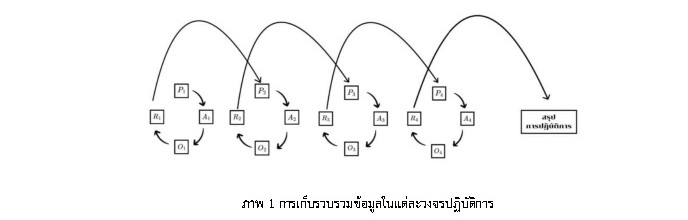
This action research aimed to study the approach to teaching and the results of developing mathematical reasoning ability in problem solving of Grade 6 students on the topic of three-dimensional geometric shapes when organizing learning, by utilizing mathematical tasks. The participants were 14 students. The research instruments included lesson plans, reflective journals, activity sheets and Mathematical reasoning ability test for problem solving. The research was conducted over four cycles. The data were analyzed using content analysis and triangulation. The result is the approach to teaching mathematics was found to be: 1.) Teacher should be stimulated to be interested with video clips related to everyday situations or activities that students are interested in. Teachers should engage students through questions and connect discussions about the situations to the lesson, 2.) The teacher should present the situation and facilitate discussions about it again, posing questions and clarifying any concepts that students do not understand. When students reach the stage of hands-on practice, the teacher should consider their learning abilities and reading skills. The teacher must provide close guidance and use probing questions to encourage students to think critically and express their ideas by writing them down in the activity sheets, 3.) The teacher should summarize the knowledge gained from the questioning and answering process to help students formulate their own concepts and clarify any key points that remain unclear, 4.) The design of mathematical tasks should include all four levels, arranged in order of cognitive demand: Level 1 Memorization, Level 2 procedures without connections, Level 3 procedures with connections and Level 4 – doing mathematics. This progression can support students’ development of mathematical reasoning in problem-solving. Furthermore, when students engage in hands-on activities based on real-life situations will help them gain a better understanding and be able to solve problems effectively. They are more likely to gain a deeper understanding and become better at solving real-world problems. However, Students’ problems with reading literacy contributed to the modest level of improvement observed. The results showed improvement in students’ mathematical reasoning ability in problem solving, the highest improvement was found in Recognizing and Evaluating Situations (RSA), followed by Reasonable Summarization (RSS), Revising and Justifying Solutions (RSR), Selecting Strategies (RSC), and Awareness of Problem-Solving Applications (RSB), respectively.
References
กมล โพธิเย็น. (2564). Active Learning : การจัดการเรียนรู้ที่ตอบโจทย์การจัดการศึกษาในศตวรรษที่ 21. วารสารศึกษาศาสตร์ มหาวิทยาลัยศิลปากร, 19(1), 11-28.
นภัสสร แก้วมีชัย และสิรินภา กิจเกื้อกูล. (2564). การจัดการเรียนรู้ที่เน้นการปฏิบัติโดยใช้งานทางคณิตศาสตร์เพื่อพัฒนาการคิดสร้างสรรค์ทางคณิตศาสตร์ เรื่อง เศษส่วนและจำนวนคละ ของนักเรียนชั้นประถมศึกษาปีที่ 5. วารสารศึกษาศาสตร์ปริทัศน์, 36(2), 180-190.
สถาบันส่งเสริมการสอนวิทยาศาสตร์และเทคโนโลยี. (2566). คู่มือการใช้หลักสูตร กลุ่มสาระการเรียนรู้คณิตศาสตร์ (ฉบับปรับปรุง พ.ศ. 2566) ตามหลักสูตรแกนกลางการศึกษาขั้นพื้นฐานพุทธศักราช 2551 ระดับมัธยมศึกษาตอนต้น. กรุงเทพฯ: สถาบันส่งเสริมการสอนวิทยาศาสตร์และเทคโนโลยี.
สำนักงานเลขาธิการสภาการศึกษา. (2550). แนวทางการจัดการเรียนรู้แบบประสบการณ์และที่เน้นการปฏิบัติ. กรุงเทพฯ: ชุมนุมสหกรณ์การเกษตรแห่งประเทศไทย.
พรรณิษา เอี่ยมอ่อน. (2567). การพัฒนาความสามารถในการคิดอย่างมีวิจารณญาณ เรื่อง สมการเชิงเส้นตัวแปรเดียว โดยใช้การจัดกิจกรรมการเรียนรู้ตามแนวคิด DAPIC ร่วมกับเทคนิคเพื่อนคู่คิด (Think Pair Share) สำหรับนักเรียนชั้นมัธยมศึกษาปีที่ 1. วารสารศึกษาศาสตร์ มมธ, 12(1), 166-179.
วรรณิสา เมืองโคตร. (2560). การส่งเสริมความสามารถในการแก้ปัญหาทางคณิตศาสตร์ของนักเรียนชั้นมัธยมศึกษาปีที่ 1 โดยใช้งานทางคณิตศาสตร์ (วิทยานิพนธ์ปริญญามหาบัณฑิต). เชียงใหม่: มหาวิทยาลัยเชียงใหม่.
วิทวัส ดวงภุมเมศ และวารีรัตน์ แก้วอุไร. (2560). การจัดการเรียนรู้ในยุคไทยแลนด์ 4.0 ด้วยการเรียนรู้อย่างกระตือรือร้น. วารสารมนุษยศาสตร์และสังคมศาสตร์ บัณฑิตวิทยาลัย มหาวิทยาลัยราชภัฏพิบูลสงคราม, 11(2), 1-14.
สิรินภา กิจเกื้อกูล. (2557). การจัดการเรียนวิทยาศาสตร์: ทิศทางสำหรับครูศตวรรษที่ 21. เพชรบูรณ์: จุลดิสการพิมพ์.
อัมพร ม้าคนอง. (2553). ทักษะและกระบวนการทางคณิตศาสตร์: การพัฒนาเพื่อพัฒนา (พิมพ์ครั้งที่ 3). กรุงเทพฯ: โรงพิมพ์แห่งจุฬาลงกรณ์มหาวิทยาลัย.
Henningsen, M., & Stein, M. K. (1997). Mathematical Tasks and Student Cognition:Classroom-Based Factors That Support and Irhibit High-Level MathematicalThinking and Reasoning. Journal for Research in Mathematics Education, 28(5), 524-549.
Isoda, M., & Katagiri, S. (2012). Mathematical thinking: How to develop it in the classroom. Singapore: World Scientific.
Lucast, E. K. (2003). Proof as method: A new case for proof in mathematics curricular. Master thesis. Pittsburgh, PA, USA: Carnegie Mellon University.
OECD. (2023). PISA 2022 Assesment and Analitical Framework. Retrieved on 15 September 2024. Available from: https://www.oecd.org/content/dam/oecd/en/publications/reports/2023/08/pisa-2022-assessment-and-analytical-framework_a124aec8/dfe0bf9c-en.pdf
Downloads
Published
How to Cite
Issue
Section
License
Copyright (c) 2025 Humanities and Social Sciences Journal of Pibulsongkram Rajabhat University

This work is licensed under a Creative Commons Attribution-NonCommercial-NoDerivatives 4.0 International License.
Any articles or comments appearing in the Journal of Humanities and Social Sciences, Rajabhat Phibulsongkram University, are the intellectual property of the authors, and do not necessarily reflect the views of the editorial board. Published articles are copyrighted by the Journal of Humanities and Social Sciences, Rajabhat Phibulsongkram University.