The Enhancement of Eco-Friendly Products and Sustainable Green Tourism in the Pak Nam Prasae Community Rayong Province
DOI:
https://doi.org/10.14456/psruhss.2025.25Keywords:
Eco-friendly products, Sustainable green tourism, Pak nam prasaeAbstract
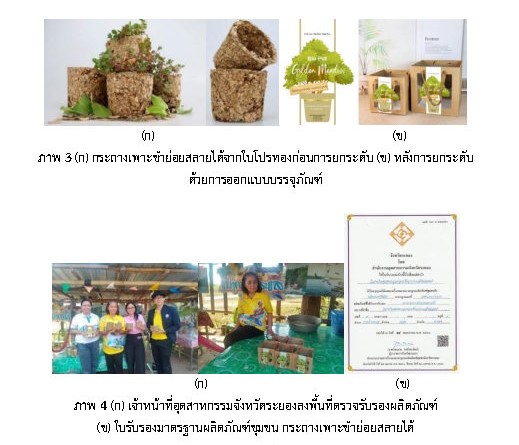
This research aimed to: 1) Enhance eco-friendly products and green tourism in the Pak Nam Prasae community, Rayong Province. 2) Create and develop public relations media to promote the enhancement of eco-friendly products and sustainable green tourism in the community. 3) Study the utilization outcomes of enhancing eco-friendly products and sustainable green tourism in the Pak Nam Prasae community. The study employed a Participatory Action Research (PAR) approach through two methods: focus group discussions with six key community stakeholders and a survey of 384 consumers selected through accidental sampling. The findings revealed that 1) The community actively participated in designing packaging and promotional media that reflected environmental values and local cultural identity, as well as in developing a green tourism route that integrates eco-friendly products and provides meaningful experiences that effectively raise tourists’ environmental awareness. 2) Consumers expressed a high level of satisfaction with the promotional media — specifically, for natural tie-dye fabric made from Prong Thong leaves (content: x̄ = 4.25, S.D. = 0.55), biodegradable seedling pots made from Prong Thong leaves (content: x̄ = 4.23, S.D. = 0.61), and the green tourism route (content: x̄ = 4.29, S.D. = 0.58) 3) regarding utilization, the economic dimension showed that new income sources emerged from innovative products developed from local resources, which can be further commercialized; the social dimension indicated that the community developed a sense of pride in its indigenous wisdom and successfully transferred such knowledge to younger generations; and the environmental dimension demonstrated that the use of biodegradable and chemical-free materials in product and packaging design helped reduce environmental impacts and fostered sustainable consumption behaviors in the long term. A significant finding of this study is the development of a Model for the Enhancement of Eco-Friendly Products and Sustainable Green Tourism, which consists of five key components: community participation, packaging as a strategic communication tool, storytelling for emotional engagement, media design using consumer insights, and communication for promoting sustainable behavior.
References
กระทรวงท่องเที่ยวและกีฬา. (2566). สรุปสถานการณ์พักแรม จำนวนผู้เยี่ยมเยือนและรายได้จากผู้เยี่ยมเยือน เดือนมกราคม ถึง ธันวาคม 2566. สืบค้น 18 มีนาคม 2567, จาก https://www.mots.go.th/news/category/705?page=1&perpage=18
กาญจนา แก้วเทพ. (2545). สื่อสารมวลชน: ทฤษฎีและแนวทางการศึกษา. กรุงเทพฯ: โรงพิมพ์ศาลาแดง.
จารุวรรณ นิธิไพบูลย์, ธิปัตย์ โสตถิวรรณ์, นครินทร์ ทั่งทอง, ณชภัทร พิชญมหุตม์ และมณีรัตน์ ภารนันท์. (2567). การพัฒนาชุมชน สีเขียวอัจฉริยะด้วยเทคโนโลยีและนวัตกรรมของจังหวัดระยอง (รายงานการวิจัย). ชลบุรี: มหาวิทยาลัยเทคโนโลยีราชมงคลตะวันออก.
ศูนย์วิจัยและสนับสนุนเป้าหมายการพัฒนาที่ยั่งยืน. (2567). ข้อมูลเบื้องต้นเกี่ยวกับ SDGs. สืบค้น 18 มีนาคม 2567, จาก https://www.sdgmove.com/intro-to-sdgs/
Anuntachai Phinijkijsophon. (2019). The impact of price, quality, and environmental concern on adopting decision of green package for Thai consumer. http://dspace.bu.ac.th/bitstream/123456789/3971/3/anuntachai_phin.pdf
Cochran, W.G. (1977). Wiley: Sampling Techniques (3rd ed.). New York: John Wiley & Sons.
Ko, D., Chung, H., Park, J., Kim, H., Kang, E., Lee, S., & Yoon, T. K. (2023). Recycled waste leaf litter pots exhibit excellent biodegradability: an experimental analysis. Horticulturae, 9(9), 987. https://doi.org/10.3390/horticulturae9090987
Narayana Swamy, V., Gowda, K. N., & Sudhakar, R. (2016). Natural dye extracted from vitex negundo as a potential alternative to synthetic dyes for dyeing of silk. Journal of the Institution of Engineers (India): Series E, 97(1), 31-38. https://doi.org/10.1007/S40034-015-0069-X
Perini, A., & Candido , L. H. A. (2023). Tie-dye textile processing technique with natural pigments applied to organic cotton. Seven Editora, 55, https://doi.org/10.56238/alookdevelopv1-055
Phinijkijsophon, A. (2019). The impact of price, quality, and environmental concern on adopting decision of green package for Thai consumer (Independent Study (M.B.A.)). Bangkok: Bangkok University. http://dspace.bu.ac.th/jspui/handle/123456789/3971
Poturak, M. (2014). Influence of product packaging on purchase decisions. European Journal of Social and Human Sciences, (3), 144-150.
Ruggeri, G., Mazzocchi, C., Bergamelli, C., & Tosca, A. (2024). Plant the pot! Understanding consumer willingness to pay for sustainability in garden shop products. Journal of Cleaner Production, 477, 143855. https://doi.org/10.1016/j.jclepro.2024.143855
Silayoi, P., & Speece, M. (2004). Packaging and purchase decisions: An exploratory study on the impact of involvement level and time pressure. British food journal, 106(8), 607-628. https://doi.org/10.1108/00070700410553602
Singh, N. (2024). Impact of packaging design on consumer purchasing decisions. International Journal of Scientific Research in Engineering and Management, 8(4), 1–5. https://doi.org/10.55041/ijsrem32740
Downloads
Published
How to Cite
Issue
Section
License
Copyright (c) 2025 Humanities and Social Sciences Journal of Pibulsongkram Rajabhat University

This work is licensed under a Creative Commons Attribution-NonCommercial-NoDerivatives 4.0 International License.
Any articles or comments appearing in the Journal of Humanities and Social Sciences, Rajabhat Phibulsongkram University, are the intellectual property of the authors, and do not necessarily reflect the views of the editorial board. Published articles are copyrighted by the Journal of Humanities and Social Sciences, Rajabhat Phibulsongkram University.