
ภาพลักษณ์อาหารท้องถิ่นริมทางเพื่อเสริมสร้างความจงรักภักดีของนักท่องเที่ยว กลุ่มจังหวัดภาคกลางตอนล่าง
DOI:
https://doi.org/10.14456/psruhss.2025.23คำสำคัญ:
ภาพลักษณ์อาหาร , อาหารท้องถิ่น , อาหารริมทาง , ความจงรักภักดีของนักท่องเที่ยว , กลุ่มจังหวัดภาคกลางตอนล่างบทคัดย่อ
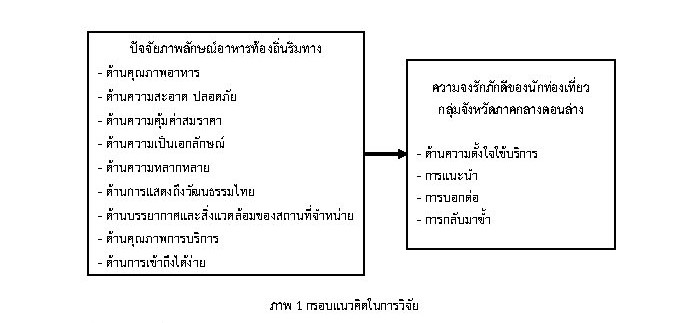
ภาพลักษณ์อาหารเป็นปัจจัยส่งผลให้นักท่องเที่ยวพึงพอใจ ทำให้มีการบอกต่อและกลับมาท่องเที่ยวเพื่อสัมผัสประสบการณ์ทางวัฒนธรรมผ่านอาหารท้องถิ่นอีกครั้ง งานวิจัยนี้มีวัตถุประสงค์เพื่อ 1) ศึกษาปัจจัยภาพลักษณ์อาหารท้องถิ่นริมทางและความจงรักภักดีของนักท่องเที่ยว และ 2) วิเคราะห์อิทธิพลของปัจจัยภาพลักษณ์อาหารท้องถิ่นริมทางที่เสริมสร้างความจงรักภักดีของนักท่องเที่ยวกลุ่มจังหวัดภาคกลางตอนล่าง 2 กลุ่มตัวอย่างคือ นักท่องเที่ยวชาวไทยจำนวน 400 คน คำนวณกลุ่มตัวอย่างด้วยวิธีการสุ่มแบบเจาะจง เครื่องมือที่ใช้ในการวิจัยเป็นแบบสอบถาม วิเคราะห์ข้อมูลโดยใช้สถิติ ได้แก่ ค่าเฉลี่ย ส่วนเบี่ยงเบนมาตรฐาน การทดสอบฟรีดแมน และการวิเคราะห์การถดถอยเชิงเส้นพหุคูณ ผลการวิจัยพบว่า 1) นักท่องเที่ยวมีความคิดเห็นต่อภาพลักษณ์อาหารท้องถิ่นริมทางในระดับมาก โดยด้านคุณภาพอาหารมีค่าเฉลี่ยสูงสุด และมีความคิดเห็นต่อความจงรักภักดีในระดับมากเช่นกัน โดยด้านการแนะนำมีค่าเฉลี่ยสูงสุด 2) ปัจจัยด้านคุณภาพอาหาร ความสะอาดปลอดภัย ความคุ้มค่าสมราคา ความเป็นเอกลักษณ์ ความหลากหลาย บรรยากาศและสิ่งแวดล้อมของสถานที่จำหน่าย คุณภาพการบริการ และการเข้าถึงได้ง่าย มีอิทธิพลอย่างมีนัยสำคัญทางสถิติ (p < .05 และ p < .01) ต่อความจงรักภักดีของนักท่องเที่ยวด้านความตั้งใจ การแนะนำ การบอกต่อ และการกลับมาซ้ำ โดยมีข้อเสนอแนะให้จัดทำมาตรฐานคุณภาพอาหารและหลักสูตรอบรมผู้ประกอบการอาหาร เพื่อยกระดับคุณภาพ ความปลอดภัย และภาพลักษณ์อาหารท้องถิ่นให้เป็นส่วนหนึ่งของการท่องเที่ยวเชิงวัฒนธรรม
เอกสารอ้างอิง
จอมขวัญ สุวรรณรักษ์, บัณฑิต ผังนิรันดร์ และวัชรินทร์ แสงมา. (2564). ปัจจัยเชิงสาเหตุที่มีอิทธิพลต่อความภักดีของนักท่องเที่ยวในการบริโภคอาหารท้องถิ่นในเขตระเบียงเศรษฐกิจพิเศษภาคตะวันออก. วารสารสันติศึกษาปริทรรศน์ มจร, 9(5), 1857–1869.
ณนนท์ แดงสังวาลย์, ประสพชัย พสุนนท์ และธีรวัฒน์ จันทึก. (2563). การศึกษาสภาพการณ์ของการใช้บริการร้านอาหารพื้นถิ่นในกลุ่มจังหวัดเมืองรองเขตภาคกลาง: การวิจัยแบบผสมวิธี. วารสารมหาวิทยาลัยราชภัฏธนบุรี, 14(1), 121–138.
ธานินทร์ ศิลป์จารุ. (2563). การวิจัยและวิเคราะห์ข้อมูลทางสถิติด้วย SPSS และ AMOS (พิมพ์ครั้งที่ 18). กรุงเทพฯ: บิซิเนสอาร์แอนด์ดี.
บุษบา ทองอุปการ. (2561). อาหารท้องถิ่น: ความมั่นคงทางอาหารในมิติวัฒนธรรม กรณีศึกษาชุมชนบ้านตลิ่งแดง จังหวัดกาญจนบุรี. วารสารมหาวิทยาลัยสงขลานครินทร์ สาขามนุษยศาสตร์และสังคมศาสตร์, 5(ฉบับพิเศษ), 107 – 118.
พิชชานันท์ ช่องรักษ์ และเจริญชัย เอกมาไพศาล. (2561). ความสัมพันธ์เชิงสาเหตุของภาพลักษณ์อาหารริมทางทัศนคติต่อจุดหมายปลายทาง การคล้อยตามกลุ่มอ้างอิง และความตั้งใจกลับมาจุดหมายปลายทางซ้ำของนักท่องเที่ยว กรณีศึกษา ย่านเยาวราช. วารสารเศรษฐศาสตร์และนโยบายสาธารณะ, 9(17), 1-20.
ลัดดาวัลย์ เพชรโรจน์ และอัจฉรา ชำนิประศาสน์. (2562). ระเบียบวิธีการวิจัย. กรุงเทพฯ: เจริญดีมั่นคงการพิมพ์.
สถาบันโภชนาการ มหาวิทยาลัยมหิดล. (2562). การพัฒนารูปแบบการจัดการอาหารริมบาทวิถีเพื่อสร้างเสริมสุขภาพ. นครปฐม: ไซเบอร์พริ๊นท์กรุ๊ป.
สำนักงานคณะกรรมการพัฒนาการเศรษฐกิจและสังคมแห่งชาติ. (2566). แผนพัฒนาเศรษฐกิจและสังคมแห่งชาติฉบับที่สิบสาม พ.ศ. 2566-2570. กรุงเทพฯ: สำนักงานสภาพัฒนาการเศรษฐกิจและสังคมแห่งชาติ สำนักนายกรัฐมนตรี.
สำนักนโยบายและยุทธศาสตร์การค้า กระทรวงพาณิชย์. (2566). การท่องเที่ยวเชิงอาหาร. วารสาร สนค., 14(148), 4-5.
สำนักสุขาภิบาลอาหารและน้ำ กรมอนามัย. (2563). คู่มือการพัฒนาและยกระดับมาตรฐานอาหารริมบาทวิถี. กรุงเทพฯ: กรมอนามัย.
สุธีรา สิทธิกุล. (2565). ภาพลักษณ์อาหารท้องถิ่นที่มีอิทธิพลต่อแนวโน้มพฤติกรรมการกลับมาท่องเที่ยวเชิงอาหารซ้ำในจังหวัดเชียงใหม่. สยามวิชาการ, 24(10), 1-21.
โอปอล์ สุวรรณเมฆ และอภิวรรตน์ กรมเมือง. (2562). ปัจจัยที่มีผลต่อความพึงพอใจในการบริโภคอาหารริมบาทวิถีในเขตกรุงเทพมหานคร. วารสารบริหารธุรกิจศรีนครินทรวิโรฒ, 10(2), 144-155.
Božić, A., & Mašić, S. (2022). Importance of local restaurants gastronomic offer for the future of rural tourism. In Tourism International Scientific Conference Vrnjačka Banja-TISC (Vol. 7, No. 1, pp. 30-45).
Chaowanasilp, W., & Agmapisarn, C. (2023). Thai Visitors’ Street Food Motivation Influencing Destination Loyalty: The Case Study of Bangkok. Journal of Business, Innovation and Sustainability (JBIS), 18(3), 181–198.
Cochran, W. G. (1977). Sampling techniques (3rd ed.). New York: John Wiley & Sons.
Cronbach, L. J. (1972). The dependability of behavioral measurement. New York: John Wiley.
Estrada, M., Moliner, M. Á., Monferrer, D., & Vidal, L. (2023). Sustainability and local food at tourist destinations: a study from the transformative perspective. Journal of Sustainable Tourism, 32(5), 1008–1026.
Hiamey, S. E., Amenumey, E. K., & Mensah, I. (2021). Critical success factors for food tourism destinations: A socio‐cultural perspective. International Journal of Tourism Research, 23(2), 192-205.
Jeaheng, Y., & Han, H. (2020). Thai street food in the fast growing global food tourism industry: Preference and behaviors of food tourists. Journal of Hospitality and Tourism Management, 45, 641-655.
Jeaheng, Y., Al-Ansi, A., Chua, B. L., Ngah, A. H., Ryu, H. B., Ariza-Montes, A., & Han, H. (2023). Influence of Thai street food quality, price, and involvement on traveler behavioral intention: exploring cultural difference (eastern versus western). Psychology Research and Behavior Management, 16, 223-240.
Kotler, P. (2000). Marketing management millennium edition (10th ed.). Upper Saddle River, NJ: Prentice-Hall.
Liu, J., & Xu, Y. (2022). T-Friedman test: A new statistical test for multiple comparison with an adjustable conservativeness measure. International Journal of Computational Intelligence Systems, 15(1), 29.
Martin, C. A., Izquierdo, C. C., & Laguna-Garcia, M. (2021). Culinary tourism experiences: The effect of iconic food on tourist intentions. Tourism Management Perspectives, 40, 100911.
Nakpathom, P., Pitchayadejanant, K., Viet, M. N., Vivatvani, V., & Asmaniati, F. (2023). Factors Affecting Customer Perception Toward Customer Loyalty of Street Food Hygiene During The Pandemic: A Case of Bangsean, Thailand. TRJ Tourism Research Journal, 7(2), 167-180.
Osman, S., & Nazari, N. (2020). Reviewing food as a tourism product. International Journal of Innovation, Creativity and Change, 10(8), 350-371.
Phakdee-Auksorn, P., Sastre, R., Pattaro, P., Soonsan, N., & Dachum, P. (2024). An analysis of international tourist motivations towards Phuket food attractiveness. Journal of Quality Assurance in Hospitality & Tourism, 25(6), 2046-2073.
Poltanee, I., & Thavornsil, T. (2022). Destination Image of street food on China town an impact on tourists' dining experiences. Central Asia & the Caucasus, 23(1), 191.
Soonsan, N., Phakdee-auksorn, P., & Suksirisopon, P. (2023). Determining food attributes for measuring and evaluating a gastronomic destination's appeal to visitors. Journal of Hospitality and Tourism Insights, 6(5), 1755-1775.
Stalmirska, A. M. (2024). Local food in tourism destination development: The supply-side perspectives. Tourism Planning & Development, 21(2), 160-177.
Thio, S., Jokom, R., & Widjaja, D. C. (2024). The contribution of perceived food consumption value on destination attractiveness and revisit intention. Journal of Culinary Science & Technology, 22(4), 727-743.
United Nations World Tourism Organization (UNWTO). (2019). Overtourism? Understanding and managing urban tourism growth beyond perceptions. Madrid: UNWTO.
Üstünsoy, E., Dedeoglu, B. B., Şahin Perçin, N., & Solunoğlu, A. (2024). Do food quality, service quality, and hygiene practices in street food affect satisfaction and behavioral intentions? The role of emotion: in Istanbul and Bangkok. Journal of Foodservice Business Research, 27(6), 1-30.
World Health Organization. (2022). Food Safety is Everyone’s Business in Street Food Vending. Retrieved September 24, 2025, from https://www.who.int/publications/i/item/WHO-HEP-NFS-AFS-2022.4
ดาวน์โหลด
เผยแพร่แล้ว
รูปแบบการอ้างอิง
ฉบับ
ประเภทบทความ
สัญญาอนุญาต
ลิขสิทธิ์ (c) 2025 วารสารมนุษยศาสตร์และสังคมศาสตร์ มหาวิทยาลัยราชภัฏพิบูลสงคราม

อนุญาตภายใต้เงื่อนไข Creative Commons Attribution-NonCommercial-NoDerivatives 4.0 International License.
บทความหรือข้อคิดเห็นใดใดที่ปรากฏในวารสารมนุษยศาสตร์และสังคมศาสตร์ มหาวิทยาลัยราชภัฏพิบูลสงครามเป็นวรรณกรรมของผู้เขียน ซึ่งบรรณาธิการไม่จำเป็นต้องเห็นด้วย บทความที่ได้รับการตีพิมพ์เป็นลิขสิทธิ์ของวารสารมนุษยศาสตร์และสังคมศาสตร์ มหาวิทยาลัยราชภัฏพิบูลสงคราม