
An Annotated Translation of the Samayabhedoparacanacakra into Thai (2)
Article Sidebar
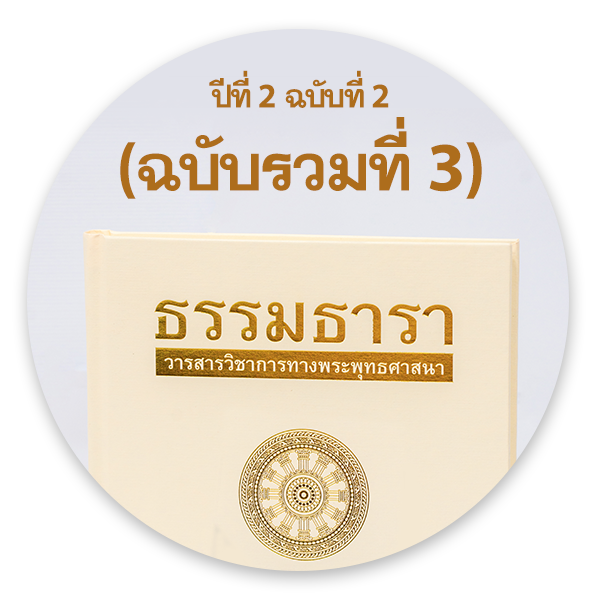
Main Article Content
Abstract
The Samayabhedoparacanacakra, composed by the Sarvāstivādin elder Vasumitra, exists today in three Chinese and one Tibetan translations.
This text reports important traditions on the date of the Buddha's Parinirvāṇa, the date of the first schism and its causes, the different Buddhist sects and their doctrinal principles. If the Dīpavaṃsa and Kathāvatthu-aṭṭhakathā represent the historical tradition of Southern Buddhism, the Samayabhedoparacanacakra, certainly, represents a similar tradition within Northern Buddhism.
Budddhist Studies in Thailand lacks primary sources preserved in Tibetan, Chinese and Sanskrit translation. The present article is the second part of a Thai translation of the Samayabhedoparacanacakra, based primarily on the Tibetan version but also in conjunction with a careful comparison of the three Chinese translations. Annotated footnotes are included to help readers understand the text. I hope this series of translations will encourage Thai Buddhist scholars to do their research from a broader perspective, and so hopefully raise the standard their academic work.
In this paper, I translate from topic of the split of Mahāsāṃghika until the aspects of characteristic Dharma.
Article Details
ลิขสิทธิ์ สำนักการศึกษา วัดพระธรรมกาย

References
เมธี พิทักษ์ธีระธรรม. 2559. "Samayabhedoparacanacakra: คำแปลพร้อมเชิงอรรถวิเคราะห์ (1)". วารสารธรรมธารา 2(1): 67-103. กรุงเทพฯ : สุขุมวิทการพิมพ์ จำกัด.
สิริวัฒน์ คำวันสา. 2545. พระพุทธศาสนาในอินเดีย. พิมพ์ครั้งที่ 2. กรุงเทพฯ: โรงพิมพ์พิทักษ์อักษร.
เสถียร โพธินันทะ. 2543. ประวัติศาสตร์พระพุทธศาสนา. พิมพ์ครั้งที่ 4. กรุงเทพฯ: มหามงกุฏราชวิทยาลัย.2544 ประวัติศาสตร์พระพุทธศาสนา. พิมพ์ครั้งที่ 4. กรุงเทพฯ: บริษัทสร้างสรรค์บุ๊คส์จำกัด.
Bareau, André. 2013. The Buddhist Schools of the Small Vehicle. translated by Sara Boin-Webb. edited by Andrew Skilton. London: Buddhist Society Trust.
Deeg, Max. 2012. “Sthavira, Thera and ‘*Sthaviravāda’ in Chinese Buddhist Sources.” How Theravāda is Theravāda? Exploring Buddhist Identities: 129-162, edited by Peter Skilling, Jason A. Carbine, Claudio Cicuzza, and Santi Pakdeekham. Chiang Mai: Silkworm Books.
Karashima, Seishi (辛島静志). 1994. Chōagonkyō-no-gengo-no-kenkyū: onshago-bunse-ki-wo-chūshin-toshite長阿含経の原語の研究 一 音写語分析を中心として(งานวิจัยศัพท์ดั้งเดิมของคัมภีร์ทีรฆาคมะ: ศึกษาวิเคราะห์เกี่ยวกับการถอดเสียงคำทับศัพท์). Tokyo: Hirakawashuppansha.
Lamotte, Ḗtienne. 1988. History of Indian Buddhism. translated by Sara Boin-Webb. France: Peeters Publishers.
Mitomo, Kenyō (三友 健容). 1996. "setsuissaiubu-no-seiritsu 説一切有部の成立(The Forma-tion of the Sarvāstivāda)". Indogaku-bukkyōgaku-ken-kyū 印度学仏教学研究 (Journal of Indian and Buddhist Studies) 89: 1-11.
Teramoto, Enga and Tomotsugu HiramaTsu (寺本婉雅, 平松友嗣). 1974. Zō-kan-wa-sanyaku-taikō: Ibushūrinron 藏漢和三譯對校:異部宗輪論(คำแปลเปรียบเทียบสามภาษา ทิเบต จีน ญี่ปุ่น: คัมภีร์สมยเภโทปรจนจักร). Tokyo: Kokushokankōkai.
Tsukamoto, Keishō (塚本啓祥). 1980. Shoki-bukkyō-kyōdan-no-kenkyū初期仏教教団史の研究 一 部派の形成に関する文化 史的考察 (A History of the Ear-ly Buddhist order: A Historical Study on the Formation of the Indian Buddhist Schools). 2nd ed. Tokyo: Sankibōbusshorin.
Tubb, Gary A., and Emery R. Boose. 2007. Scholastic Sanskrit: A Manual for Students. New York: Columbia University Press.
Willemen, Charles, Bart Dessein and Collett Cox. 1998. Sarvāstivāda Buddhist Scholasticism. Handbuch der Orientalistik, zweite Abteilung: Indien, elfter Band. Leiden: Brill.
Yamada, Ryūjō (山田龍城).1959. Daijō-bukkyō-seiritsu-shiron-josetsu 大乗仏教成立史論序説 (บทนำทฤษฎีประวัติการกำเนิดพระพุทธศาสนามหายาน). Kyoto: Heirakujishoten.
