The Development of Dance Instructional Media for Lifelong Learning
DOI:
https://doi.org/10.14456/psruhss.2025.19Keywords:
Dance instructional media, Lifelong learning, ADDIE model, Self-directed learningAbstract
This research aimed to: 1) develop a model of dance instructional media for lifelong learning, 2) examine the efficiency of the instructional media,
3) compare learning achievement before and after using the media, and
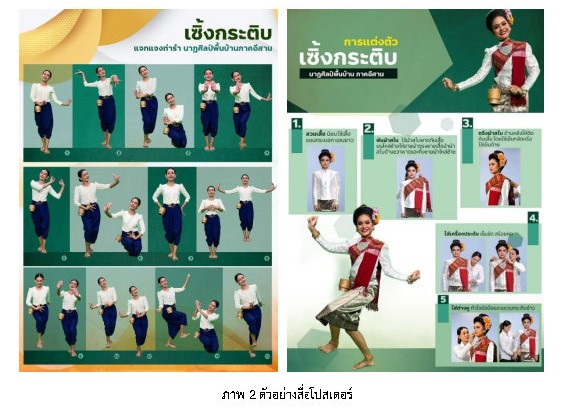
4) investigate student satisfaction with the instructional media. This study employed a research and development (R&D) methodology. Instructional media (videos and posters) of folk dance content were developed based on the ADDIE Model. In the Design phase, the PCA Instructional Model (P=Parts, C=Combination, A=Application) was synthesized and utilized to design media for teaching practical skills. Its effectiveness was evaluated using a Randomized Pretest-Posttest Control Group Design. The sample consisted of 54 students majoring in Dance and Performing Arts, divided into an experimental group (n=27) and a control group (n=27).
Research instruments included a learning achievement test, a media quality assessment form, and a satisfaction questionnaire. Data were analyzed using mean, standard deviation, and t-test. The findings revealed that. The developed instructional media had an overall quality at the highest level
( = 4.95, SD =0.20). The media's efficiency (E1/E2) was 90.15/85.19, which was higher than the established 80/80 criterion. The experimental group's post-test learning achievement (
= 27.04) was significantly higher than their
pre-test score ( = 13.33). Furthermore, the experimental group's post-test score was significantly higher than the control group's (
= 22.52) (t(43) = 3.6, p < .00083). Overall satisfaction with the instructional media was at the highest level (M = 4.78). In conclusion, the dance instructional media developed using the PCA Model within the ADDIE framework proved to be effective, fostered self-directed learning, and enhanced learning achievement. It is highly suitable as a medium for lifelong learning.
References
กาญจนา เลี้ยงประยูร. (2564). การพัฒนาทักษะทางด้านนาฏศิลป์โดยใช้สื่อนวัตกรรมแบบวีดิทัศน์ประกอบการสอน ของนักเรียนชั้นมัธยมศึกษาปีที่ 2 โรงเรียนแคมป์สกวิทยาคม ปีการศึกษา 2564. เพชรบูรณ์: โรงเรียนแคมป์สนวิทยาคม.
กิติศักดิ์ สุทธิ. (2566). พัฒนาชุดการสอนนาฏการเพื่อส่งเสริมความสามารถในการสร้างนวัตกรรมด้านนาฏศิลป์ ของนักเรียนชั้นมัธยมศึกษาปีที่ 3 (วิทยานิพนธ์ปริญญามหาบัณฑิต). นครปฐม: มหาวิทยาลัยศิลปากร.
ณัฐธิดา รุ่งเรือง, นฤมล โททอง และสุวนันท์ ถีระแก้ว. (2566). การพัฒนาชุดกิจกรรมเพื่อส่งเสริมการเรียนรู้ทางด้านนาฏศิลป์เรื่อง การละเล่นของเด็กไทย (ศิลปนิพนธ์ศึกษาศาสตรบัณฑิต). ปทุมธานี: มหาวิทยาลัยเทคโนโลยีราชมงคลธัญบุรี.
นฤเบศน์ ระดาเขต. (2565). การพัฒนาทักษะปฏิบัติการแสดงนาฏศิลป์พื้นบ้าน โดยใช้รูปแบบการเรียนการสอนตามแนวคิดทักษะปฏิบัติของเดวีส์ร่วมกับมัลติมีเดียของนักเรียนชั้นมัธยมศึกษาปีที่ 4 (วิทยานิพนธ์ปริญญามหาบัณฑิต). มหาสารคาม: มหาวิทยาลัยมหาสารคาม.
นันทิชา นินทะราช, พิทยวัฒน์ พันธะศรี และประยงค์ หัตถพรหม. (2566). พัฒนากิจกรรมการเรียนรู้ทักษะปฏิบัติตามแนวคิดของซิมพ์ซันประกอบสื่อประสม เรื่องระบํานารีชมดง ชั้นมัธยมศึกษาปีที่ 3. วารสารสังคมศาสตร์เพื่อการพัฒนาท้องถิ่น มหาวิทยาลัยราชภัฏมหาสารคาม, 7(1), 1-11.
รัฐนันท์ รถทอง, และมลรักษ์ เลิศวิลัย. (2565). การศึกษาออนไลน์และการศึกษาแบบผสมผสาน. Journal of Roi Kaensarn Academi, 7(1), 417-429.
วิรดี จินตะไล, สุรีรัตน์ จีนพงษ์ และธนิตา เลิศพรกุลรัตน์. (2567). การศึกษาความต้องการและแนวทางพัฒนาการจัดการเรียนการสอนรูปแบบผสมผสานเพื่อส่งเสริมการเรียนรู้ด้านทักษะปฏิบัตินาฏศิลป์. วารสารสังคมศาสตร์และวัฒนธรรม, 8(5), 209-201.
ศักรินทร์ ชนประชา. (2562). การศึกษาตลอดชีวิต. วารสาร AL-NUR บัณฑิตวิทยาลัย. มหาวิทยาลัยฟาฏอนี, 14(26), 159-174.
ศุภลักษณ์ ตระกูลศรี และวิทยา วรพันธุ์. (2566). พัฒนาการเรียนรู้นาฏศิลป์พื้นบ้านด้วยสื่อวีดิทัศน์ตามแนวคิดทักษะปฏิบัติของเดวีส์นักเรียนชั้นมัธยมศึกษาปีที่ 1. วารสารสังคมศาสตร์เพื่อการพัฒนาท้องถิ่น มหาวิทยาลัยราชภัฏมหาสารคาม, 7(4), 61-69.
อาชัญญา รัตนอุบล. (2562). การวิเคราะห์และสังเคราะห์ปรัชญา แนวคิดและหลักการของการศึกษา. วารสารครุศาสตร์ จุฬาลงกรณ์มหาวิทยาลัย, 47(2), 428-444.
Anderson, L. W., & Krathwohl, D. R. (Eds.). (2001). A taxonomy for learning, teaching, and assessing: A revision of Bloom's taxonomy of educational objectives. Longman.
FISCHER, G. (2000). Lifelong Learning--More Than Training. Journal of Interactive Learning Research, 11(3), 265-294. Retrieved from https://www.researchgate.net/publication/2511963LifelongLearningMoreThanTraining
Downloads
Published
How to Cite
Issue
Section
License
Copyright (c) 2025 Humanities and Social Sciences Journal of Pibulsongkram Rajabhat University

This work is licensed under a Creative Commons Attribution-NonCommercial-NoDerivatives 4.0 International License.
Any articles or comments appearing in the Journal of Humanities and Social Sciences, Rajabhat Phibulsongkram University, are the intellectual property of the authors, and do not necessarily reflect the views of the editorial board. Published articles are copyrighted by the Journal of Humanities and Social Sciences, Rajabhat Phibulsongkram University.